Valve wants Steam to squash Arm gaming stutter before you even hit play

A powerful gaming PC can still stutter like hell. Now imagine your processor having to translate the game’s instructions while you’re playing it.
That’s one of the challenges Valve faces in its fascinating push to bring Windows games to Arm chips. And the company has a clever plan to tackle it before you even hit Play.
“FEX code caching is vital for frame time consistency,” Valve software engineer Pierre-Loup Griffais told PCWorld in an interview. “In the future, it will also be integrated with Steam’s Pre-Caching feature, so that cached code is available even prior to the first local run of an application.”
That’s a nifty trick when you’re trying to make thousands of Windows games run on processors they were never designed for. And it dovetails with a broader industry push to stamp out one of PC gaming’s most infuriating problems.
Translating games without the hiccups
FEX is a crucial piece of Valve’s ambitious effort to break Steam free from traditional gaming PCs. Most Windows games are built for x86 processors from AMD and Intel. Arm chips speak a different instruction language, so FEX translates x86 code into Arm instructions as games run.
Fortunately, FEX doesn’t have to translate everything.
“When provided with a proper ARM execution environment, such as when integrated with Proton ARM, FEX only translates the CPU code of the application,” Griffais explained.

Steam’s Pierre-Loup Griffais with PCWorld’s Adam Patrick Murray
Foundry
Proton, Valve’s Windows compatibility layer, can switch to native Arm execution at the Win32 API boundary. The operating system and graphics drivers run natively, too, leaving FEX to concentrate on the game’s own CPU instructions.
Griffais says the translation overhead is typically modest, especially in GPU-bound games. But a game running at 60 frames per second has roughly 16.7 milliseconds to finish each frame. If FEX runs into unfamiliar code and needs to translate it in the middle of gameplay, that extra work can chew through the frame’s time budget and cause a hitch.
FEX’s caching system helps sidestep that problem. Translated code can be saved and reused instead of being compiled again.
In September, the FEX developers introduced a persistent on-disk JIT cache that preserves translated code between sessions. Valve subsequently enabled the feature in Proton Experimental for Arm, with Griffais pointing to potential improvements in 1% low frame rates, particularly on repeat runs.
Those lows help expose the slow frames that average FPS figures can hide. They won’t tell you everything about stuttering, but they’re a lot more revealing than a big, shiny average frame rate number.
Steam’s planned Pre-Caching integration takes the idea further. Instead of waiting for a game to run locally and build up its cache, Valve wants translated code ready before the first launch.
There’s no announced timetable or published performance data for that integration yet. But avoiding translation-related hitches without requiring a faster processor? That’s something PC gamers can get behind.
The PC industry has a stutter problem
Valve isn’t the only company trying to move expensive compilation work out of the middle of gameplay.
In October, I covered how Microsoft and Nvidia are attacking shader stutter through Advanced Shader Delivery. Supported games can receive shaders compiled for their particular hardware configuration rather than compiling everything locally. Intel has been working on a Graphics Shader Distribution Service to reduce compilation-related delays, too.
FEX tackles a different problem. Its cache stores translated CPU code, while those other systems deal with GPU shaders. The two aren’t interchangeable, and none of them will magically fix every source of stuttering. Games can still hitch because of asset streaming, CPU bottlenecks, or crappy optimization.
But the thinking behind them is similar: Get the expensive work out of the way before it interrupts your game.
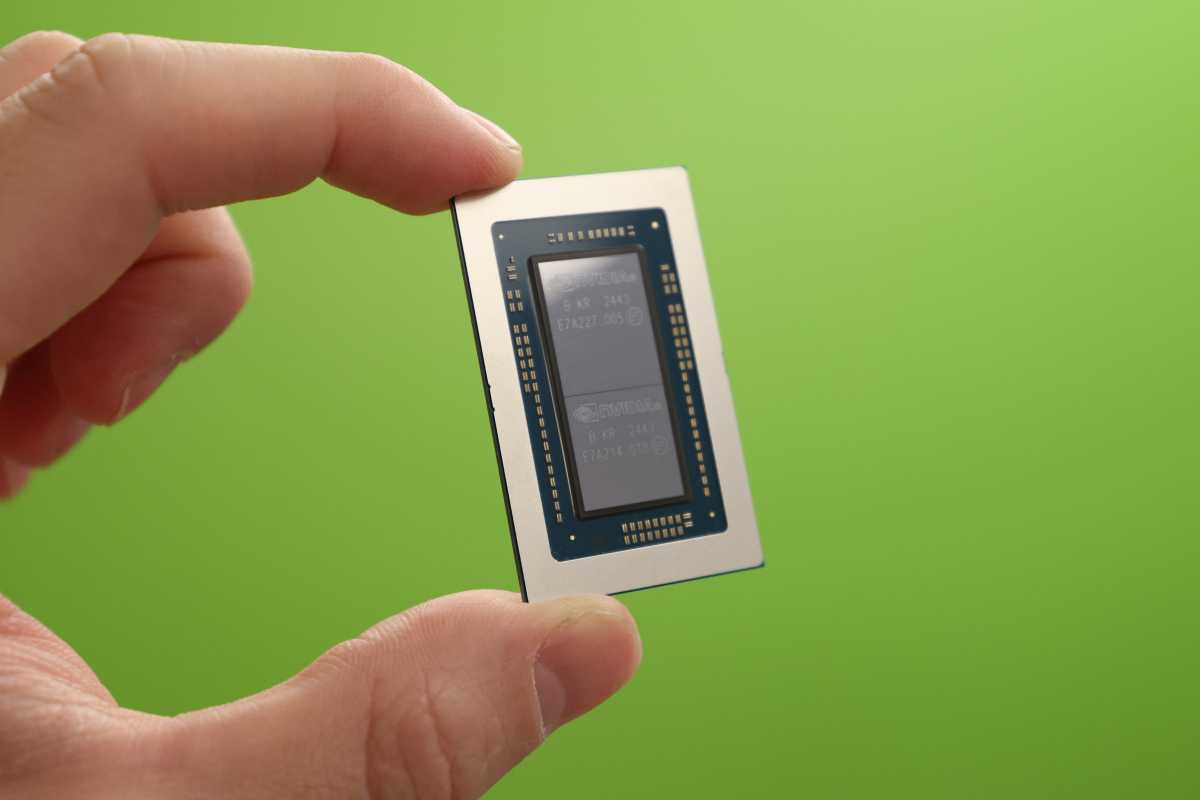
Valve’s work could help games run more smoothly on games with Arm-based processors, including Snapdragon Elite chips and Nvidia’s new RTX Spark platform (pictured).
A powerful gaming PC can still stutter like hell. Now imagine your processor having to translate the game’s instructions while you’re playing it.
That’s one of the challenges Valve faces in its fascinating push to bring Windows games to Arm chips. And the company has a clever plan to tackle it before you even hit Play.
“FEX code caching is vital for frame time consistency,” Valve software engineer Pierre-Loup Griffais told PCWorld in an interview. “In the future, it will also be integrated with Steam’s Pre-Caching feature, so that cached code is available even prior to the first local run of an application.”
That’s a nifty trick when you’re trying to make thousands of Windows games run on processors they were never designed for. And it dovetails with a broader industry push to stamp out one of PC gaming’s most infuriating problems.
Translating games without the hiccups
FEX is a crucial piece of Valve’s ambitious effort to break Steam free from traditional gaming PCs. Most Windows games are built for x86 processors from AMD and Intel. Arm chips speak a different instruction language, so FEX translates x86 code into Arm instructions as games run.
Fortunately, FEX doesn’t have to translate everything.
“When provided with a proper ARM execution environment, such as when integrated with Proton ARM, FEX only translates the CPU code of the application,” Griffais explained.
Steam’s Pierre-Loup Griffais with PCWorld’s Adam Patrick Murray
Foundry
Proton, Valve’s Windows compatibility layer, can switch to native Arm execution at the Win32 API boundary. The operating system and graphics drivers run natively, too, leaving FEX to concentrate on the game’s own CPU instructions.
Griffais says the translation overhead is typically modest, especially in GPU-bound games. But a game running at 60 frames per second has roughly 16.7 milliseconds to finish each frame. If FEX runs into unfamiliar code and needs to translate it in the middle of gameplay, that extra work can chew through the frame’s time budget and cause a hitch.
FEX’s caching system helps sidestep that problem. Translated code can be saved and reused instead of being compiled again.
In September, the FEX developers introduced a persistent on-disk JIT cache that preserves translated code between sessions. Valve subsequently enabled the feature in Proton Experimental for Arm, with Griffais pointing to potential improvements in 1% low frame rates, particularly on repeat runs.
Those lows help expose the slow frames that average FPS figures can hide. They won’t tell you everything about stuttering, but they’re a lot more revealing than a big, shiny average frame rate number.
Steam’s planned Pre-Caching integration takes the idea further. Instead of waiting for a game to run locally and build up its cache, Valve wants translated code ready before the first launch.
There’s no announced timetable or published performance data for that integration yet. But avoiding translation-related hitches without requiring a faster processor? That’s something PC gamers can get behind.
The PC industry has a stutter problem
Valve isn’t the only company trying to move expensive compilation work out of the middle of gameplay.
In October, I covered how Microsoft and Nvidia are attacking shader stutter through Advanced Shader Delivery. Supported games can receive shaders compiled for their particular hardware configuration rather than compiling everything locally. Intel has been working on a Graphics Shader Distribution Service to reduce compilation-related delays, too.
FEX tackles a different problem. Its cache stores translated CPU code, while those other systems deal with GPU shaders. The two aren’t interchangeable, and none of them will magically fix every source of stuttering. Games can still hitch because of asset streaming, CPU bottlenecks, or crappy optimization.
But the thinking behind them is similar: Get the expensive work out of the way before it interrupts your game.
Valve’s work could help games run more smoothly on games with Arm-based processors, including Snapdragon Elite chips and Nvidia’s new RTX Spark platform (pictured).