🤖 AI 资讯

每日 05:00 更新 · 09-23 · 主站 liuch.name ↗
全部标签 →
筛选标签:图神经网络 · 返回个性化推荐 · 清空筛选
AI 资讯

Diffusion-Induced Spatial Attention Overlapping Community Detection

arXiv cs.LGarXiv:2609.26737v1 Announce Type: cross Abstract: Detection of overlapping communities is essential for modelling networks in which nodes participate simultaneously in multiple structural or functional groups. Existing graph neural network approaches commonly rely on local message passing, which can obscure community boundaries through smoothing and limit the representation of structurally relevant long-range dependencies. We introduce Diffusion-Induced Spatial Attention Community Detection (DISCO), a deep-learning framework that combines a structural prior derived from influence spreading dynamics, sparse multi-head attention, and non-negative community-affiliation learning. The prior identifies candidate interactions beyond immediate graph neighbours and biases attention according to their structural proximity, while a Bernoulli-Poisson edge-reconstruction objective enables overlapping community inference from node attributes and structural profiles, or both. Benchmark experiments show that DISCO performs competitively against established graph convolutional and graph attention approaches across different input configurations. To demonstrate its practical applicability, we present a proof-of-concept cybersecurity use case in which changes between community assignments inferred from consecutive communication-network snapshots provide an interpretable anomaly signal. Temporal community similarity identifies structural deviations, while node-level contributions help locate the devices associated with them. DISCO therefore provides both a flexible method for overlapping community detection and a foundation for analysing structural change in dynamic networks.
2026-09-23 04:00:00 · Transformer,扩散模型,模型评测,端侧AI,图神经网络,招聘HR,网络安全,论文
AI 资讯

TailSpec-EASE: Knowledge-Graph-Regularized Linear Recommendation for Web Long-Tail Discovery

arXiv cs.LGarXiv:2609.26143v1 Announce Type: cross Abstract: Recommender systems on Web platforms tend to over-serve popular items and neglect the long tail. Item-side knowledge graphs (KGs), often available as linked data or RDF-style Web resources, can help by connecting sparse items through shared semantic attributes. Many competitive KG-aware recommenders rely on graph neural architectures, whereas strong shallow linear models such as EASE-R typically ignore side information and may become infeasible in their global closed-form version. We introduce TailSpec-EASE, a lightweight recommender that injects a relation-aware spectral KG prior into a local closed-form reconstruction objective. The prior strength adapts to item popularity, giving stronger semantic guidance to long-tail items. Across four public benchmarks and a broad set of classical, linear, graph-CF, KG-aware neural, and score-level KG baselines, TailSpec-EASE attains a favorable trade-off between overall accuracy, long-tail performance, and training cost. It improves NDCG@20 by up to 24% over its counterpart without KG information. All tail-metric improvements over the no-KG counterpart are statistically significant under a paired bootstrap, and overall NDCG improves significantly on three of the four datasets. In a representative Amazon-book timing study, TailSpec-EASE trains in 37 seconds on CPU, compared with 2,584 seconds for a GPU-trained KGAT run and 15,800 seconds for CPU LightGCN, while attaining higher NDCG@20 and Tail Recall@20 on that dataset. It also remains feasible on catalogs where the global closed-form model runs out of memory.
2026-09-23 04:00:00 · 算力芯片,模型评测,图神经网络,招聘HR,论文
AI 资讯

Empirical Auditing of Edge-Private Graph Generators

arXiv cs.LGarXiv:2609.25155v1 Announce Type: cross Abstract: We empirically audit privacy leakage by testing whether outputs from edge-neighbouring inputs remain distinguishable, using statistically valid lower bounds on the privacy loss witnessed by our attacks. Our framework compares direct-edge, local-structural, and GNN-based attacks through the geometry surrounding a target edge. Experiments across two generators and two networks show that privacy leakage is both mechanism- and network-dependent, with learned representations revealing information not captured by conventional local statistics.
2026-09-23 04:00:00 · 算力芯片,Google,扩散模型,端侧AI,图神经网络,招聘HR,论文
AI 资讯

From IceCube to IT-Sphere: A Hybrid Quantum-Classical GNN for Banking IT Root Cause Analysis

arXiv cs.LGarXiv:2609.22822v1 Announce Type: cross Abstract: We present Hybrid Quantum Root Cause Analysis (HQ-RCA), an industrially grounded workflow for root cause analysis in banking IT operations, built on a hybrid Quantum Graph Neural Network (QGNN): the classical backbone of DynEdge (the IceCube neutrino-reconstruction GNN, which we call standalone DynEdge), with its classification head replaced by a Variational Quantum Circuit (VQC). On 13 months of anonymised IT data (13k alarm clusters) from a major European bank, the hybrid QGNN matches standalone DynEdge -- the strongest classical baseline -- on $F_1$, while standalone DynEdge leads the ranking metrics. A readout-sensitivity and layout-robustness study, analysed via Dimensional Expressivity Analysis (DEA), shows that the effective parameter dimensionality (rank) of the quantum observable has no measurable correlation with $F_1$; we therefore keep the simplest readout $\langle Z_0\rangle$ (the Pauli-$Z$ expectation on the first qubit), which in the deployed layout is rank-1, collapsing optimisation to a 1-D problem solvable by a gradient-free grid scan. Execution on IBM Heron r2 (no error mitigation) shows this gradient-free readout is executable on NISQ hardware after threshold recalibration.
2026-09-23 04:00:00 · 图神经网络,招聘HR,论文
AI 资讯

PreGS: A Parameter-Transfer-Based Multi-Expert Graph Neural Network for Node Classification

arXiv cs.LGarXiv:2609.26310v1 Announce Type: new Abstract: Graph neural networks have achieved strong performance in node classification by aggregating information from graph neighborhoods. However, a single aggregation mechanism may be insufficient to capture diverse structural patterns across graph datasets. Moreover, independently training multiple structural branches can introduce substantial overhead without necessarily producing stable node representations. To address these issues, this paper proposes PreGS, a parameter-transfer-based multi-expert graph neural network framework. PreGS first pretrains a multi-head graph attention network (GAT) and transfers the linear transformation weights of its first-layer attention heads to multiple GraphSAGE experts. The transferred experts are frozen and used as complementary structural branches. The fused raw node features, GAT head representations, and GraphSAGE expert representations are fed into a multilayer perceptron (MLP), whose output is further fused with the pretrained GAT logits. Based on PreGS, we further develop PreGSv2, which introduces source-level weighting and a structural gating mechanism for adaptive multi-source feature integration. Experiments on eight public graph datasets show that PreGS and PreGSv2 achieve competitive performance against representative graph neural network baselines. Ablation, parameter-transfer, sensitivity, aggregator, visualization, and training-time analyses further validate the effectiveness and stability of the proposed framework. The code and datasets are available at https://github.com/LH-Czc/PreGS.
2026-09-23 04:00:00 · 算力芯片,开源,Google,Transformer,预训练,图神经网络,论文
AI 资讯

CacheDyG: Decoupling Temporal Propagation for Efficient Dynamic Graph Learning

arXiv cs.LGarXiv:2609.25814v1 Announce Type: new Abstract: Dynamic graphs are widely used to model time-evolving relational systems in real-world applications. Dynamic graph neural networks provide an effective framework for capturing both structural dependencies and temporal dynamics in such data. However, they typically intertwine temporal graph propagation with every optimization epoch and often maintain large trainable representations for each node-time pair. This design repeatedly recomputes largely unchanged historical structures, leading to substantial training and parameter overhead. To address this critical issue, we propose CacheDyG, a Cache-refine framework for efficient Dynamic Graph learning. Specifically, it decouples temporal propagation from routine parameter updates by constructing a time-ordered temporal dependency cache that stores graph-aware node-time representations in non-trainable buffers. During standard training epochs, CacheDyG reads from the cache and updates only a lightweight cache refiner, an adaptive residual gate, and the link predictor. Selective cache refresh further keeps cached representations aligned with the supervised objective while avoiding epoch-wise sparse propagation. Experiments on five dynamic graph benchmarks show that CacheDyG adopts substantially fewer trainable parameters and lower runtime to obtain more competitive predictive performance than baselines. These results demonstrate that cache-based decoupling provides an effective principle for scalable dynamic graph learning.
2026-09-23 04:00:00 · 模型评测,图神经网络,论文
AI 资讯

Signed Graph Pre-Training and Prompt Learning

arXiv cs.LGarXiv:2609.25722v1 Announce Type: new Abstract: Signed graphs arise in trust--distrust networks, financial correlation systems, biological interaction graphs, and many other domains in which edges can be positive or negative and may also be directed. While signed graph neural networks have improved task-specific learning, graph transfer learning on signed graphs remains underdeveloped. In this paper, we introduce TopoSIGN, a pioneer topology-guided graph pre-training and prompt learning framework for signed graphs. TopoSIGN combines a structural encoder built on the magnetic signed Laplacian with a novel persistent-homology branch that summarizes signed topology through Dowker-complex persistence images. The fused embeddings are then transferred to a prompt learning function. Experimental results on synthetic and real-world datasets demonstrate the efficacy of TopoSIGN in extracting useful structural information in signed graphs, as well as the adaptability and flexibility of the proposed general framework.
2026-09-23 04:00:00 · 向量数据库,提示工程,图神经网络,招聘HR,榜单评测,论文
AI 资讯

Spatiotemporal Kronecker Covariance Neural Networks

arXiv cs.LGarXiv:2609.25326v1 Announce Type: new Abstract: Multivariate time series contain complex patterns that span across both space and time. While covariance-based statistical tools like spatiotemporal Principal Component Analysis (ST-PCA) help identify these patterns, they are limited to linear operations and prone to estimation errors with limited data. Recent covariance-based spatiotemporal neural networks offer more stable, non-linear alternatives, but they ignore correlations across different time steps. To solve this, we introduce the Kronecker coVariance Neural Network (KVNN), a temporal graph neural network that represents the spatiotemporal covariance matrix via a sum of Kronecker products where spatial and temporal dependencies are decoupled. By implementing filtering operations on spatial and temporal components, KVNNs achieve expressive processing capabilities, admit a rigorous spectral analysis, and are provably stable to finite-sample estimation errors, ultimately addressing all of ST-PCA's limitations. We show on five real-world datasets that KVNNs achieve strong forecasting performance, often requiring significantly fewer trainable parameters than competitive methods, and are consistent under estimation noise.
2026-09-23 04:00:00 · 图神经网络,论文
AI 资讯

Dual-GNN Multilevel Coarsening for Maximum Independent Set

arXiv cs.LGarXiv:2609.25149v1 Announce Type: new Abstract: Solving large-scale instances of the Traveling Salesman Problem (TSP) exactly is computationally expensive. Researchers often employ graph sparsification methods to improve computational efficiency. Traditional sparsification methods typically rely on fixed heuristics and fail to fully exploit instance-specific structural information. In this paper, we propose Graph Edge Sparsification (GES), a learning-based sparsification approach for Euclidean TSP. By incorporating geometric structural information and combinatorial optimization technology, our proposed method adaptively generates a sparsification graph for different instances, significantly reducing the graph size and accelerating the solving process. Experimental results demonstrate that our sparsification method can prune up to 95\% of edges on the MATILDA dataset, while keeping the solution gap within 1\% of the optimal value. Moreover, our approach exhibits strong generalization capability on the TSPLIB benchmark.In some large-scale instances, the pruning rate exceeds 99\%, while the optimality gap remains below 1\%.
2026-09-23 04:00:00 · 扩散模型,模型评测,图神经网络,论文
AI 资讯

Towards Hierarchical GNNs for multi-grid power flow: generalization across operating scenarios

arXiv cs.AIarXiv:2609.26603v1 Announce Type: cross Abstract: Hierarchical latent communication improves the generalization of a multi-grid power-flow model to new operating scenarios. The module exchanges information through two reduced graphs within a GENCO-based corrective network. We compare Kron-derived transports, a same-anchor Quotient construction and a flat backbone in preliminary trainings of 200 epochs on three grid topologies, with three initialization seeds per model. Evaluation uses 200 newly generated, preselected scenarios per grid. On the training topologies, Kron reduces the macro family-balanced voltage error from 5.660 +- 0.899 to 0.851 +- 0.110: an 85.0% reduction relative to Flat GENCO and 31.0% relative to Quotient, which reaches 1.235 +- 0.225. Both hierarchical models outperform a per-bus mean fitted on training solutions on every training topology in all three seeds. These results demonstrate generalization across operating scenarios within the studied topologies, with one set of learned parameters shared across grids. Evaluation on two additional topologies distinguishes this achievement from cross-topology generalization: the current models do not yet outperform the fitted reference in that calibrated- transfer setting. This preprint presents the architecture and preliminary evidence for hierarchical communication as a component of multi-grid power-flow learning, with generalization to unseen topologies as the next development objective.
2026-09-23 04:00:00 · 扩散模型,图神经网络,招聘HR,榜单评测,论文
AI 资讯

EMERGE: Resolution-Agnostic Point Cloud Generation with Equivariant Graph-Based Diffusion

arXiv cs.AIarXiv:2609.26039v1 Announce Type: cross Abstract: Point cloud generation has emerged as a crucial task for accurately capturing and reproducing the complexity of the physical world. However, existing generative approaches, predominantly relying on Transformers and Variational Autoencoders (VAEs), frequently ignore the continuous, non-grid topologies inherent to 3D spaces. Although the integration of graph-based structures has yielded significant benefits in related discriminative vision tasks, such geometric architectures remain noticeably absent from 3D generative modeling. To address this gap, we introduce EMERGE (Equivariant Multi-scale GNN for Resolution-agnostic point cloud GEneration), the first fully $SE(3)$-equivariant graph-based diffusion backbone explicitly designed to generate point clouds while preserving continuous spatial symmetries. Our framework bypasses the rigid resolution dependencies of standard generative pipelines, enabling zero-shot inference at multiple, arbitrary spatial resolutions. Extensive empirical evaluations demonstrate that EMERGE achieves State-of-the-Art generation quality across standard metrics, while the strong inherent geometric inductive biases enable significantly faster training convergence compared to existing baseline methods.
2026-09-23 04:00:00 · Transformer,扩散模型,图神经网络,榜单评测,论文
AI 资讯

DefaultGNN: A Dual-Perspective GNN Framework for Predicting Corporate Default from Buyer-Seller Transaction Networks

arXiv cs.AIarXiv:2609.25542v1 Announce Type: cross Abstract: Corporate default prediction is a core problem in financial risk management, yet traditional credit models rely heavily on financial statements that are often sparse or unavailable for many firms. Corporate transaction networks offer a complementary view of real economic activity, but how risk propagates through buyer-seller relationships remains underexplored. We conduct a large-scale empirical study using real-world electronic tax-invoice data spanning six years that links transaction histories with default events, revealing that transaction-driven risk is both role-dependent (buyer or seller) and scale-dependent. Based on these findings, we construct multiplex buyer-view and seller-view transaction networks and propose DefaultGNN, a dual-perspective graph neural network-based framework for corporate default prediction. DefaultGNN integrates both views to model how risk flows through transactional relationships, achieving strong improvements over both attribute-based and graph-based baselines, especially for firms with limited intrinsic risk signals. We further provide interpretable network-based explanations by visualizing how distressed trading partners contribute to default risk. In collaboration with a licensed credit rating agency, we validate that DefaultGNN's predictions complement existing credit scoring models, improving approval rates by 7-11%p without increasing default risk among approved firms. The source code can be found at https://github.com/jhkim611/DefaultGNN
2026-09-23 04:00:00 · 开源,扩散模型,图神经网络,招聘HR,论文
AI 资讯

Deep Reinforcement Learning on Item-Compatibility Graphs for One-Dimensional Bin Packing

arXiv cs.AIarXiv:2609.25397v1 Announce Type: cross Abstract: The one-dimensional bin packing problem (1D-BPP) is a classical NP-hard combinatorial optimization problem with applications ranging from logistics and manufacturing to cloud resource management. Although deep reinforcement learning (DRL) has become a competitive paradigm for data-driven optimization, most learned packing methods target 2D and 3D variants, and intelligent learned solvers for 1D-BPP remain scarce. In this paper, we present a novel end-to-end, size-agnostic graph reinforcement learning framework for 1D-BPP. We formulate the packing process as a Markov decision process on an item-compatibility graph, serving as a structural knowledge representation in which every action merges two partial bins that fit together. A graph neural network actor-critic policy extracts relational features from this representation and is trained through reinforcement learning and decoded by stochastic beam search, enabling a single trained model to generalize zero-shot to instances of any size. We conduct a systematic empirical study across graph encoders, DRL algorithms, reward functions, training distributions, and hyperparameters. Evaluated zero-shot on the full BPPLIB benchmark against a constructive heuristic, a grouping genetic algorithm, and recent learned methods, our data-driven policy lowers the mean optimality gap of the constructive heuristic from 2.66\% to 2.31\%, with the largest gains on structured instances. Against learned baselines evaluated on the same benchmark, it attains a lower gap on most of the nine families and is far more stable across instance distributions. On the hardest benchmark family, it outperforms a state-of-the-art learned solver that relies on column generation and integer programming, while using no solver at all. A grouping genetic algorithm remains ahead overall, and we analyze where and why the residual gap arises.
2026-09-23 04:00:00 · 强化学习,模型评测,图神经网络,招聘HR,论文
AI 资讯

Multi-Term Fourier Graph Neural Network with Sample Relationship Learning for Enhanced Remaining Useful Life Prediction

arXiv cs.AIarXiv:2609.25179v1 Announce Type: cross Abstract: Predicting the remaining useful life (RUL) is essential for effective predictive maintenance. Spatio-Temporal Graph Neural Networks (ST-GNNs), which can model both temporal and spatial relationships by representing time series data as a sequence of graphs, have shown exceptional performance in RUL prediction. However, current ST-GNNs face several drawbacks. First, they require domain expertise or significant computational power to establish graph structures prior to deploying GNNs. Second, the models are restricted to capture temporal dependencies within a predefined fixed-size lookback window. This restriction ignores the common issue of varying time series lengths, leading the prediction model to miss short-term or long-term dependencies. Finally, conventional models often fail to capture the inherent relationships between samples generated from adjacent time windows, which are crucial for improving both the accuracy and robustness of predictions. To address the aforementioned issues, we introduce a novel framework called Multi-Term Fourier Graph Neural Network with Sample Relationship Learning (MTFGN-SRL). Rather than treating the sample as a sequence of graphs, we consider it as a single complete graph and utilize a Fourier Graph Neural Network (FGN) to capture the spatio-temporal information in the frequency domain. We propose a multi-term learning module that utilizes multiple lookback windows to generate samples with varying terms, which are then fed into the FGN to enhance the extraction of useful information from the data. Finally, we develop a sample relationship learning module by training a heterogeneous GNN to identify inter-sample relationships, resulting in enhanced accuracy and robustness in predictions. Evaluations on the CMAPSS dataset demonstrate MTFGN-SRL's superior performance over state-of-the-art methods in RUL prediction.
2026-09-23 04:00:00 · 图神经网络,论文
AI 资讯

An Accurate and Interpretable Hyper Graph Neural Network for GBM Survival Prediction
arXiv cs.AIarXiv:2609.25088v1 Announce Type: new Abstract: Survival prediction for glioblastoma multiforme (GBM) demands models that are both accurate and interpretable, yet existing approaches treat these objectives as com- peting, where performant models sacrifice transparency, while interpretable models accept degraded predictive power. We argue that this trade-off is not inherent. Graph neural net- works offer a structural foundation for extracting interpretable, explainable representations without compromising discriminative ability. Furthermore, current methods typically rely on a single imaging modality, underutilizing the complementary information available across multi-modal MRI and clinical metadata. We propose a multi-modal framework that inte- grates three components to address both objectives simultaneously: (1) a sheaf hypergraph neural network that captures higher-order relationships among tissue patches through direc- tional, asymmetric message passing; (2) a concept bottleneck layer that compresses learned representations into clinically grounded concepts, enforcing ante-hoc interpretability; and (3) an extension sufficiency test (EST) regularizer that penalizes unfaithful explanations during training, ensuring that model explanations genuinely reflect the internal decision process. Clinical and genomic features are incorporated through gated fusion, preserving the dominant prognostic signal of molecular markers while retaining concept-level traceabil- ity. Evaluated on 593 patients from the UPenn-GBM dataset under 5-fold cross-validation, our framework achieves a concordance index of 0.643 with the lowest fold-level variance among all compared models (std = 0.015). To our knowledge, this is the first work to unify sheaf hypergraph convolution, concept bottleneck supervision, and EST regularization for interpretable survival prediction from brain MRI
2026-09-23 04:00:00 · Meta,图神经网络,招聘HR,论文

At AI Day Singapore, NVIDIA and Partners Showcase AI Advancements Across Southeast Asia

NVIDIA Blog

NVIDIA AI Day Singapore, which takes place Sept. 22-23 at the Raffles City Convention Centre, is offering attendees opportunities to explore the hands-on training, expert-led sessions and advanced tools to accelerate their work in AI and high-performance computing.

At the event, NVIDIA and its partners are showcasing breakthrough AI advancements across the Southeast Asia region at large.

Read more about these announcements below.


NVIDIA Accelerates Public Sector AI from Pilot to Production in Southeast Asia 🔗

AI is becoming a matter of national strategy, with governments looking to move from pilots to production and deliver impact at scale, while building trusted AI capabilities that reflect local languages, cultures, priorities and economic needs. 

NVIDIA is working to enable all nations to be AI nations — providing the technology, infrastructure, ecosystem and expertise needed to make this possible.

To accelerate this transition across Southeast Asia, NVIDIA is helping nations move AI from experimentation to production-scale deployment through open models, developer tools and a broad partner ecosystem. 

Together, NVIDIA and its partners are focusing on four key areas: 

  • Enhancing government operations and service delivery.
  • Developing accessible AI-powered citizen services, and empowering local businesses.
  • Strengthening critical infrastructure and public safety.
  • Supporting startups, developers and researchers to strengthen national AI capabilities and innovation in each country. 

Singapore’s HTX (Home Team Science and Technology Agency) is embarking on research using the NVIDIA Nemotron 3 Super and Nemotron 3 Nano Omni models to advance AI for public safety. Nemotron Super has the potential to support the agency’s complex reasoning and agentic workflows, while Omni’s unified vision, audio and language capabilities could help HTX develop multimodal applications grounded in real-world operational data. Together, the models could strengthen HTX’s ability to deploy secure, locally controlled AI across Singapore’s Home Team.

NCS is advancing agentic AI adoption across enterprises and the public sector, using Nemotron models and the NVIDIA Blueprint for video search and summarization (VSS), while advancing physical AI for practical humanoid robotics applications, to address security, responsiveness and data governance requirements. ST Engineering is using NVIDIA NeMo tools and NVIDIA cuOpt software to develop its AI Studio platform and deploy agentic AI solutions across its businesses such as Marine MRO.

Beyond Singapore, similar work is already underway across the region. Malaysia’s YTL AI Labs is fine-tuning Nemotron models for enterprise and citizen services, while Viettel AI is doing the same for Vietnamese-language applications. 

In Thailand, the Big Data Institute and iApp Technology, as members of the ThaiLLM Collaboration, are exploring Nemotron as a foundation model. With an initial focus on legal applications, iApp Technology is adapting Nemotron 3 Nano by fine-tuning OpenThai 2.0 Legal with Thai-language legal data using the NVIDIA NeMo framework. 

The model is released as open source for the Thai developer community and serves as the engine for Thanoy, the company’s legal-assistant chatbot, which already serves approximately 43,000 users. 

In Brunei, Antrique built an AI innovation platform to help boost productivity across the nation’s food sector.  

Across the region, NVIDIA Cosmos open world models and the NVIDIA VSS Blueprint are advancing smart city solution development. Malaysia’s ITMAX uses Cosmos with VSS to improve city traffic operations, while Thailand’s AS-TECH applies the same stack to improve passenger flow in airports. 

Learn more about NVIDIA

2026-09-23 02:30:22 · 大模型,算力芯片,AI应用,具身智能,开源,NVIDIA,对话助手,多模态,Agent智能体,推理思考,强化学习,微调蒸馏,世界模型,图神经网络,招聘HR

千问办公押注的企业上下文,是 Agent 时代的组织语言

爱范儿

在大模型在拼命刷 Benchmark 卷编程的时候,「不能说话」的 Jev 却意外成了 AI 圈的新顶流,究其原因,大模型应用的价值正在从「生成什么」,进一步延伸到「能否理解复杂信息,并据此做出可靠判断」。

放到企业办公场景里,这个问题尤为明显。

员工的一句「帮我整理报价」,背后可能同时牵涉客户历史、库存状态、折扣规则、审批权限和部门协作。AI 如果只会生成文档,却不了解这些业务背景,输出再完整,也很难真正进入公司的工作流。

企业真正需要的,是一个能够理解业务上下文、知道该和谁协作、也清楚自己权限边界的 AI。
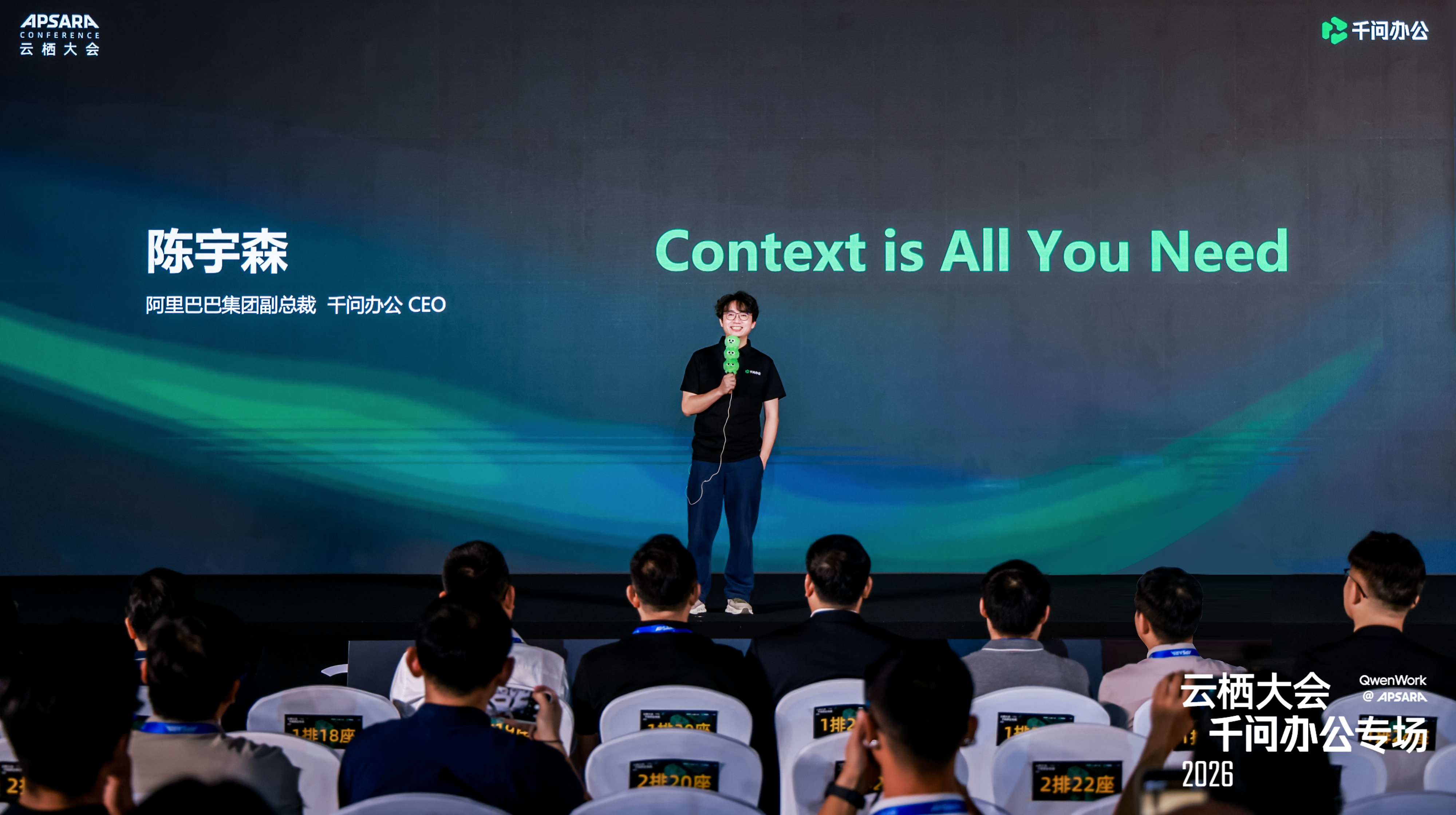
就在刚刚,千问办公在杭州云栖大会发布企业上下文(Enterprise Context)、应用、QwenNote、安全中心等功能和产品。核心目的就是要为 Agent 进入企业业务流程提供一套完整的支持体系。

阿里巴巴集团副总裁、千问办公 CEO 陈宇森表示:「千问办公是业内首个企业级 Agent 产品,Agent 要在企业真实场景落地,既要懂业务,也要像人一样在企业和组织内协同,且每一次任务执行要有边界、能追溯。」
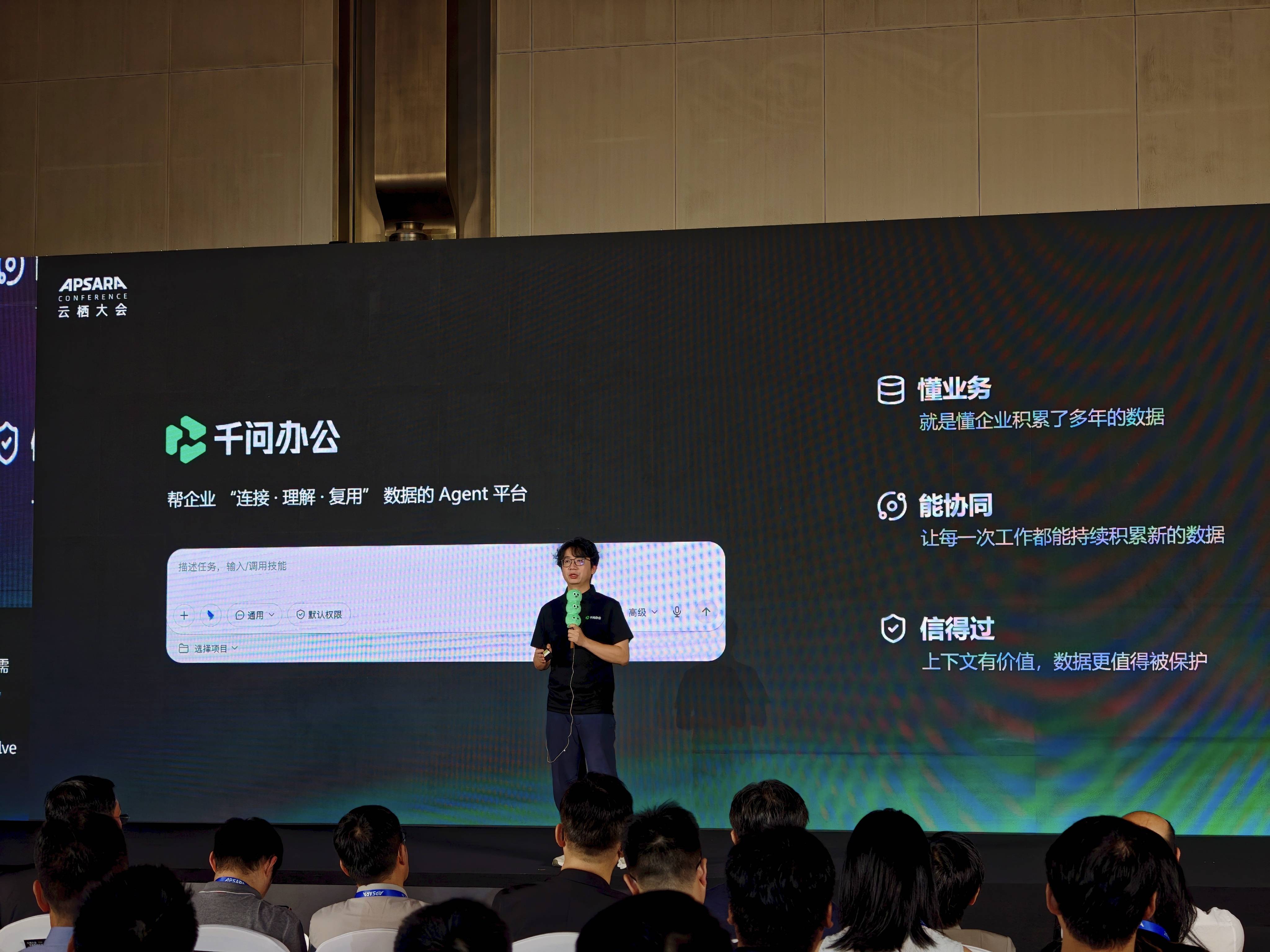
「懂业务、能协同、信得过」,三个要求对应着企业引入 AI 后必须回答的问题,包括它了解多少业务、如何与同事配合,以及可以被授予多大权限。

企业 AI 的第一课,是理解上下文

撰写报告、整理表格已是办公 Agent 的常见能力,但企业还有自己的业务规则。

同样是「给客户报价」,不同企业的产品体系、折扣权限和审批流程各不相同。即使在同一家公司,三个月前的会议结论也可能已经失效,群聊里的临时讨论未必代表最终决定。

一个 Agent 在不同公司能做成什么,很大程度上取决于它对业务上下文的了解。

过去的数字化建设,让企业把大量工作记录保存在系统里;Agent 进入工作流,则要求企业进一步整理记录之间的关系,包括谁负责项目、哪个版本已经生效,以及任务进行到了哪一步。

此前,千问办公团队已推出个人上下文项目 MyContext,它可以把海量异构的个人工作数据加工成 Agent 能直接使用的上下文,让 Agent 更懂工作也更懂用户,提升 Agent 在工作场景下的表现。

此次发布的企业上下文管理产品企业上下文( Enterprise Context),进一步把这一能力延伸到企业级场景。
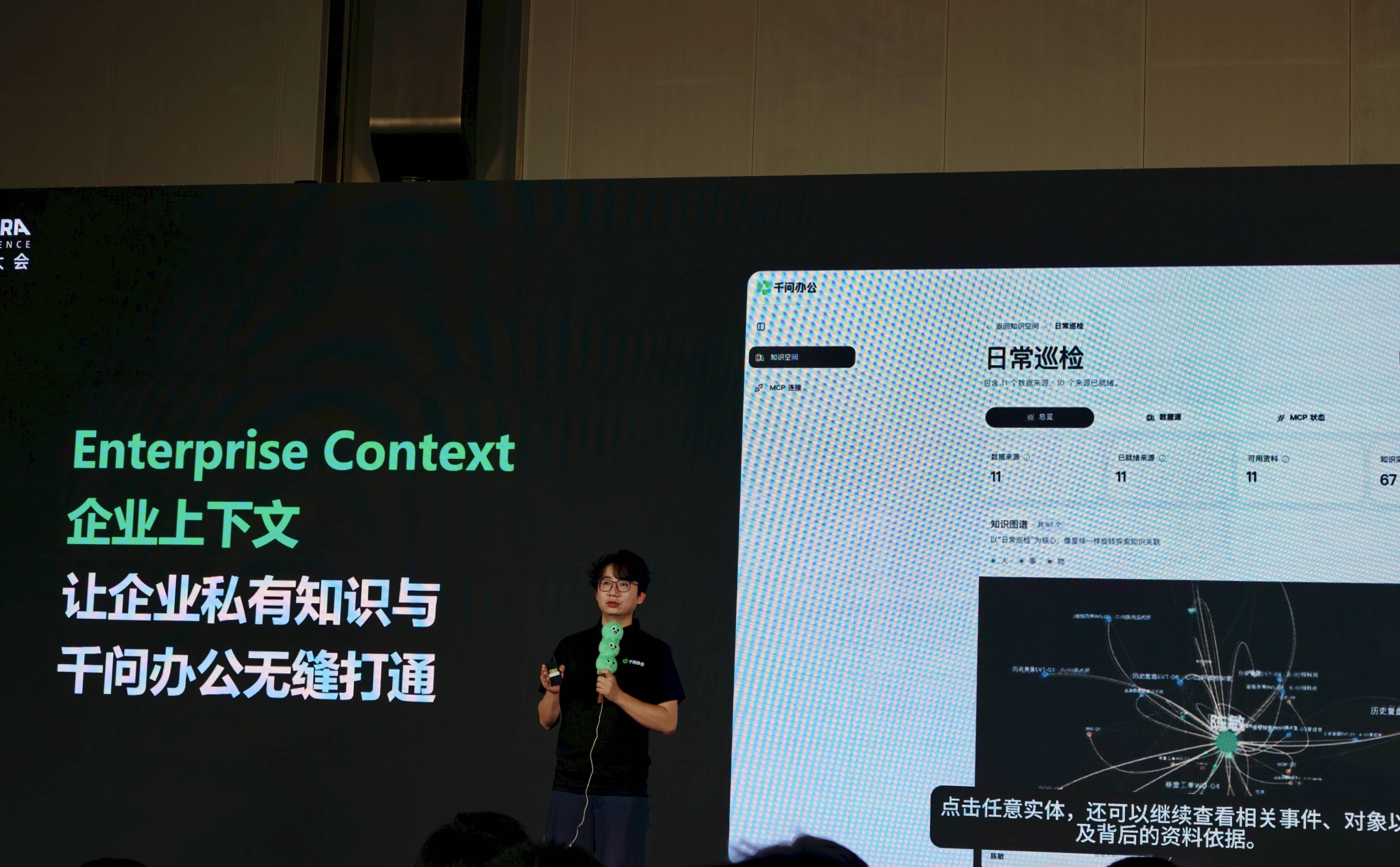
它可以将分散在群聊、文档、知识库等位置的信息整理成结构化的企业上下文,按任务提供相关内容,并随着业务变化持续更新。按任务组织上下文,有助于减少无关信息干扰,也让积累多年的资料在需要时被正确调用。

古茗的门店运营就是一个很贴切的案例。新品频繁上线,意味着制作要求、物料规范和培训安排也在不断变化,一线员工需要从多个渠道找到与当前工作有关的最新说明。
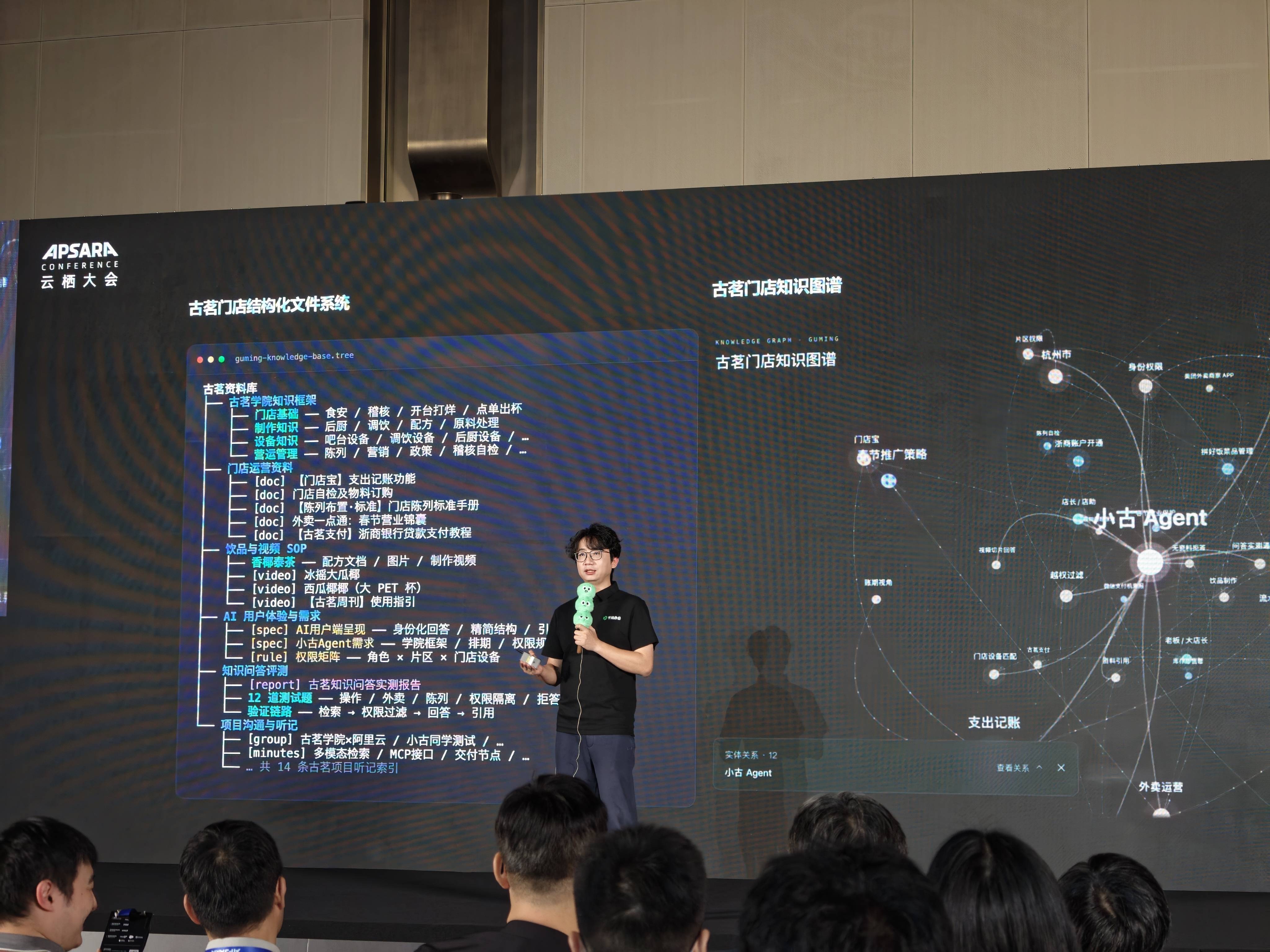
现在,Enterprise Context 将古茗飞书文档、知识库、答疑群和培训日程中的内容整理为「门店运营知识空间」。店员询问海报张贴规范时,Agent 调取相应信息,并随标准更新维护知识空间,减少员工翻找资料和反复询问的时间。

据介绍,基于 Enterprise Context 和千问办公的 Agent 托管能力,千问办公还可以帮助企业构建懂业务的数字员工,让他们在钉钉等各类 IM 上和人类员工进行协同,重塑业务流程,大幅提升组织效率。
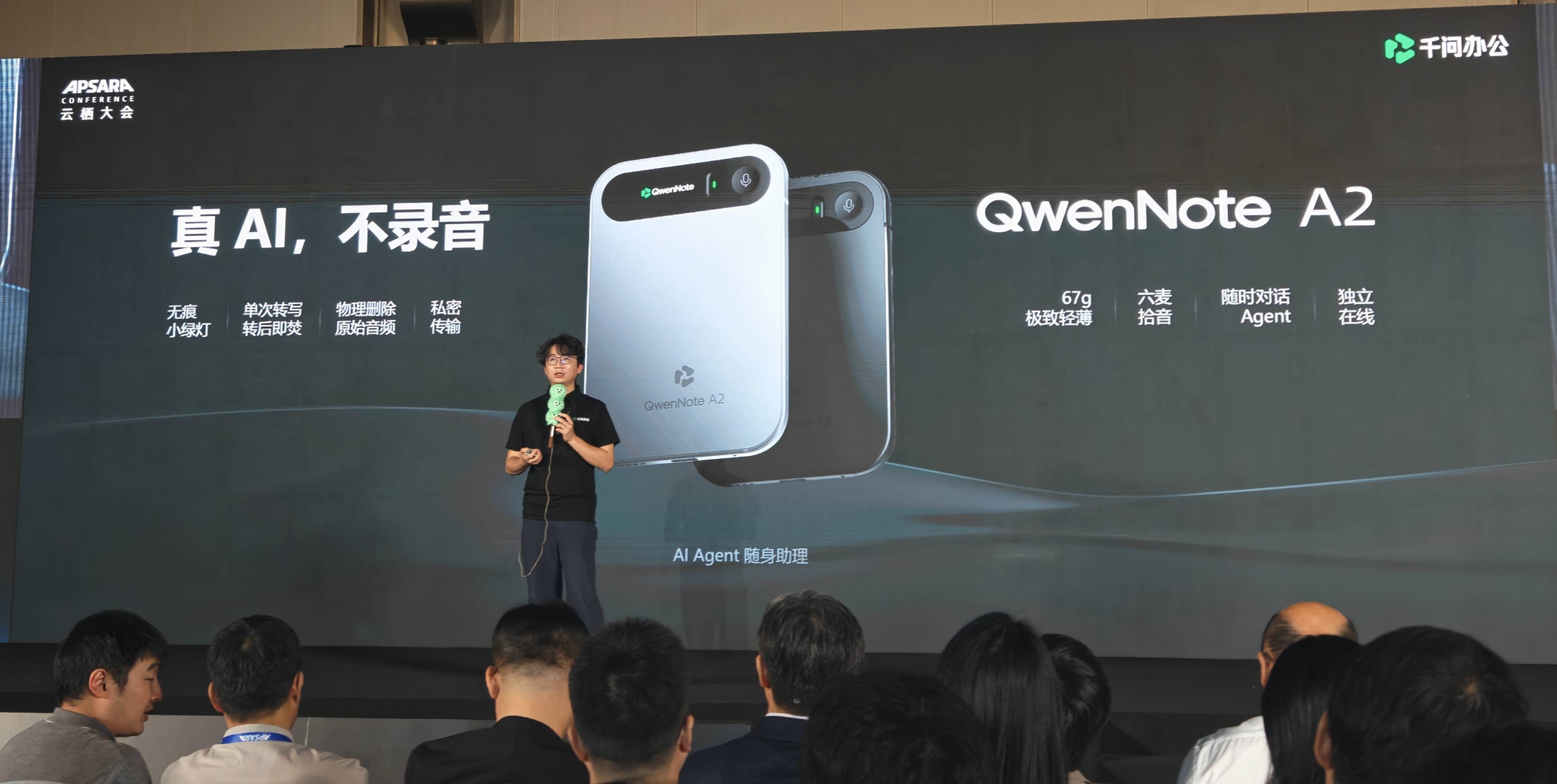
企业还有大量信息产生在线下,会议讨论和客户拜访中的要求,同样会影响 Agent 的任务执行准确率。

此次发布的 Agent 硬件 QwenNote 及首款产品 A2,支持语音转写和语音调用千问办公,把线下交流转化为可供后续工作使用的记录;其转写内容仅保留文字和纪要,不保留原始音频。
下一轮企业数字化,需要把公司整理成 Agent 看得懂的公司。 过去依赖老员工记忆、跨部门询问才能解释清楚的业务关系,需要逐渐变成可以维护、查询和授权使用的组织知识。

给 Agent 一张组织里的工牌

理解业务之后,Agent 还要找到自己在组织里的位置。

一份报价从销售流转到财务、采购和法务,会经过多个岗位,每个环节都有自己的输入和职责。企业效率的提升,很少来自某一个人突然快了十倍,更多来自任务在不同岗位之间能够连续流转。

企业可以基于千问办公和钉钉打造数字员工,相当于给 Agent 发了一张组织里的工牌。

它有名称、所属部门、负责人和岗位职责,也有明确的授权范围与生命周期,可以被员工识别、被系统授权,也可以被管理员停用,所有执行记录都能追溯到对应身份。

钉钉等协作平台决定数字员工可以进入哪些群聊、访问哪些系统,Enterprise Context 为其提供完成工作所需的业务信息,Managed Agents 则负责管理它的工作方式。

企业可以在平台中设定 Agent 的目标和边界,配置模型、指令与工具,并授权运行环境和凭证,让不同岗位的数字员工按照各自职责持续工作。

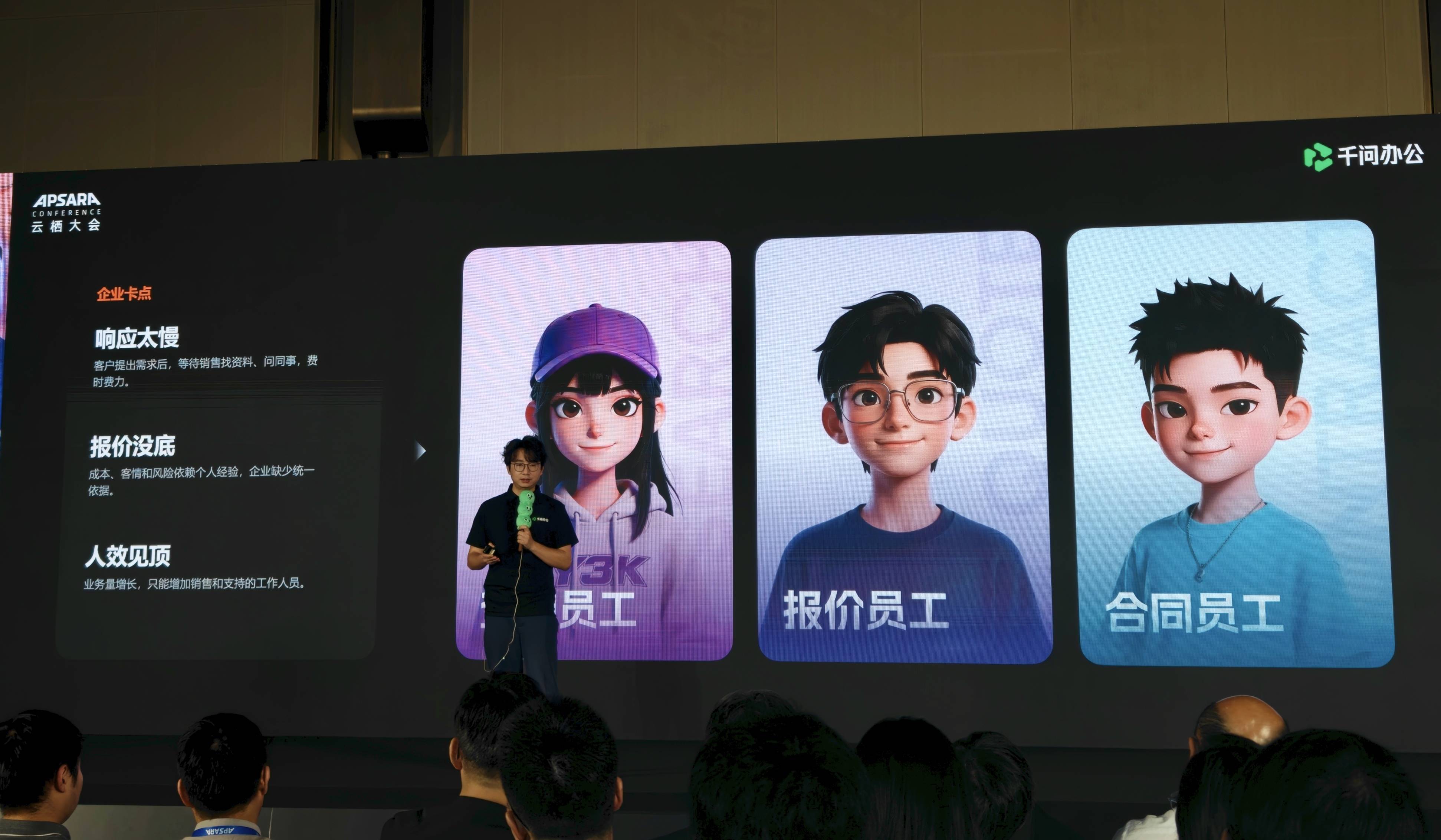
仓储物流包装公司富立卡已经将这种思路用于销售流程。其销售团队每人每天需要处理 300 多条客户询盘,同时与六个部门协作。

千问办公为其配置了三个数字员工,通过 Enterprise Context 共享同一笔业务当前需要的信息,让询盘、报价和合同沿着同一条流程推进。Agent 在这里承担的已经超出一个孤立任务,逐渐成为组织分工中的一个岗位。

数字员工进入公司以后,协作关系也会扩展到人与 Agent、Agent 与 Agent 之间。

千问办公推出「协作」功能,让同事与数字员工在同一空间内,围绕项目资料讨论、分工,并共同保留进度和产出。人与 Agent、Agent 与 Agent 之间可以共享必要背景,后续参与者也能沿着已有记录继续工作。
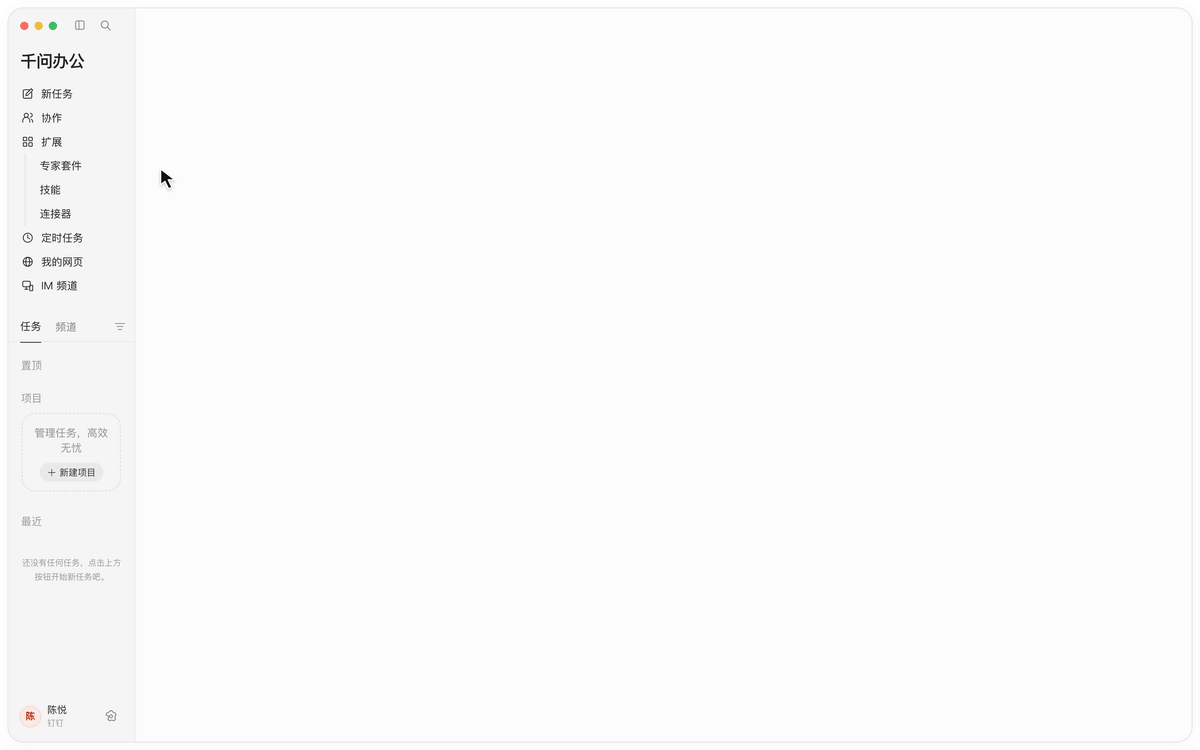
当然,任务最终还要回到业务系统,因此新推出的「应用」功能,允许企业和 SaaS 厂商在保留原有页面与数据的基础上引入 Agent。

它可以了解用户当前的操作及进度,协助完成任务;以投研为例,研究员能够在应用内完成分析、核对和修改,再将结果保存到业务系统。

旧系统不用推倒重来,新能力见缝插针——这种「不折腾」,本身就是企业级产品最被低估的美德。

把这些能力放在一起,才能看清企业级 Agent 与通用办公 Agent 的分水岭。过去半年,行业竞争大多围绕写文档、做表格、生成 PPT 和操作电脑展开,随着主流产品陆续补齐功能,这些能力正在迅速成为标配。

真正进入企业的 Agent 需要读懂公司的上下文,带着明确身份与人协作,接入原有系统,并把结果交给下一个岗位。企业需要的也随之从一件通用办公工具,变成一套能够承接真实业务流程的组合方案。

当然,能力越深入业务流程,Agent 获得的权限越大,可能产生的风险也越接近企业核心。

Agent 时代新的组织语言

当 Agent 能够帮企业查询客户、生成合同,甚至直接调用业务系统,企业衡量它的标准也会发生变化。内容出现偏差还可以修改,数据越权访问或错误操作已经执行,则可能直接影响真实业务。

陈宇森表示,企业不能只在系统外围增加防线,而要从架构设计之初,就把权限越界、数据泄露和误操作等 Agent 风险考虑进去。

飞行前的检查单就是一个类似的例子。

1935 年,波音 299 型轰炸机原型机试飞时坠毁,调查结论让人哭笑不得:飞机没有任何故障,是飞行员忘了解锁升降舵和方向舵的控制机构。后来的解决方案土得掉渣,一张飞行前检查单。

这张纸片后来救了无数人的命,也让复杂机器的操作权,一步步交到了普通人手里。双发飞机今天能跨大洋飞行,靠的也是几十年里每一趟航班的可靠记录,一点点攒出来的信任。

此次发布的千问办公安全中心,也是同样的道理。

它统一管理数据访问、工具调用和任务执行:企业可以通过沙箱限定运行环境,对高风险操作设置审批和拦截,并在异常发生后依据操作记录与恢复机制处理问题。

结合企业权限体系,管理员还可以按岗位授予必要权限,识别敏感信息并审计执行过程,追溯任务由谁发起、使用了什么数据、进行了哪些操作。数字员工的岗位职责,由此对应到可检查的访问和执行记录。

业务负责人能够检查执行依据、在必要时接管任务,才更有条件把涉及真实客户和内部系统的工作交给 Agent,信任需要通过每一次可追溯的执行逐渐建立。

微软《2026 年工作趋势指数》里面有个细节值得注意,在其调查的 AI 使用者中,66% 表示 AI 让自己能投入更多时间从事高价值工作,58% 表示能够完成一年前无法完成的工作;报告同时指出,许多组织的工作方式尚未跟上员工能力的变化。

行业数据也在佐证同一个拐点。Gartner 预测,到 2026 年底,40% 的企业应用将嵌入特定任务的 AI Agent,而 2025 年这个数字还不足 5%。

无论国内还是海外,头部模型厂商近来也纷纷把 Agent 装进自己的办公生态。风向已经很清楚了:竞争的主线正在从模型能力的比拼,转向企业组织生产力的提升。

千问办公此次升级关注的,正是个人生产力提升之后,怎样继续传导到整个组织。据团队介绍,相关产品目前已向古茗、富立卡、长安汽车等企业开放邀请测试。

钉钉和  QwenNote 硬件入口负责沉淀企业每天产生的沟通、会议和文档, Enterprise Context 负责把这些信息整理成可调用的组织上下文,千问办公则在此基础上执行任务,并把结果回流到协作场景。

由此,千问办公也帮助企业把协作入口、上下文处理、Agent 执行, 并与多种设备连接成一套完整的企业 AI 体系。
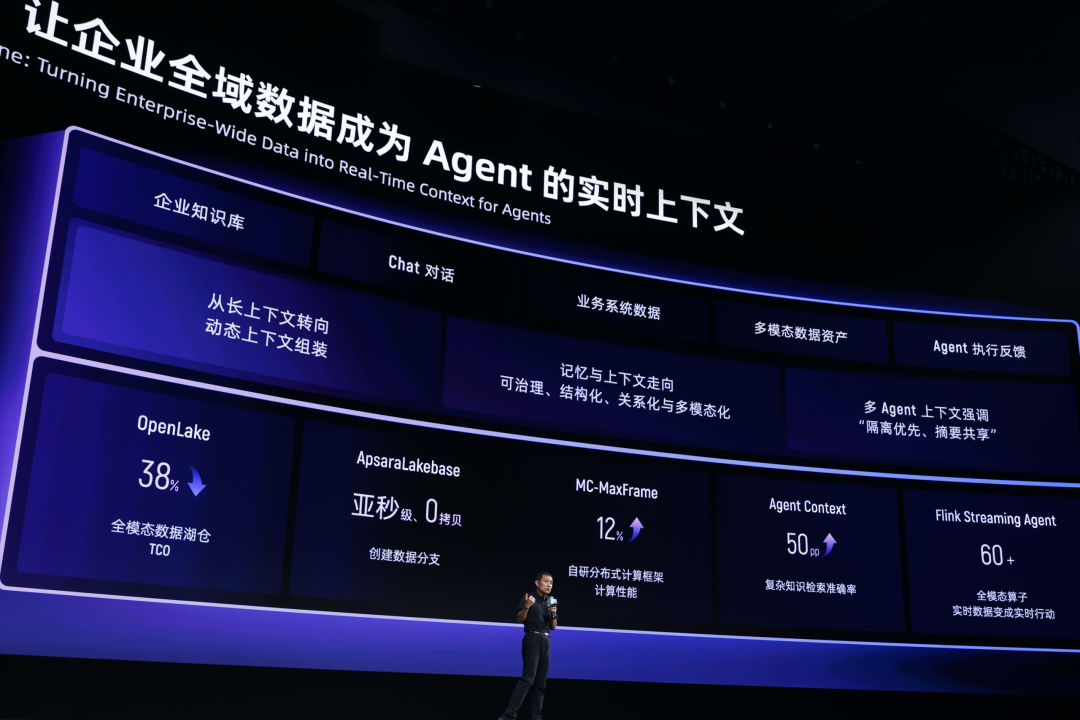
四十年前,微软用 Office 定义了 PC 时代的办公,文档、表格和幻灯片由此成为全球通用的生产力语言。

今天,当数字员工开始领工牌、进群组、处理任务和参与流程,「办公」的对象也从文件延伸到了人类与 Agent 协作的组织本身。

在 APPSO 看来,企业 AI 的长期价值,要看它做过的工作,能为下一次工作留下什么。

文件是 PC 时代的工作语言,在线协作是移动互联网时代的工作语言,而千问办公正在押注的企业上下文,也将会成为 Agent 时代新的组织语言。

让 AI 读懂世界,考验的是模型拥有多少知识;让它读懂一家公司,考验的则是它能否理解那些藏在群聊、流程和人情世故里的言外之意。千问办公瞄准的,恰好是后一个更接近真实工作的命题。

#欢迎关注爱范儿官方微信公众号:爱范儿(微信号:ifanr),更多精彩内容第一时间为您奉上。

2026-09-22 09:06:44 · 大模型,AI应用,政策监管,Microsoft,阿里巴巴,语音音频,代码生成,Agent智能体,搜索RAG,办公效率,设计创意,金融,模型评测,向量数据库,图神经网络,法律,物流供应链,模型发布,产品更新

OPPO 新旗舰塞满了「两亿」,却只要 6799 元起

爱范儿

常规直板手机这几年越来越难在形态上做出突破,各家旗舰竞争的焦点,逐渐转向了如何在有限的机身里平衡配置与取舍。

很多时候,标准版与顶配版之间一道道清晰的配置分水岭,更像是把成本和利润算计得很精的商业选择题——更别提还要加上今年存储成本暴涨的背景。

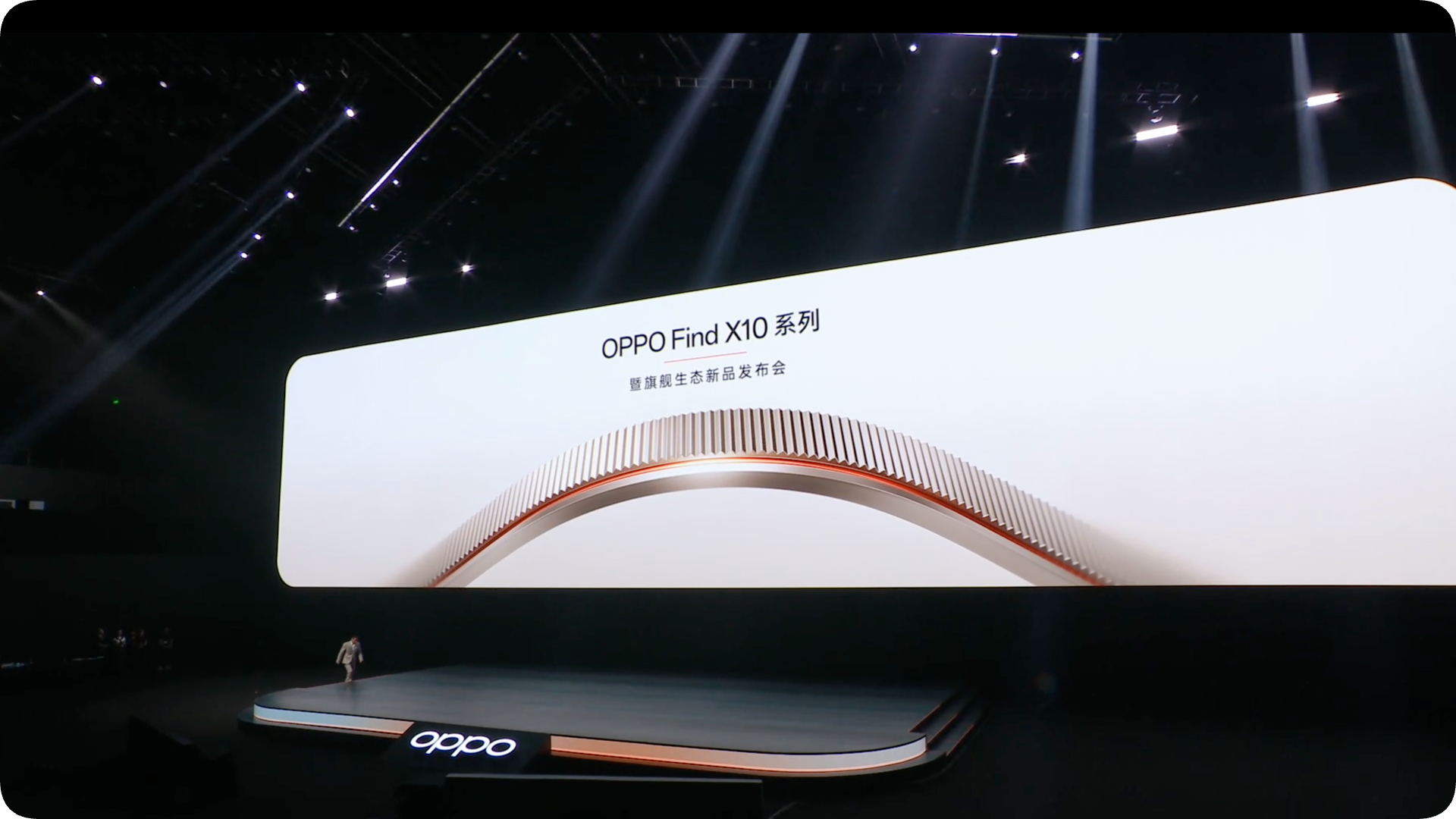
今晚登场的 OPPO Find X10 系列,展现出一种少见的产品线思路:

  • 过去常被作为溢价工具的双 2 亿高规格镜头群与 8000mAh 电池,被直接放进了标准版;
  • 而往上的 Pro Max,则干脆把主摄、超广角与长焦全部拉到 2 亿像素,并引入了 OpenGate 与专业视频附件生态;
  • 入门级的 Find X10 E 也保留了全 5000 万三摄与 7025mAh 电池。
Image

整场发布会的核心主线很清晰:OPPO 正在尝试打破产品线内部的规格层级,让标准版不再妥协,同时给专业视频创作者提供一台足够重度的生产力工具。

欢迎你阅读爱范儿对 Find X10 系列新机的深度评测;如果你只是想速览一下发布会内容,继续看下去。

Find X10 系列:把「原相机」重新做一遍

6799 元起,Find X10 Pro Max:三颗 2 亿,把三个焦段拉到同一条起跑线

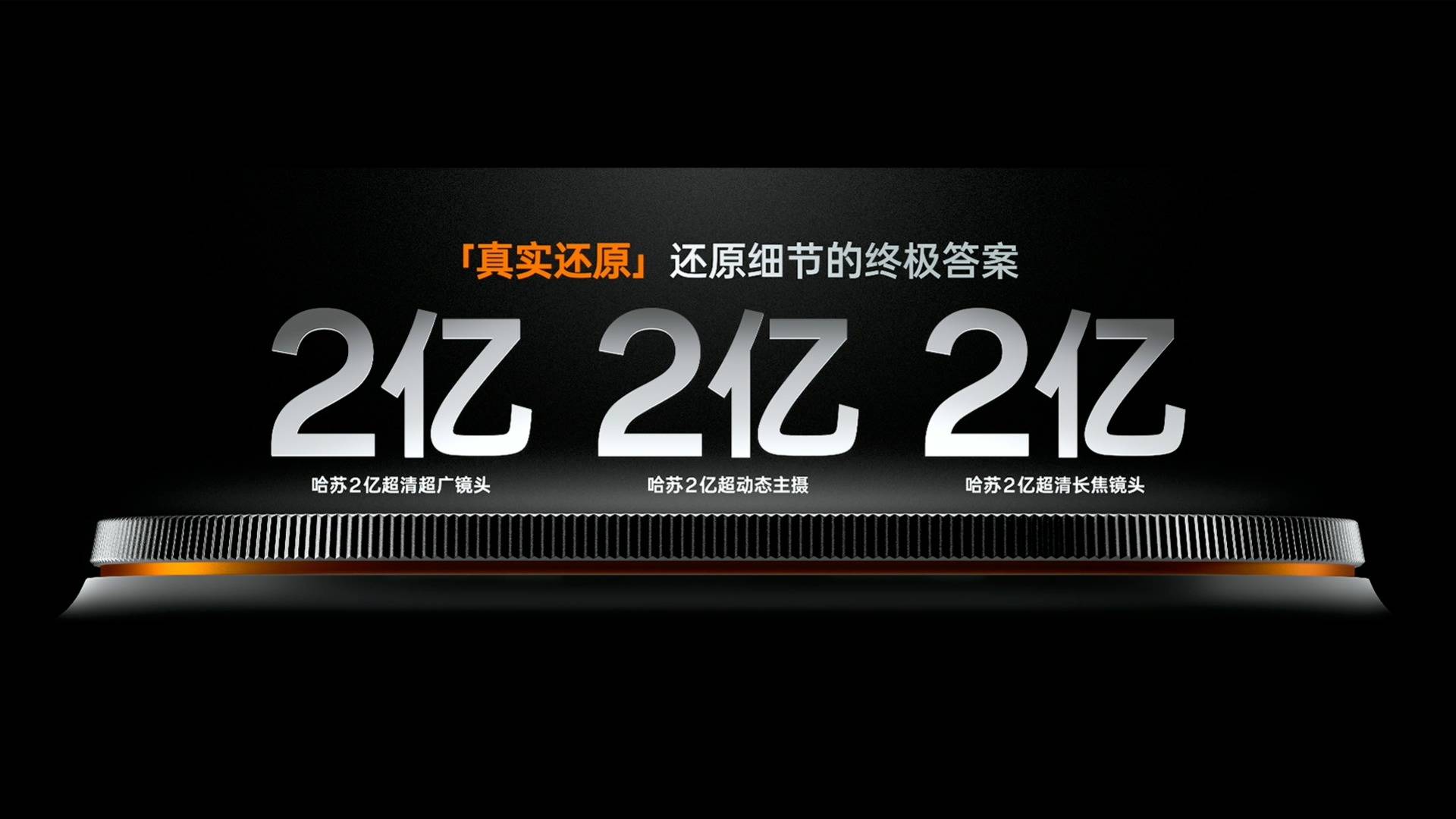
在影像系统上,Find X10 Pro Max 聚焦于全焦段画质与色彩的一致性。主摄、超广角与潜望长焦均配备 2 亿像素传感器,核心在于让不同焦段拥有高度统一的解析力、动态范围与色彩基准,保证变焦取景与实拍时的画面过渡平滑自然。

硬件规格上,Find X10 Pro Max 的核心看点是三颗后摄均达到了 2 亿像素级别:

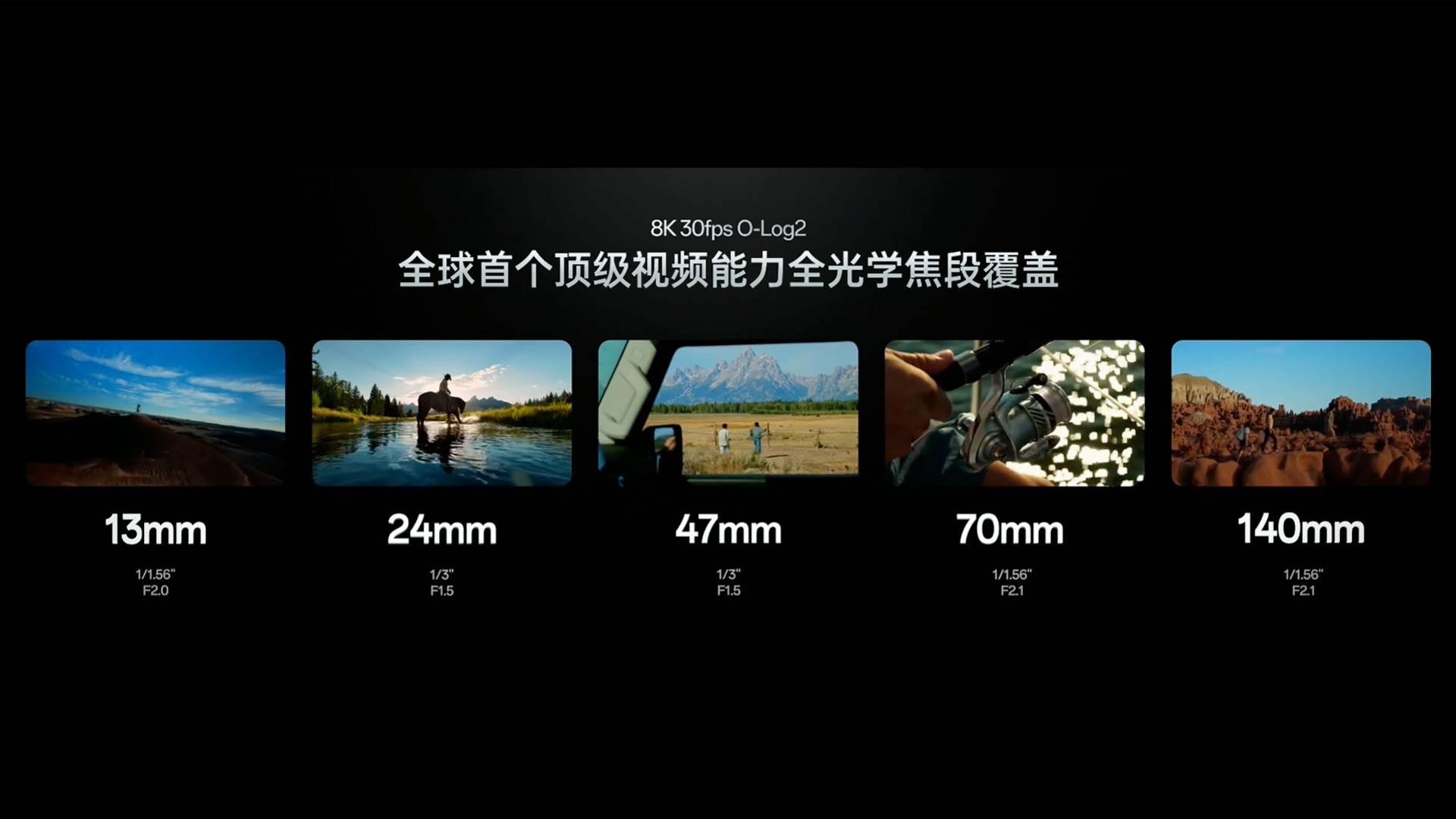
  • 2 亿哈苏超动态主摄:24mm 焦段(含 47mm 2× 裁切),三星 1/1.3 英寸大底,F1.5 超大光圈,首发 DeepPix 技术,标称最高 17 档高动态范围,CIPA 6.5 级 OIS 防抖;
  • 2 亿哈苏超清超广角:13mm 焦段(0.5×、124° 超广视角),1/1.56 英寸大底,F2.0 光圈,感光进光量提升至 202%,支持 4cm 广角微距;
  • 2 亿哈苏超清长焦:70mm 焦段(含 140mm 2× 裁切),1/1.56 英寸大底,F2.1 超大光圈,CIPA 7.5 级 OIS 防抖,支持 10cm 超近对焦长焦微距。

三摄硬件规格的拉平,主要解决变焦取景时的画质跳变,保证各焦段输出一致的原生细节与色彩风格。机身同样获得了 IP66、IP68 与 IP69 级防尘防水及瑞士 SGS 五星抗跌耐摔认证。
向左滑动查看更多内容

除了静态拍照,这一代更显著的转向是专业视频创作。

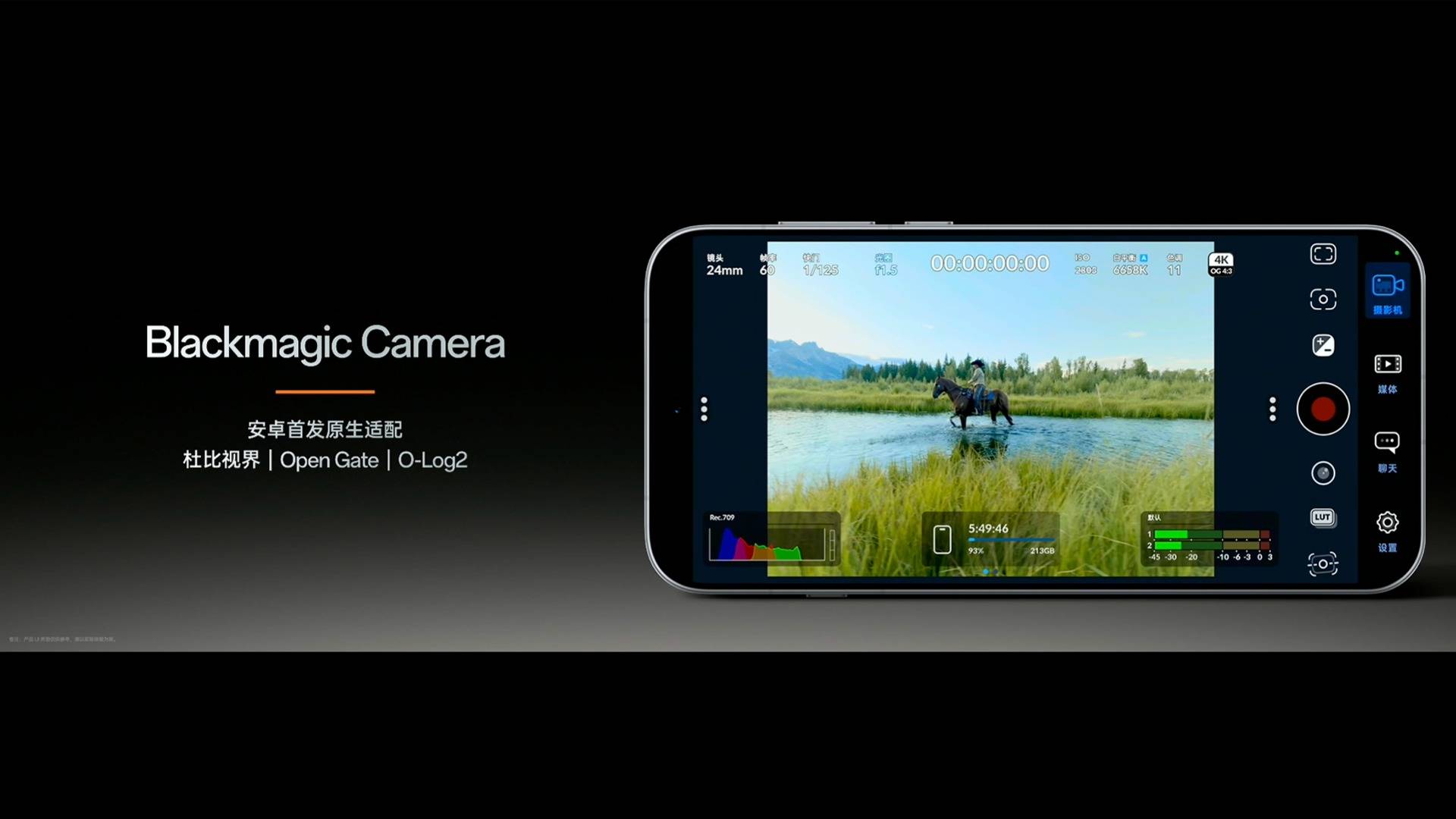
Find X10 Pro Max 实现了 13mm、24mm、47mm、70mm、140mm 五个核心光学与裁切焦段的顶级视频能力全覆盖,支持全焦段 8K 30fps 10-bit O-Log2 录制与三摄 OpenGate 片门全开,并成为安卓首个原生深度适配 Blackmagic Camera 的机型(支持杜比视界、OpenGate 与 O-Log2)。
向左滑动查看更多内容

围绕视频生态,OPPO 这次把周边配件与创作链路也一并搭齐:支持铁头(KHRONOS)摄影套件、新一代哈苏增距镜、ND 滤镜、跟焦手柄以及外置 SSD 录制,让手机能够更自如地融入轻量化视频拍摄工作流;

在日常分享端,也打通了小红书 2 亿像素超清原图直发。此外,针对出境差旅与户外采风,新机内置的「山海通信」支持全球 230 多个国家与地区频段,并提供出境三网三待能力。

从这一整套规格来看,Find X10 Pro Max 在影像硬件和专业工作流上几乎把料堆满了。三颗两亿大底、Log 调色与海量高码率素材的后期存储,显然更偏向高阶创作与重度拍摄场景。

而在高负载录制与多摄调度下,底层搭载的台积电 2nm N2P 制程天玑 9600 Pro 芯片,也能兜住长效能效与温控的底线。

售价方面,Find X10 Pro Max 提供四个存储版本:12GB+256GB 售价 6799 元,12GB+512GB 售价 7499 元,16GB+512GB 售价 7999 元,16GB+1TB 售价 8999 元。9 月 24 日 10:00 全面开售。

Image

5499 元起,Find X10:双 2 亿长焦与 8000mAh 电池下放到标准版

标准版 Find X10 并没有遵循传统「减配降本」的常规做法,反而承接了大量以往只属于大杯甚至超大杯的核心配置:

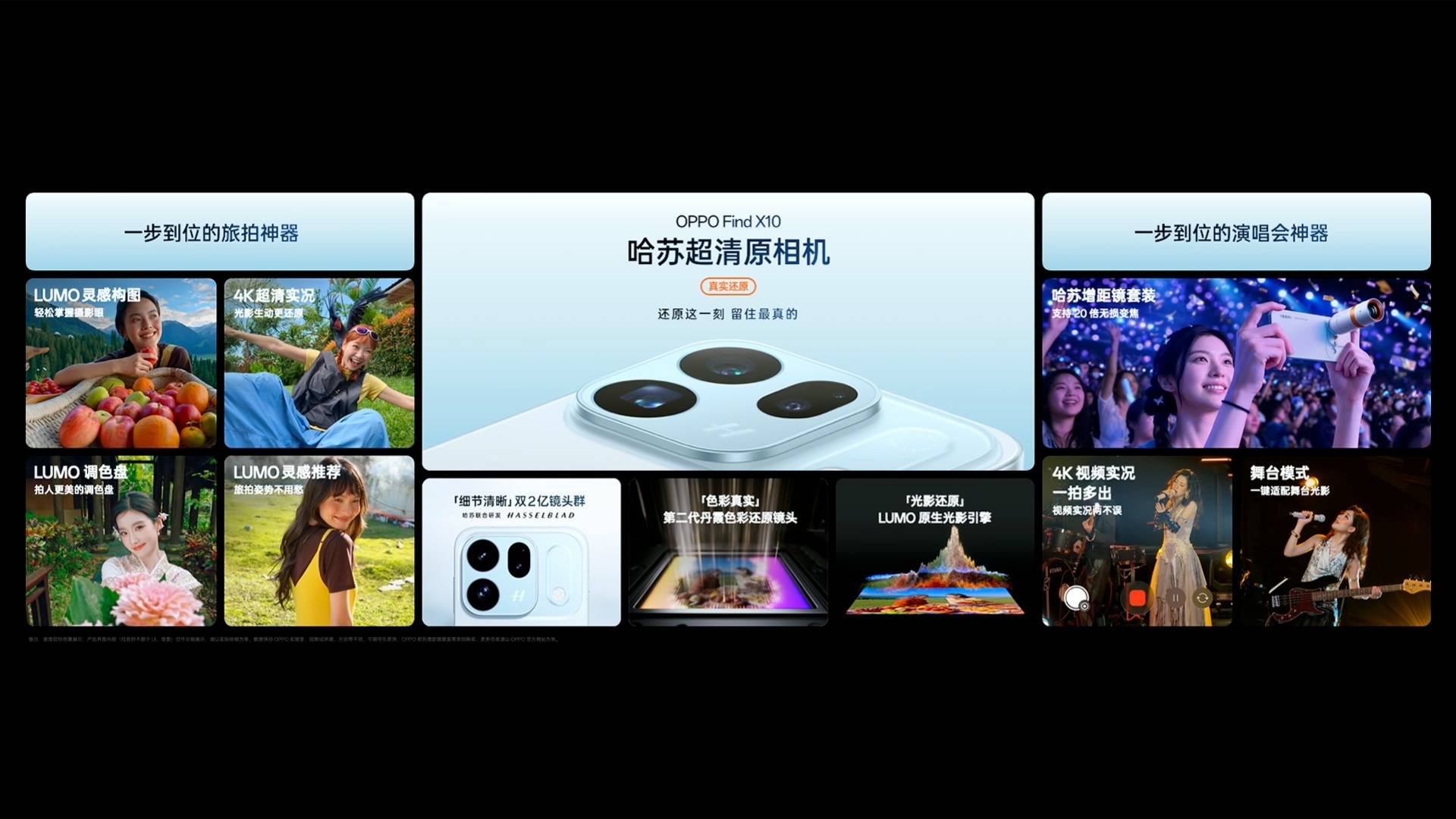
  • 双 2 亿镜头群:2 亿像素 F1.6 超大光圈主摄 + 2 亿像素 F2.6 潜望长焦(CIPA 7.0 级防抖),配合哈苏增距镜支持 20 倍无损变焦与 4K 视频实况同步录制;
  • 第二代丹霞色彩还原镜头:具备 24 光谱采样通道与 15 档高动态范围,在夜景、舞台与复杂室内光源下改善人像偏色与「吃妆」问题;
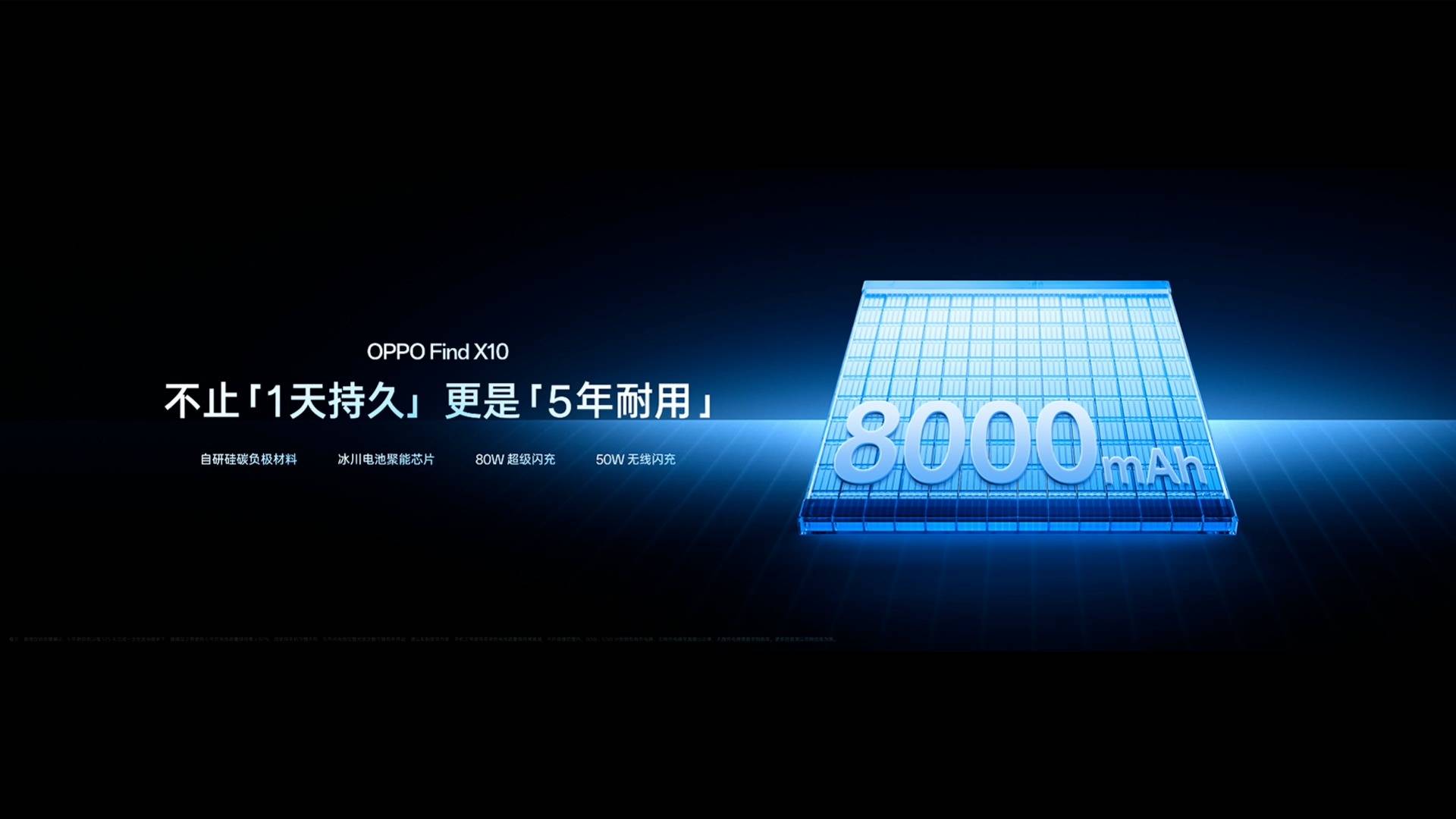
  • 性能与长续航底座:首发 4.21GHz 超高频天玑 9600M 芯片,塞入 8000mAh 冰川电池,支持 80W 有线快充与同级少有的 50W 无线闪充;
  • 正面视野与防护:正面配备 0.99mm 极窄四等边屏幕,整机支持 IP66、IP68 与 IP69 级防尘防水大满贯。

Image

外围规格同样给得较为扎实:首发 4.21GHz 超高频天玑 9600M 芯片,塞进了一块基于自研硅碳负极的 8000mAh 冰川电池,支持 80W 有线快充与同档少见的 50W 无线闪充,并配齐了 IP66、IP68 与 IP69 级防尘防水。屏幕正面则采用 0.99mm 极窄四等边设计,配合哈苏增距镜可实现 20 倍无损变焦与 4K 视频实况同步录制。
向左滑动查看更多内容

在同价位竞品普遍精简潜望长焦规格或缩减电池的背景下,Find X10 标准版呈现出极高的配置完整度。不过,大底长焦与大容量电池的加入,也必然会对机身厚度和握持手感带来一定挑战。

售价方面,Find X10 12GB+256GB 售价 5499 元,12GB+512GB 售价 5999 元,16GB+512GB 售价 6499 元,16GB+1TB 售价 7499 元。

同场发布的全新 OPPO 哈苏增距镜套装售价为 1099 元(兼容标准版与 Pro Max,内含增距镜、保护套、转接环与手机半托支架)。两款产品均将于 9 月 24 日 10:00 全面开售。
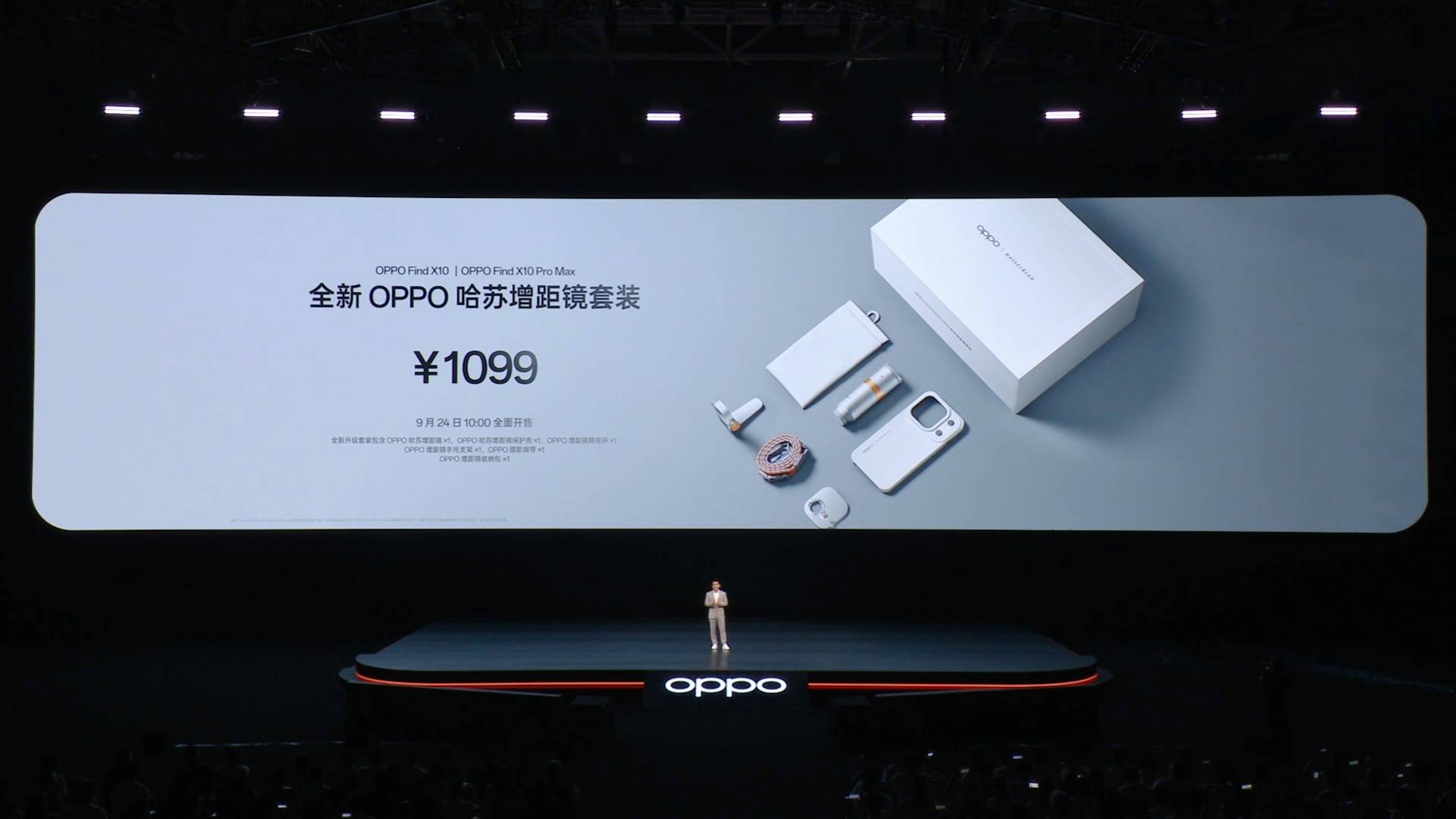
向左滑动查看更多内容

4999 元起,Find X10 E:全焦段 5000 万三摄与 7025mAh 探路入门旗舰

首次出现在正代序列中的 Find X10 E,官方定位为「入门影像旗舰」。并没有像外界此前担忧的那样大幅缩水,核心配置依然在线:

  • 全 5000 万三摄镜头群:5000 万大底主摄 + 5000 万潜望长焦 + 5000 万大光圈超广角,支持专业哈苏人像与 16 款风格的 LUMO 调色盘(含专属肤色保护);
  • 续航与耐用防护:塞入 7025mAh 冰川电池(标称 22 小时在线短视频播放),同时保留了 IP66、IP68 与 IP69 级防尘防水大满贯;
  • 护眼屏与系统:配备通过莱茵金标护眼认证的明眸护眼屏,出厂搭载 ColorOS 17,具备 6 年久用流畅保证。

售价方面,Find X10 E 12GB+256GB 售价 4999 元,16GB+512GB 售价 5499 元。9 月 24 日 10:00 全面开售。作为全系列起售价最低的机型,它成功将潜望长焦、大容量冰川电池与高等级防护压缩进了 5000 元以内的价位带。


向左滑动查看更多内容

新一代明眸护眼屏:把护眼思路从调光频率推向发光材料

全系搭载的新一代护眼屏配备 2768 × 1272 分辨率、144Hz 刷新率、3840Hz 高频 PWM 调光与 1nit 极暗光显示。更重要的变化在于底层材料:屏幕首发新一代原色光谱发光材料,覆盖 95% BT.2020 超广色域(色域面积较 DCI-P3 提升 40%)。
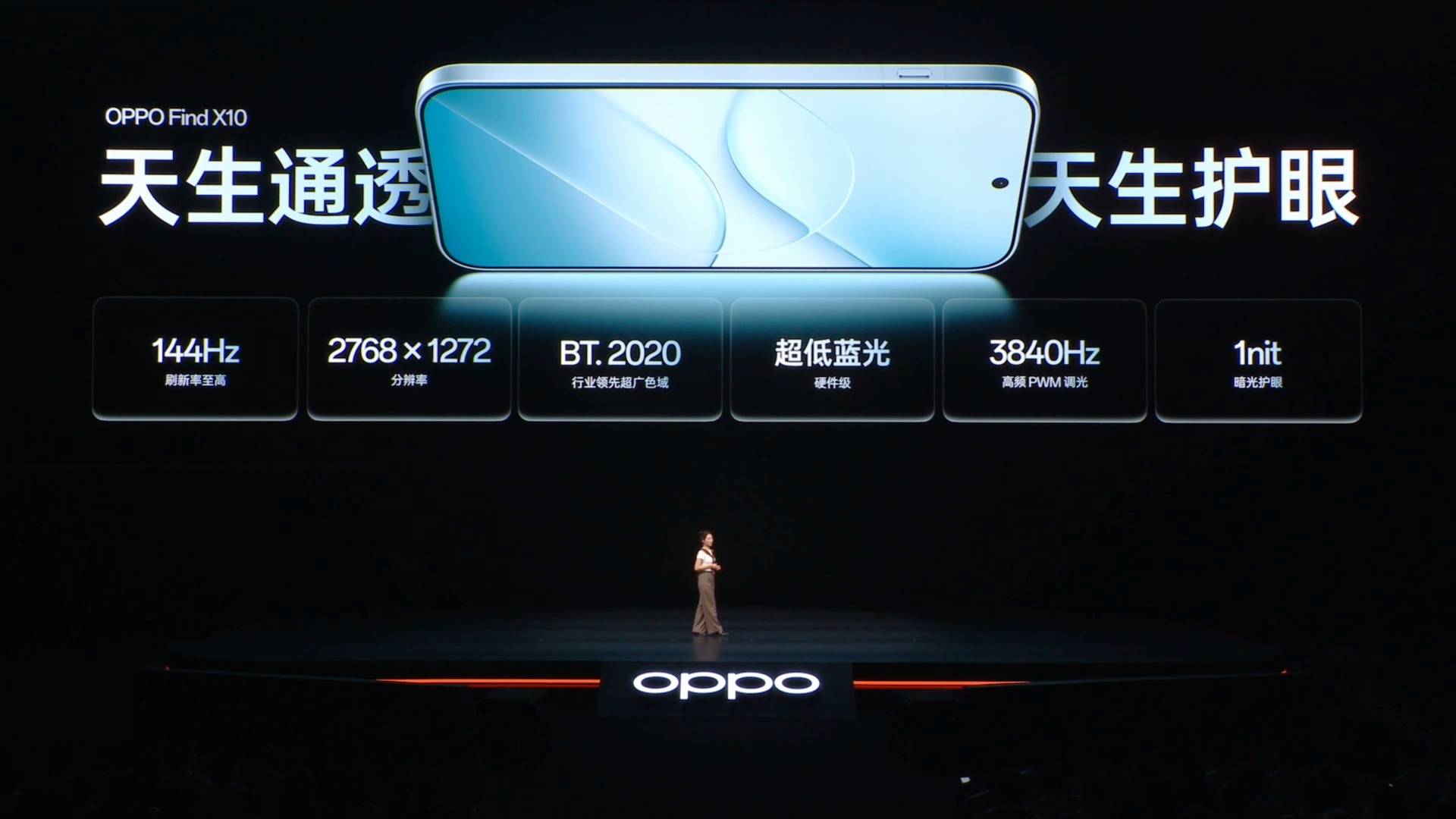

2026-09-22 13:24:35 · 算力芯片,Agent智能体,设计创意,金融,强化学习,微调蒸馏,模型评测,图神经网络,AI for Science,招聘HR,模型发布,财报,榜单评测

涨价 9 万?岚图梦想家 9 凭什么敢卖 41.99 万元

爱范儿

2022 年 5 月,第一代梦想家上市的时候,高端 MPV 市场还是另一副样子。

那时 GL8 依然是这个市场绕不开的名字,赛那刚刚国产不久,新能源 MPV 几乎还是一片空白。梦想家带着相当高的规格进入市场,起售价 36.99 万元。

以今天的眼光回头看,那款车的车机、智能驾驶和补能体验都有明显的时代局限,一些细节也还留着传统车企造 MPV 的思路,但放在 2022 年,它已经是一台竞争力很强的产品。

四年过去,新能源 MPV 已经成了国内高端车市场竞争最激烈的品类之一。后来者越来越多,空间、舒适、智能化、补能和底盘都被重新卷了一遍,梦想家也在一次次改款中,把早期留下的问题逐渐补齐。

今晚,梦想家 9 正式上市,售价为 41.99 万-52.99 万元。相比四年前,它在智能化、三电、座舱和底盘上都已经跨过了不止一个阶段。

第一代梦想家吃到了新能源 MPV 起步早的红利,而走到今天,它的竞争力已经更多来自产品本身。对岚图来说,梦想家也早已不只是一款销量不错的车型,而是目前整个品牌最成熟、最有分量的一块招牌。

把「旗舰感」做得更具体

梦想家 9 没有另起炉灶,依然是一眼梦想家,车身尺寸也基本没有变化,长宽高为 5325/1998/1823mm,轴距还是 3200mm。

外饰设计上,岚图保留了直瀑式格栅、双色车身这些我们熟悉的元素,同时增加了可升降的发光立标以及来自华为的 XPIXEL 双百万像素智慧投影大灯,整车的豪华取向比以前更明显。
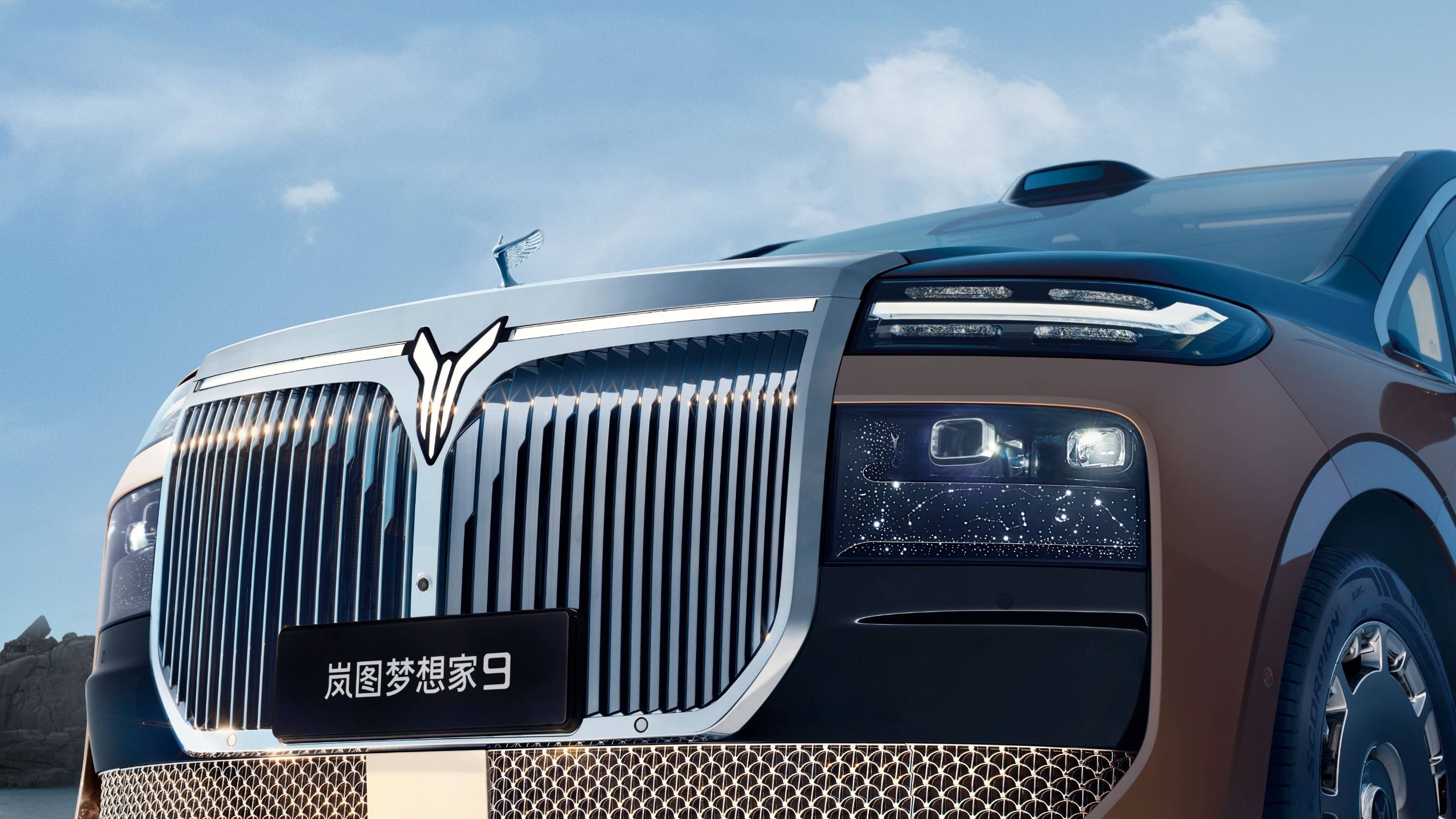
梦想家一直都不缺体量感,只是设计上相对保守,到了梦想家 9,可升降立标、投影大灯这些带有仪式感的配置,开始承担一部分豪华感的表达。

车内的许多升级也落在了质感和细节上,材质搭配比过去要讲究不少,多处新增了真木与铝合金材质,连后排娱乐屏的背面都有麂皮包覆。
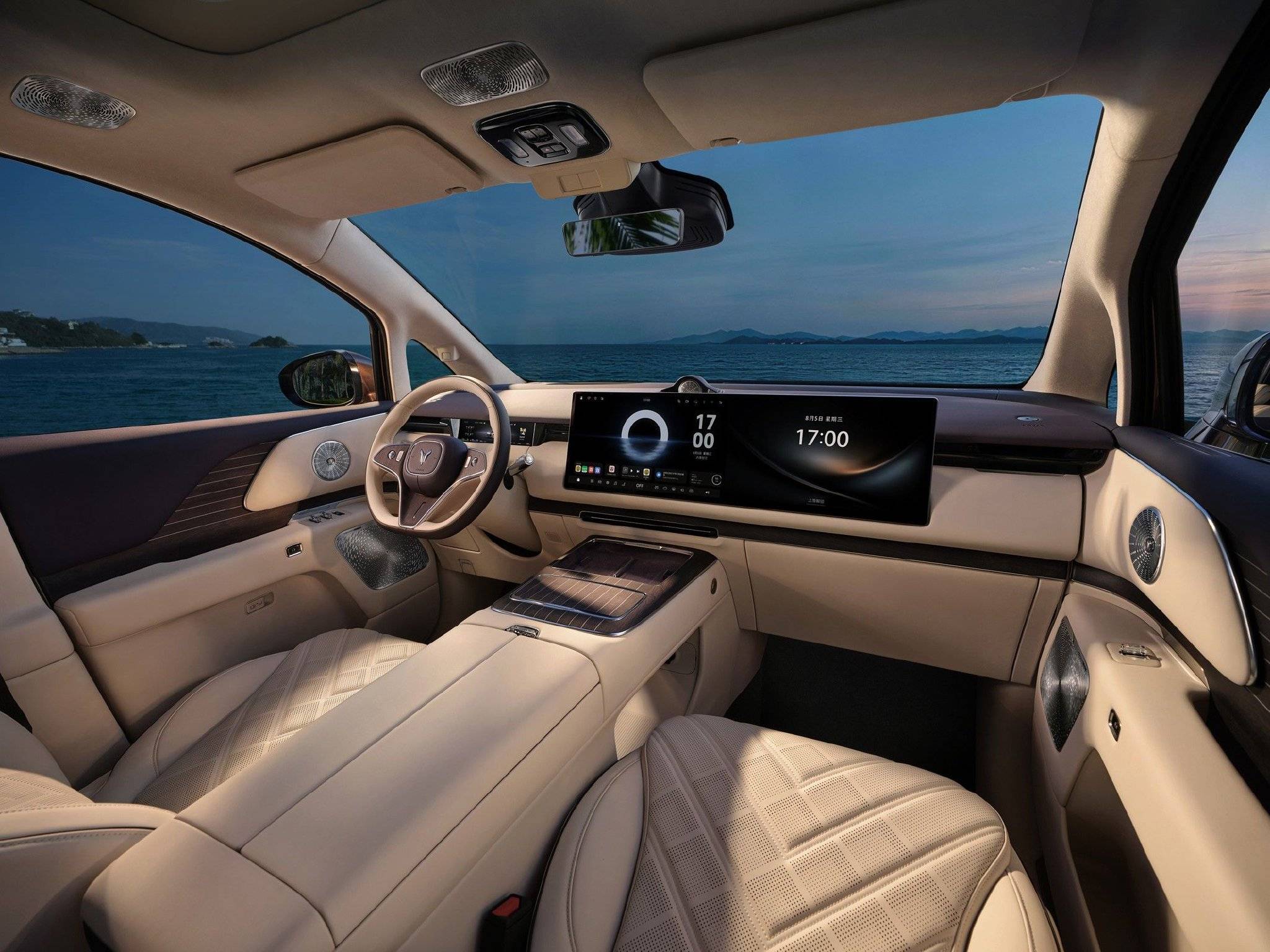
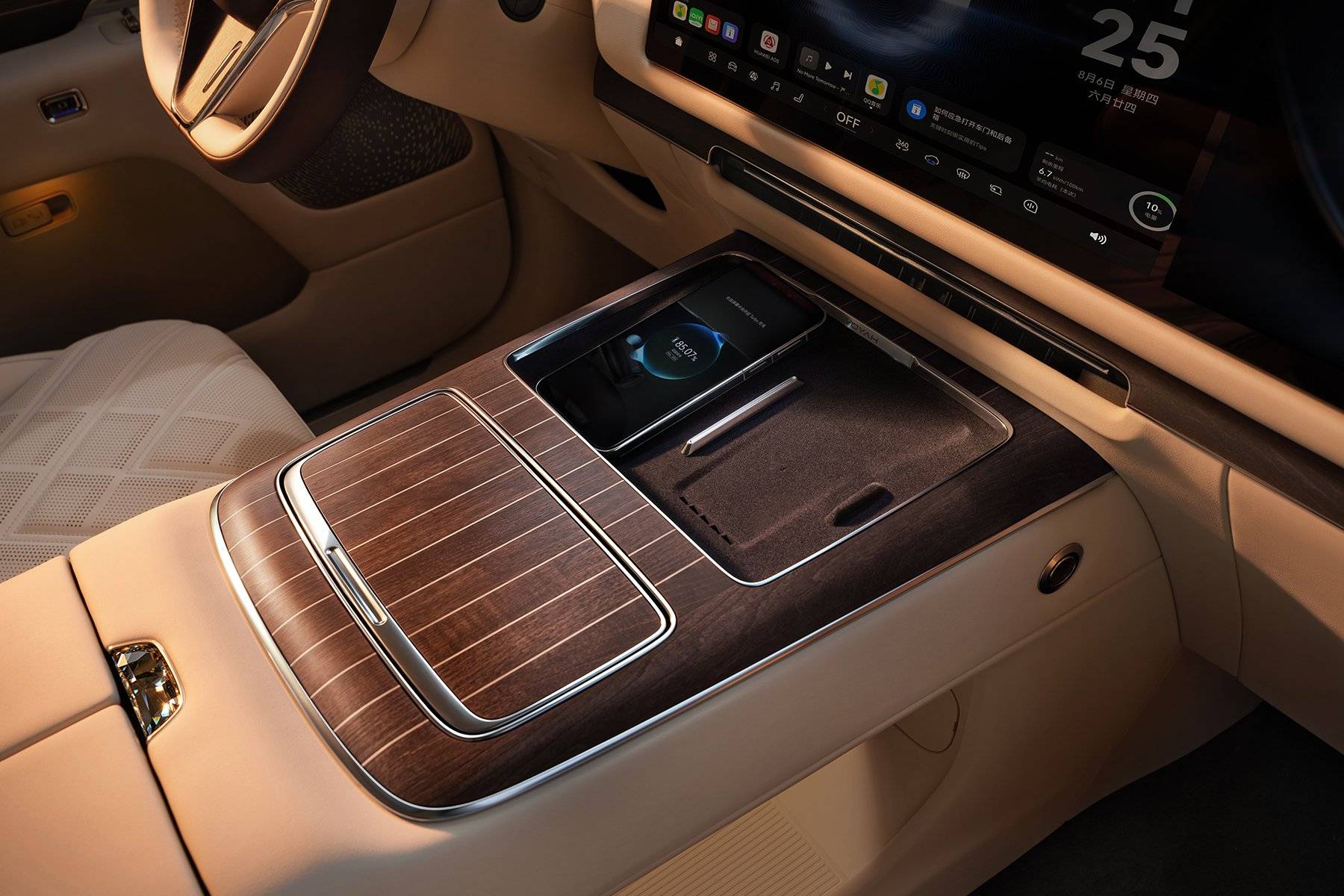
豪华配置自然也有所加码,梦想家 9 的二排座椅在原有的通风、加热、按摩等功能之外,还增加了颈部按摩这一罕见配置。用起来也很方便,所有的功能都可以扶手上的可拆卸屏幕里找到,包括新加入的隐私调光玻璃。

另外,二排座椅本身也有进一步调整,除了常规的通风、加热、按摩和腿托,还新增了对于横向移动和多角度旋转的支持,车内布局不再完全固定在传统的 2+2+3 模式。

辅助驾驶上,岚图宣称梦想家 9 全系基于全域 L3 级架构打造,全车一共布置了 37 个传感器,包括一颗 896 线双光路激光雷达和 3 颗固态补盲雷达,软件上用的依旧是华为乾崑智驾 ADS 5。

毫无疑问,座舱和辅助驾驶都换成华为之后,智能化已经不再是梦想家容易吃亏的一环。

动力上,插混车型配备 65kWh 电池和 5C 快充,从 20% 充至 80% 只要 12 分钟;纯电车型采用 800V 高压平台,120kWh 电池带来了 701km 的 CLTC 续航。

底盘也是梦想家 9 升级幅度比较大的部分,它的虎踞 P 底盘采用前双叉臂、后五连杆悬架,全系配备双向 10° 后轮转向,最小转弯半径 5.9 米。

更值得关注的地方在于,梦想家 9 搭载了中国品牌唯一的三腔空气悬架,还配备双阀 EDC 减振器和 VMC 底盘控制系统。

据岚图介绍,VMC 智能运动控制系统负责统一协调动力、制动、转向和悬架,三腔空气悬架负责调整支撑和刚度,双阀 EDC 则控制悬架的压缩与回弹阻尼,三者之间相互配合,为梦想家 9 带来更舒适的驾乘感受。

另外,类似的协同也被用到了日常场景中。例如,停车后空气悬架可以主动降低车身,同时二排座椅会向外旋转 45°,来降低老人和孩子上下车的难度。

这次底盘上的升级还蛮符合梦想家一直以来的路线,机械素质这一块,从来都不是岚图的短板。

梦想家没有停在 2022

尽管岚图不愿意承认,但梦想家算是他们唯一称得上的「成功」的车型,而它的成功,很大程度上与其较早的入场时机有关。

2022 年上市时,新能源 MPV 还没有形成今天这么激烈的竞争格局,梦想家靠着电四驱、空气悬架、CDC 等高规格硬件,很快建立起了市场认知。到了 2023 年,梦想家全年销量已经超过 2 万辆;2024 年完成新一轮改款后,单月交付首次突破 1 万辆;今年 3 月,第 20 万辆梦想家正式下线。
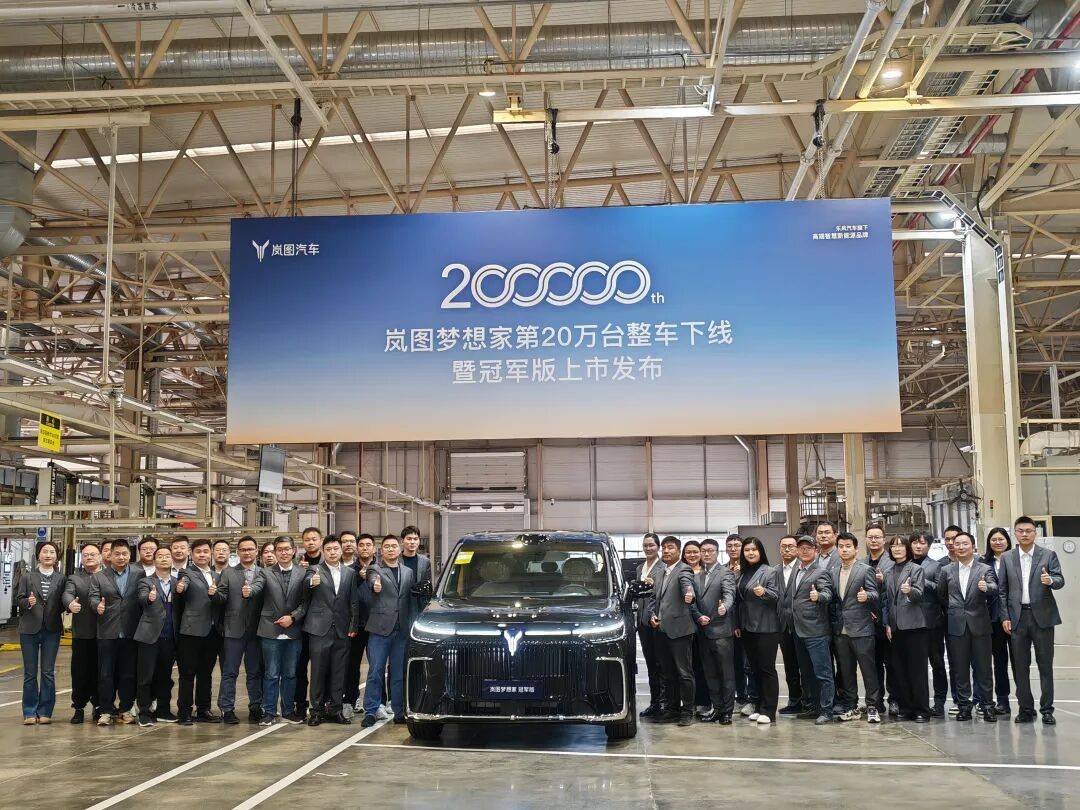
梦想家销量爬升最快的阶段,恰好也是其产品体验变化最大的一段时间。

第一代梦想家想要取得优势并不难,当时的 MPV 基本只强调空间和商务属性,梦想家却给了一套提升明显的底盘,动力性能也远高于同一时期的燃油 MPV。

但在初代梦想家身上,我们也能看到很浓的传统车企痕迹,8155 芯片已经装了上去,但车机的流畅度、生态和交互逻辑仍然谈不上出色;辅助驾驶也有,但和后来迅速成熟起来的城市 NOA 相比,完全属于上一阶段的产品。
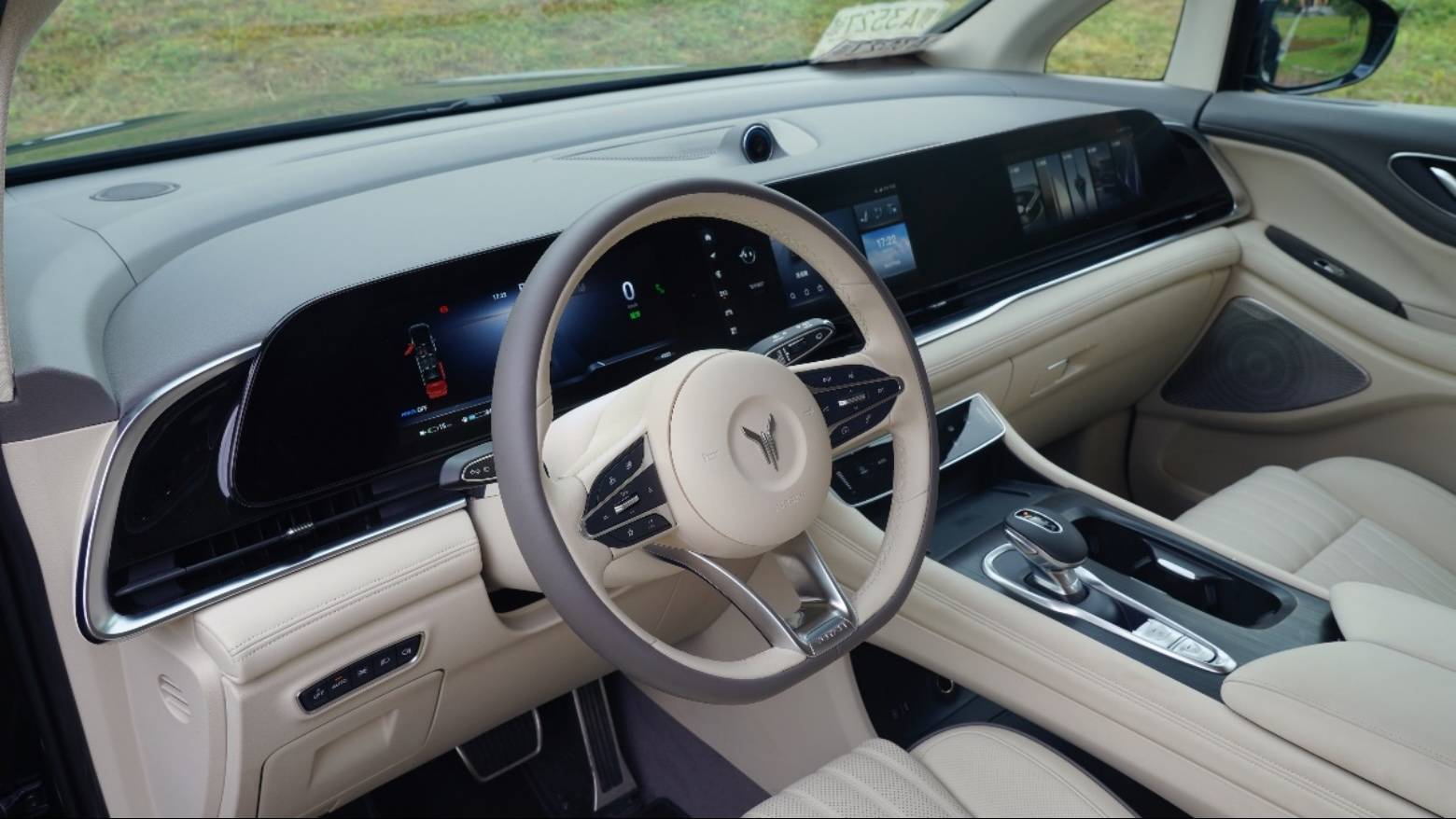
所以梦想家后来的几次升级,有着明显提升的都是这些相对薄弱的地方。

2024 年是一个很关键的节点,那一次年款升级,岚图为梦想家引入了华为乾崑 ADS 3 和鸿蒙座舱,城市 NOA 以及座舱生态迅速补上,智能化终于从梦想家的弱项变成了能正常参与同级竞争的一部分。

从市场反馈看,梦想家的销量也明显在改款后上了一个台阶,连续两个月拿到了新能源 MPV 销量冠军,单月交付也在这时突破 1 万辆。

到了 2026 款,梦想家升级的重点又从智能化扩展到了三电和车辆本身,插混车型的纯电续航提升到了 350km,还加入了 5C 快充和双向 10° 后轮转向,软件上同步升级到 ADS 4 和鸿蒙座舱 5。过去梦想家需要车主接受的几项妥协,到这一阶段已经所剩不多。

这几年的变化也能看出梦想家一个比较鲜明的特点,它不会为了改款而推翻上一代车型,更多是在原有基础上处理已经暴露出来的问题。

这样的策略听起来比较常规,但其难点在于,它的每一轮升级都得跟上市场变化。

在过去四年里,新能源 MPV 变化得太快,腾势 D9、极氪 009、理想 MEGA 陆续入场,过去可以拿来当卖点的配置,可能两年之后就成了基本要求。梦想家能够一直留在主流市场,很大一部分原因就在于它没有「吃老本」。

如今到了梦想家 9,岚图换了一种打法,开始尝试冲击更高的价格带。岚图之所以有勇气这样做,是因为他们发现用户对于高配车型的接受度比想象中更强。

2026 款梦想家上市初期,尽管起售价低至 32.99 万元,但 42.99 万元的乾崑 Ultra 版一度占到订单的一半以上,单车均价来到了 40 万元,这便让岚图有了继续往上的底气。

梦想家 9 在名字里加上「9」,对应的就是更高的产品定位和价格。

对于岚图来说,梦想家是最适合承担这个任务的车型。它有现成的销量基础,相比重新做一款旗舰车型,从梦想家身上继续往上推显然更稳妥。
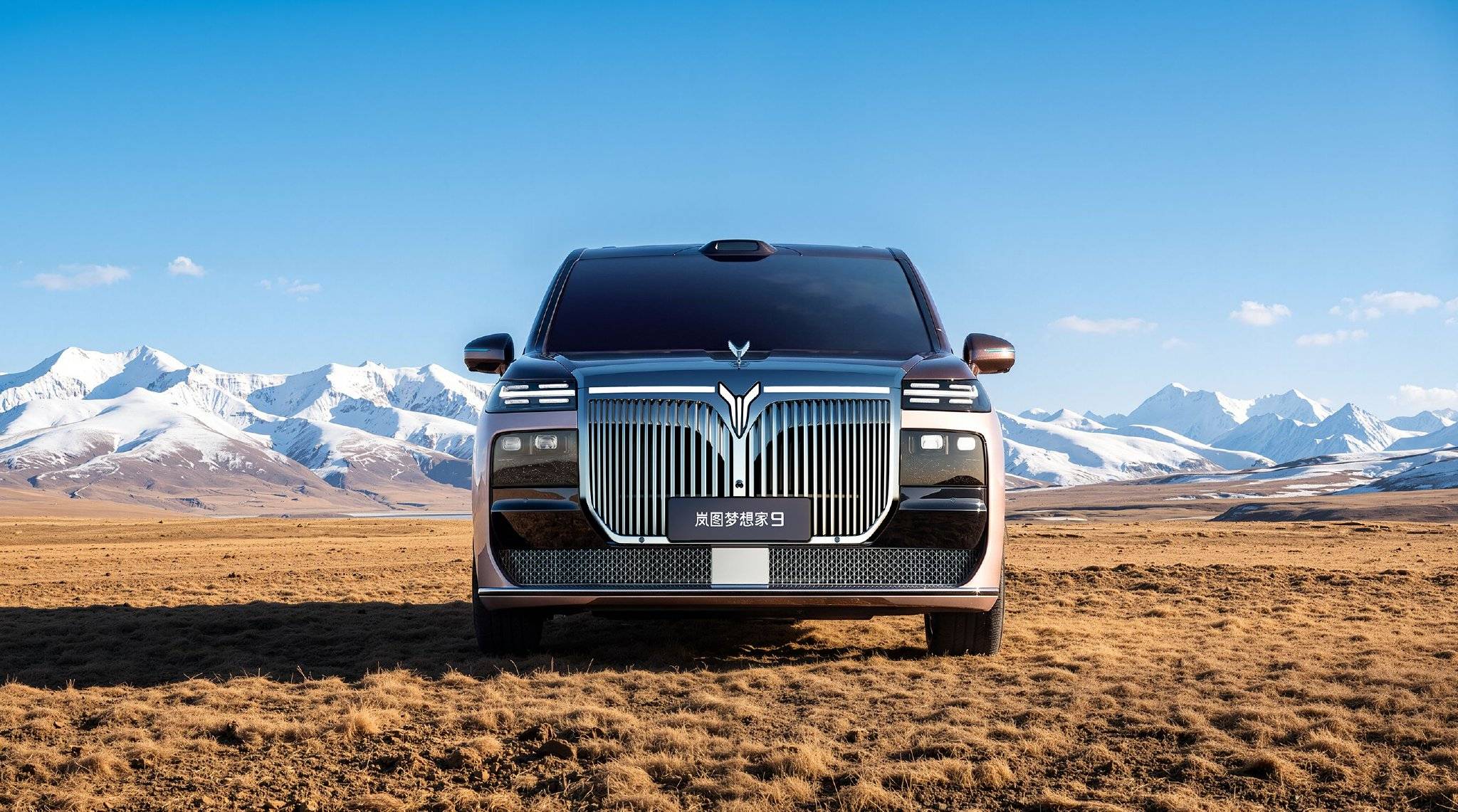
更关键的是,岚图过去几年的问题一直不是做不出高规格的车,而是品牌本身始终没有跟上产品。梦想家已经是少数能够反过来给岚图抬高品牌认知的车型。

如果连梦想家都带不动岚图往上走,那岚图短期内恐怕也很难再找到第二款更合适的车。

带轮子的都关注,欢迎交流。 邮箱:tanjiewen@ifanr.com

#欢迎关注爱范儿官方微信公众号:爱范儿(微信号:ifanr),更多精彩内容第一时间为您奉上。

2026-09-22 13:47:50 · 算力芯片,自动驾驶,华为,设计创意,图神经网络,招聘HR,产品更新,榜单评测

10.99 万元起!日产新 N7 这次是真加量还降价

爱范儿

去年 4 月,东风日产 N7 带着 11.99 万元起的价格进入市场时,一度成为合资新能源阵营里颇受关注的一款车。它的空间够大、座椅够舒服,再加上当时不算落后的智能座舱和辅助驾驶配置,让它很快积累了一批订单,月销成功破万。

如今一年多过去,N7 迎来了首次年度改款。

今晚,新 N7 正式上市,共推出 5 款车型,全系限时权益价 10.99 万元起。
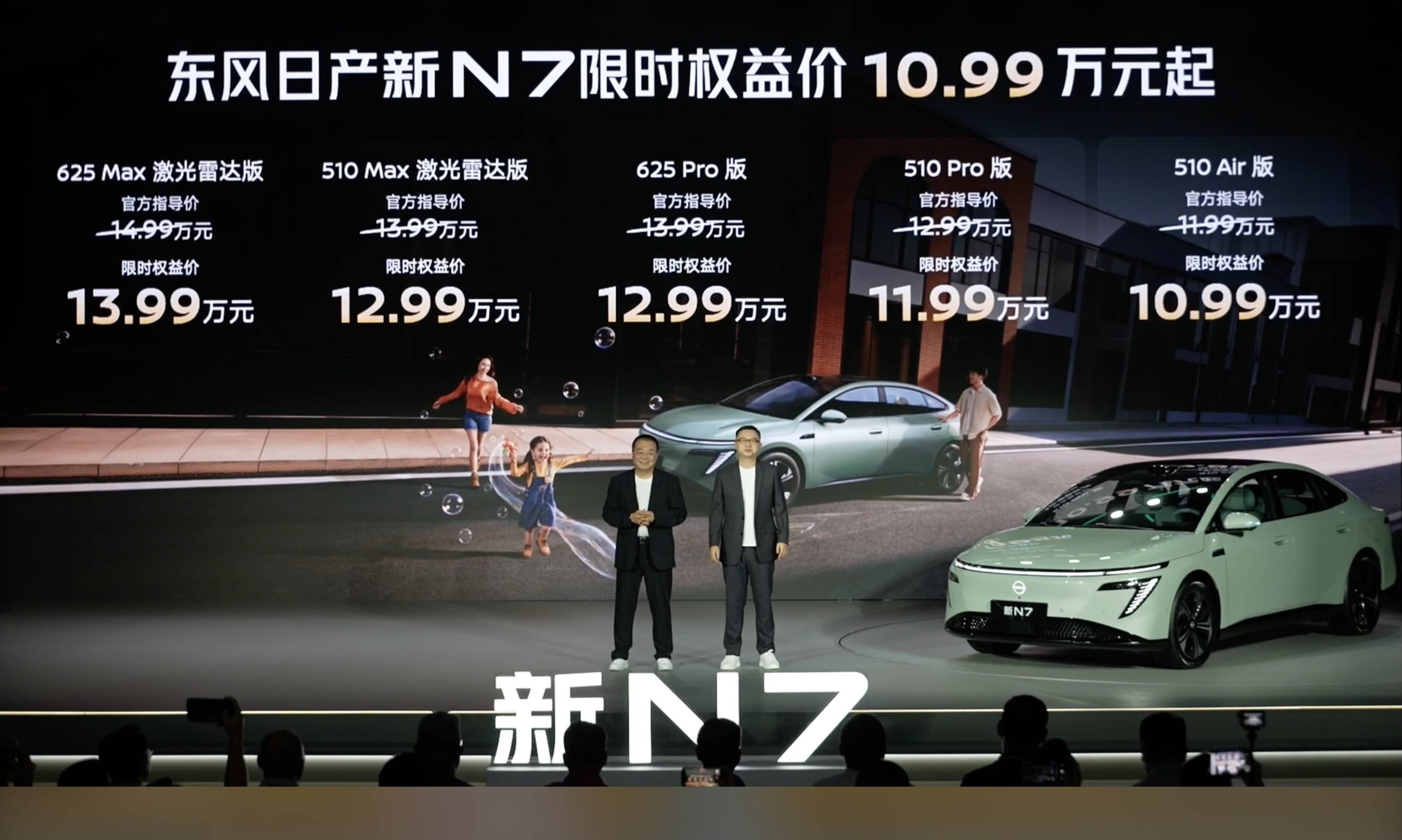
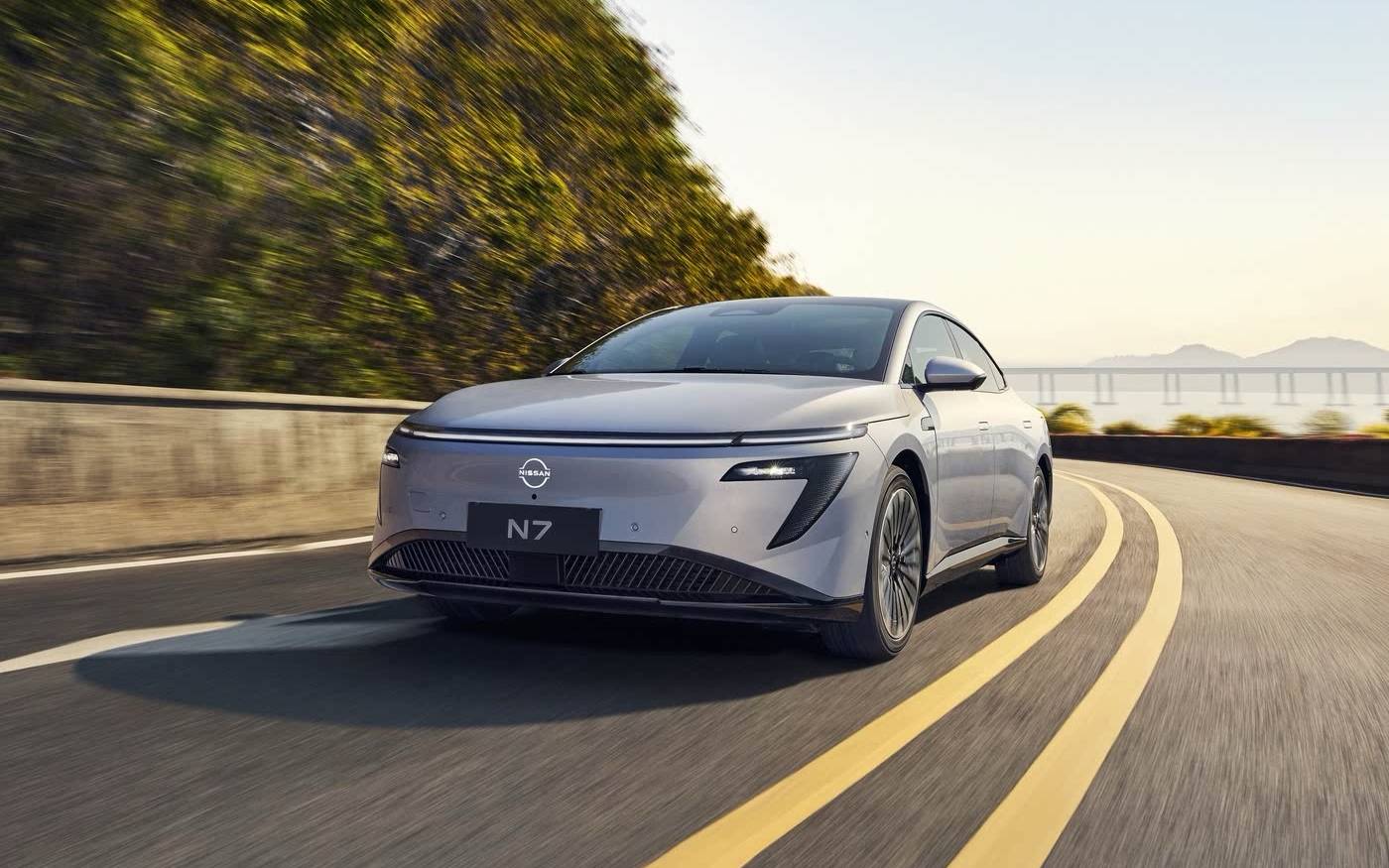
从产品本身来看,新 N7 没有大幅调整原有设计,依旧是封闭式 V-motion 前脸+贯穿式灯带,车长还是 4930mm,轴距 2915mm。

比较容易辨认新老车型的地方,在于车顶新增的激光雷达、半隐藏式的门把手,以及新漆色「青柑」。
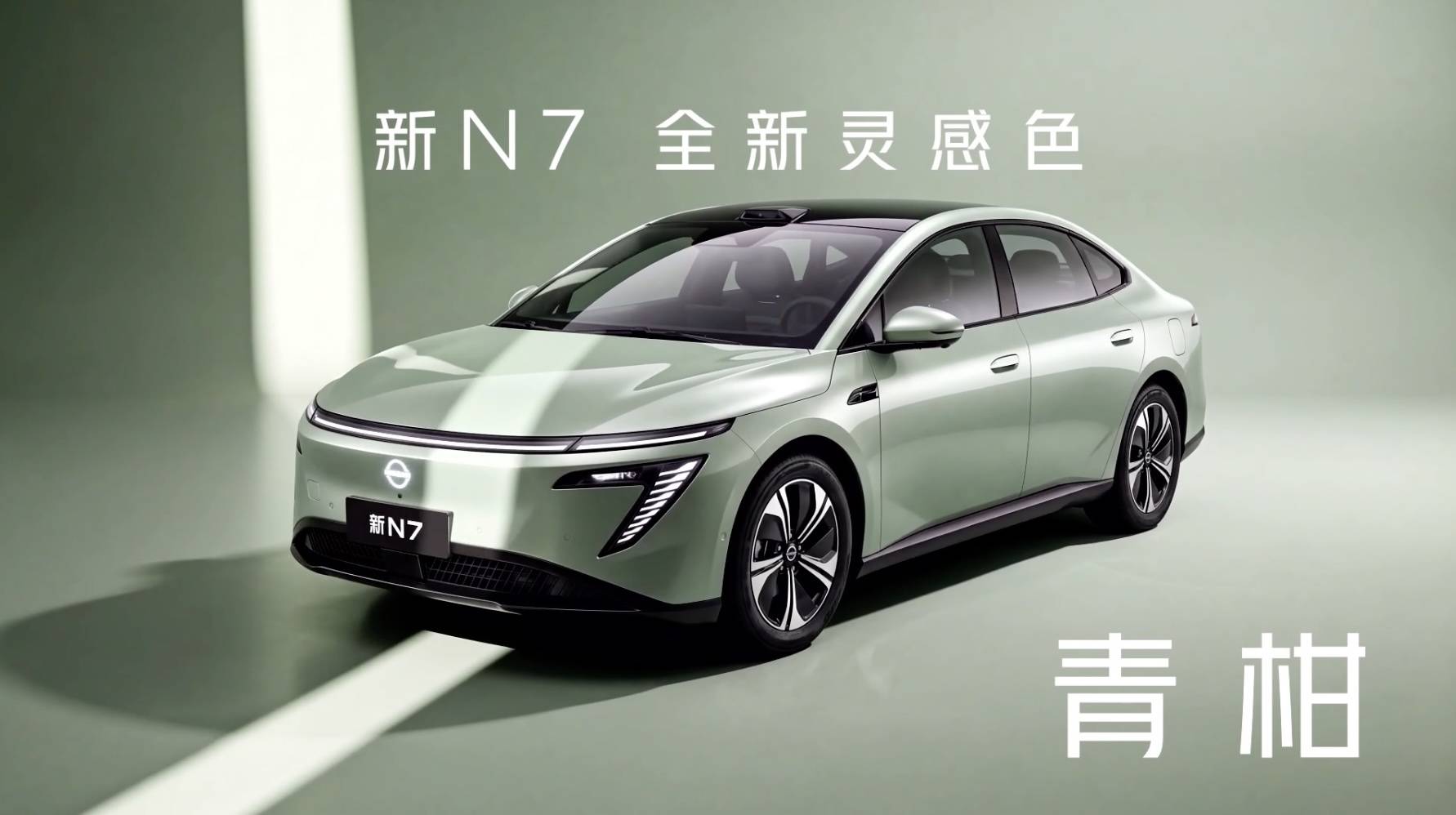
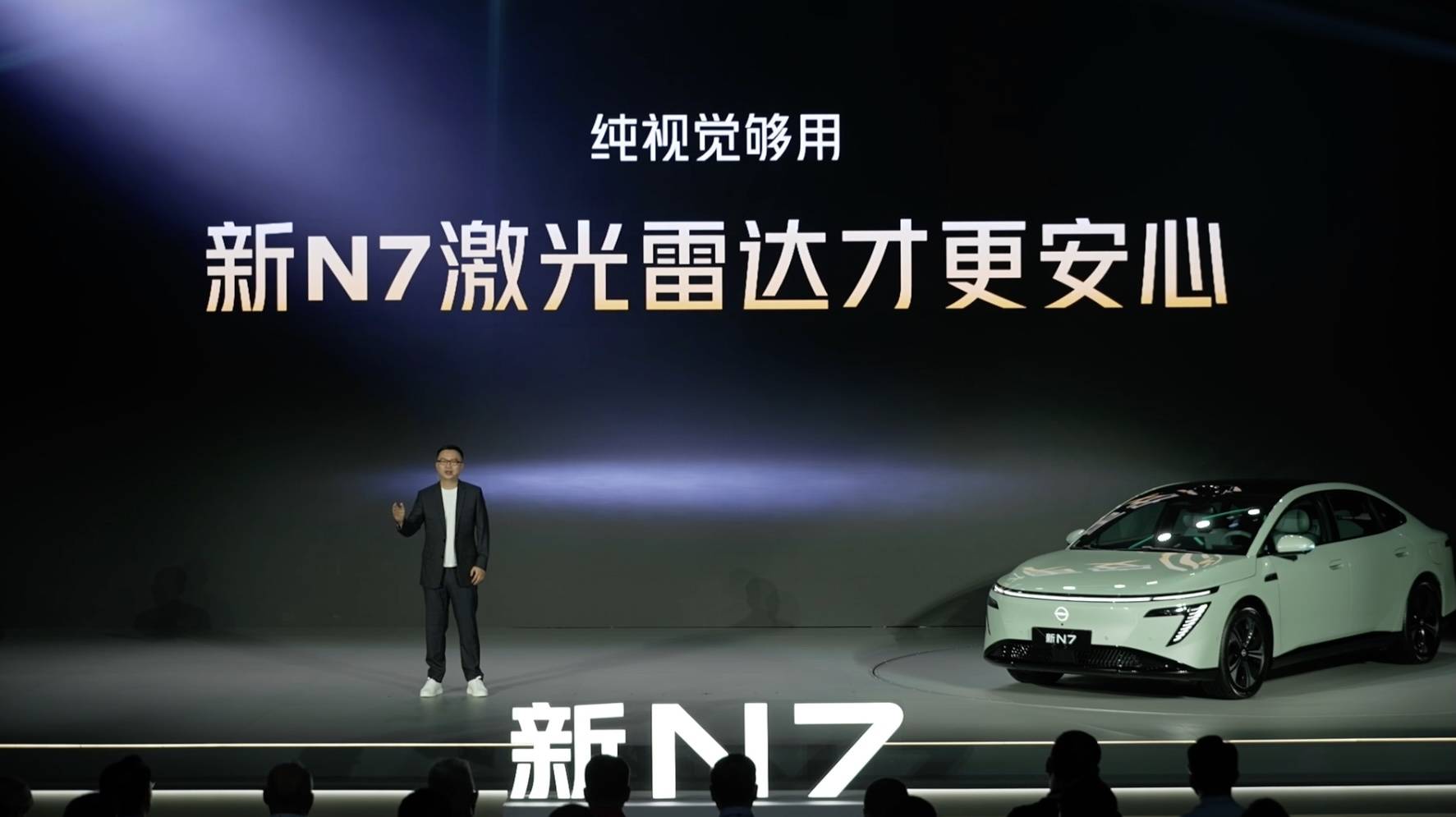
看到车顶那个激光雷达,我们大概就能猜到新 N7 最大的升级在于辅助驾驶。

除了一颗中长距激光雷达,新 N7 还配备了高通骁龙 8650P 芯片和 29 个高感知传感器。
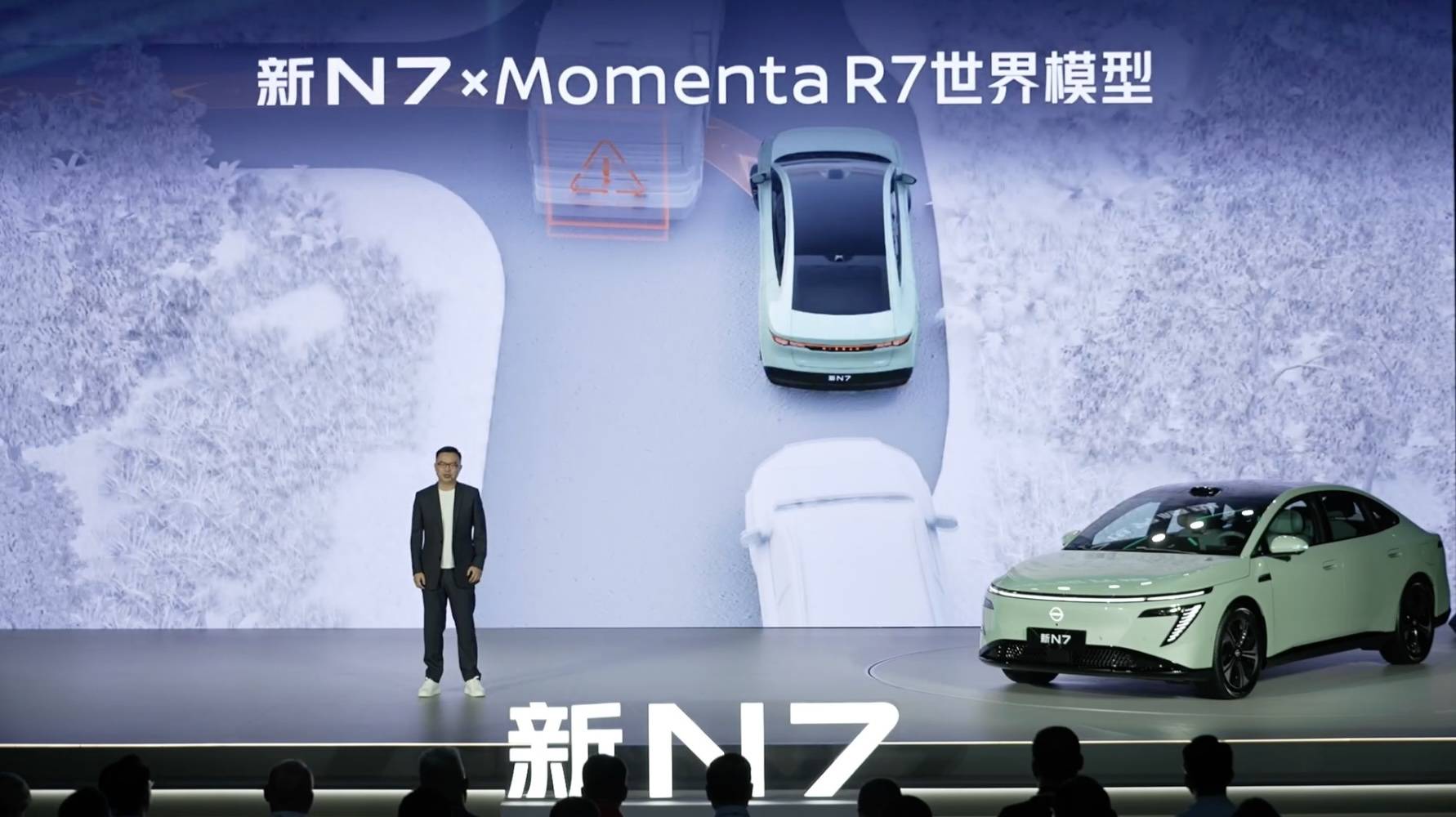
按照东风日产在发布会上公布的节奏,新 N7 最快将在今年年底通过 OTA 升级 Momenta R7 世界模型,无论是城区、高速,还是乡村小路,都支持车位到车位的辅助驾驶,以及无导航的漫游。
泊车是这次辅助驾驶升级的另一块重点,新 N7 号称支持超过 300 种泊车场景,常规泊车的一把入库率超过 90%。

与此同时,东风日产还为新 N7 带来了全域智能防晕车 3.0 和 AES 自动紧急转向,加减速更加细腻,主动安全能力也要更强。
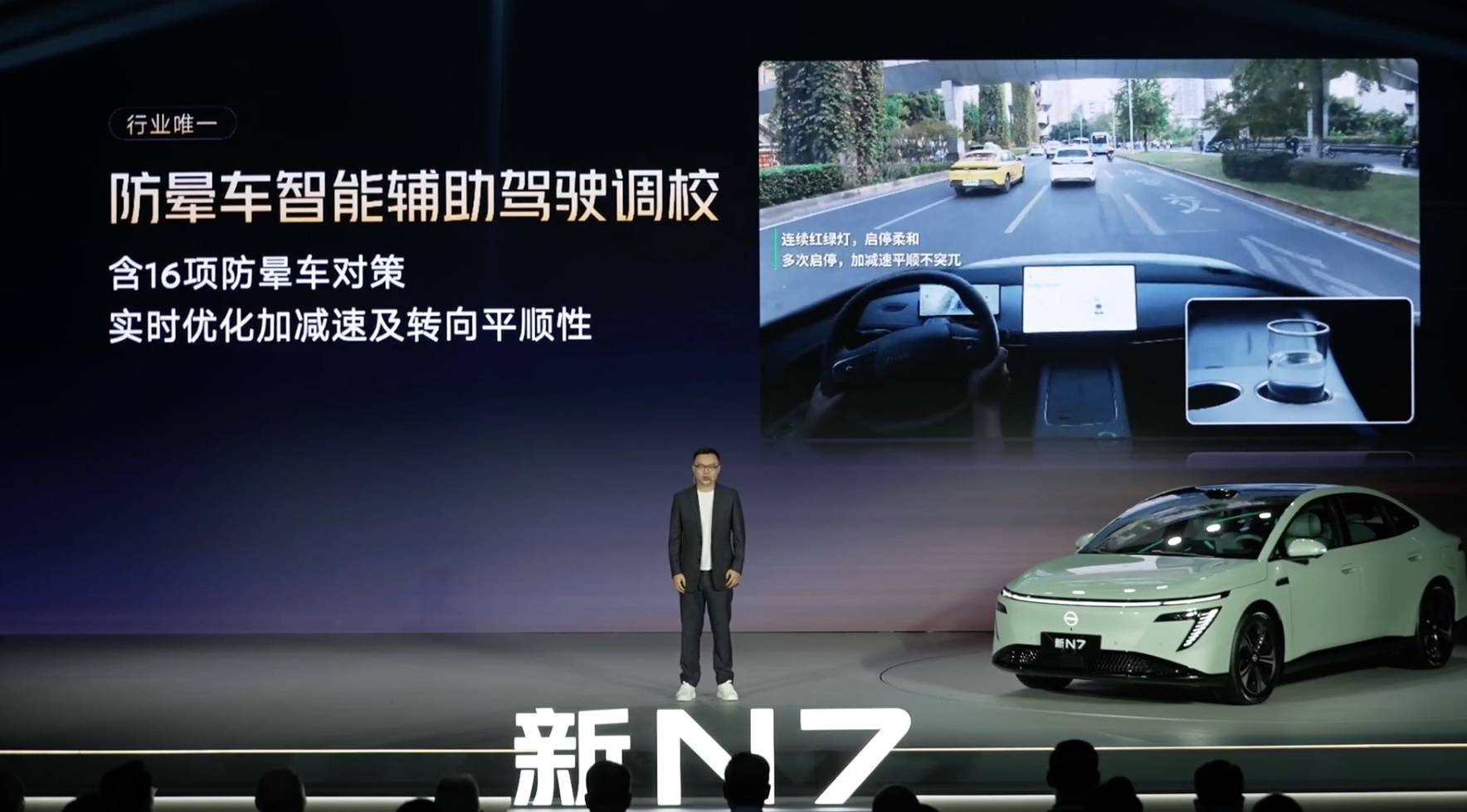
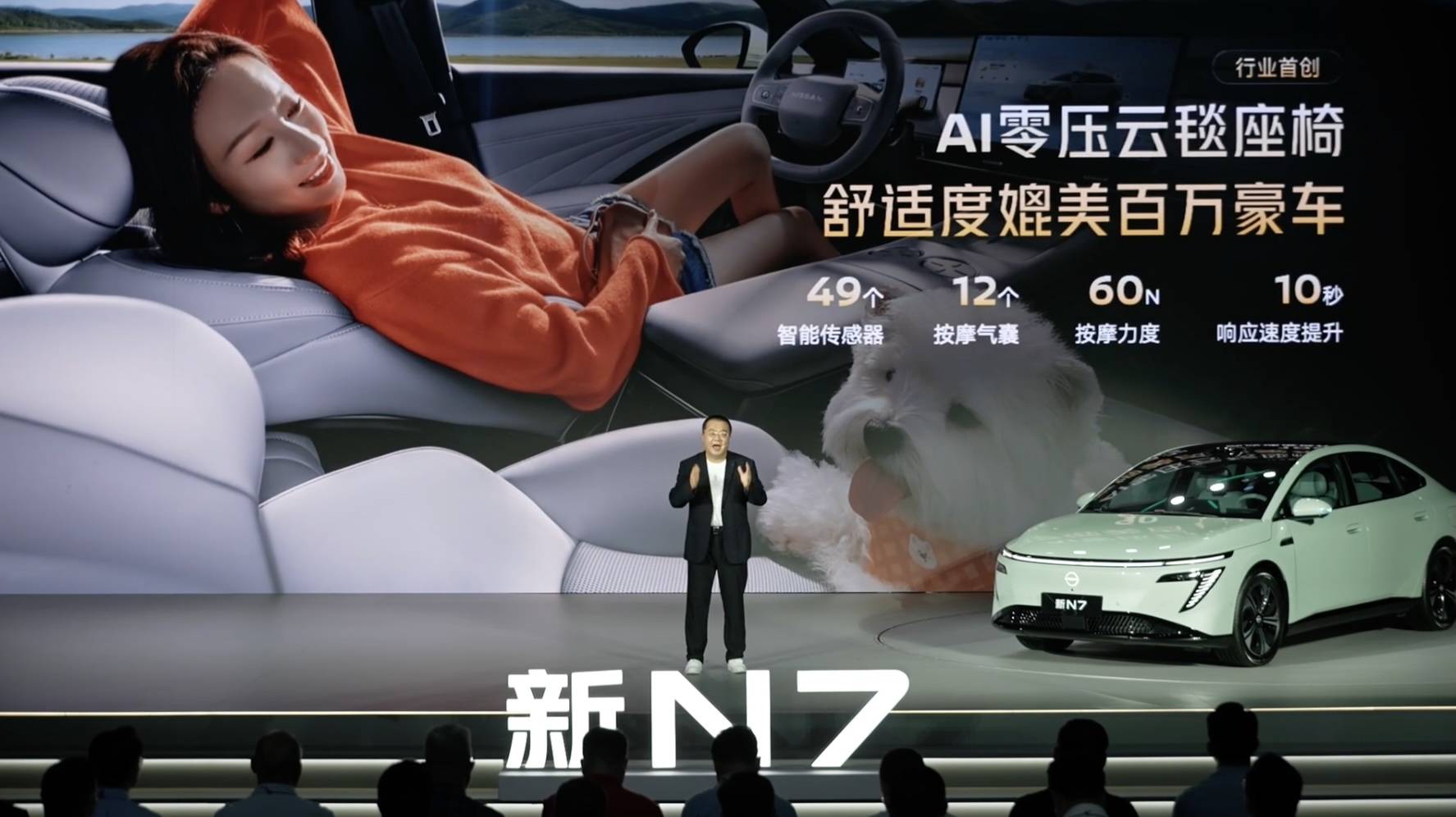
舒适性依旧是 N7 很重要的一张牌,发布会上有一张 PPT 是这样写的:

世界上有两种汽车沙发,一种是东风日产的,一种是其他的。

新 N7 前排的「AI 零压云毯座椅」配备 49 个智能传感器,能够实时采集乘员的体型数据,自动调节腰托、侧翼和坐垫,还支持 12 点的座椅按摩;后排则新增吸入式通风和加热功能,还多了一块后排控制屏,方便乘员直接调节温度和风量。
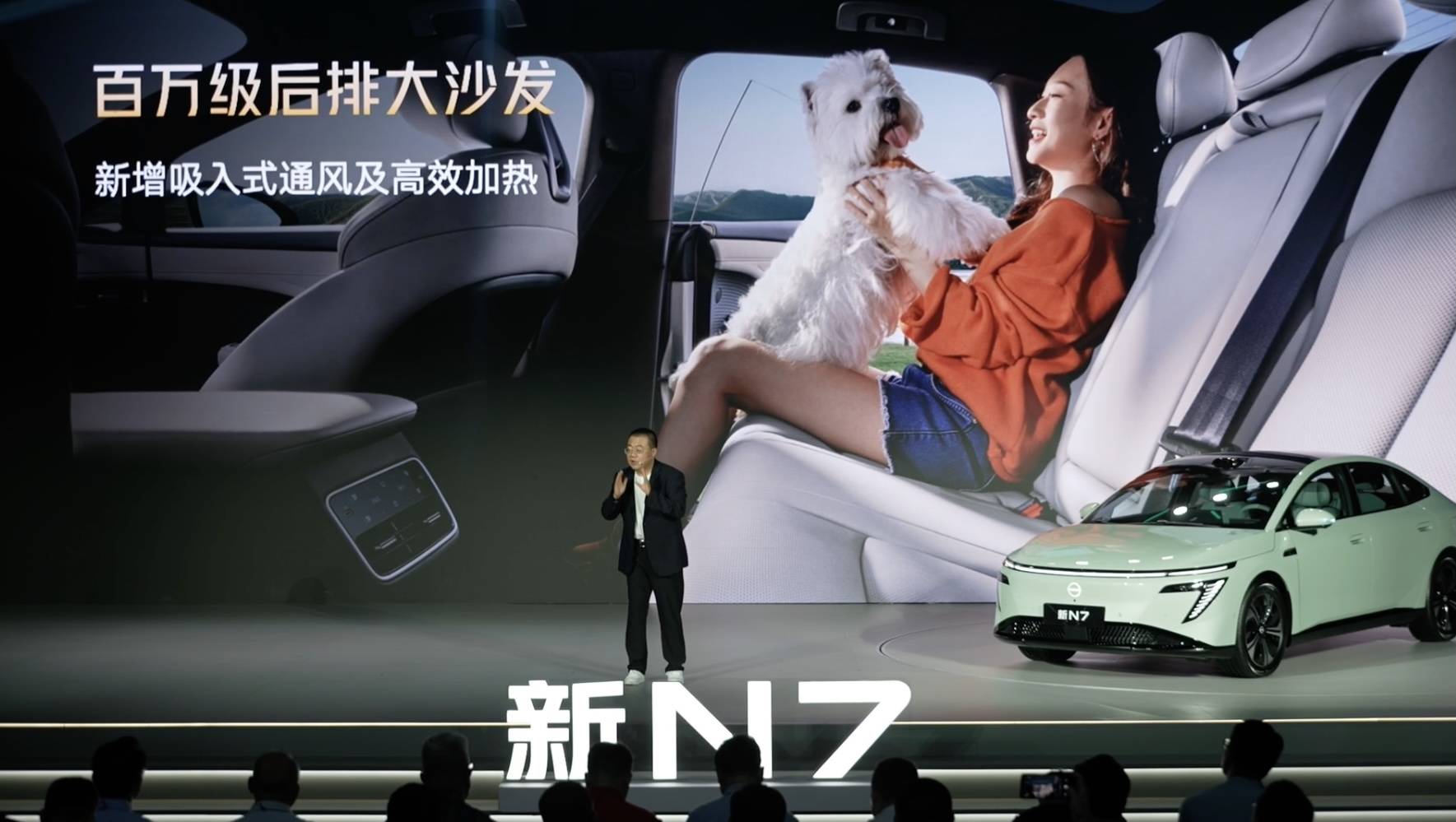
价格上,510 Air 版限时权益价 10.99 万元,510 Pro 版 11.99 万元,625 Pro 版 12.99 万元;两款 Max 车型均增加了激光雷达,其中 510 Max 为 12.99 万元,625 Max 为 13.99 万元。

这次升级之外,N7 本身的市场变化也值得一提。

去年 4 月底上市后,它曾经有过一段相当亮眼的上升期,上市 18 天,大定就突破了 1 万辆,随后交付快速爬升,6 月销量达到 6189 辆,两个月后冲至 10148 辆,成为了合资品牌纯电车型里少见的月销过万的产品。
但高点来得快,回落也很快。前期积累的订单和热度逐渐消化之后,N7 没能维持此前的增长节奏。

转折从 9 月开始出现,9 月和 10 月,N7 的月销量回到 6400 辆左右,11 月降至 4016 辆,12 月只剩 1925 辆,然后就再也没有回升,一直维持在千辆水平。
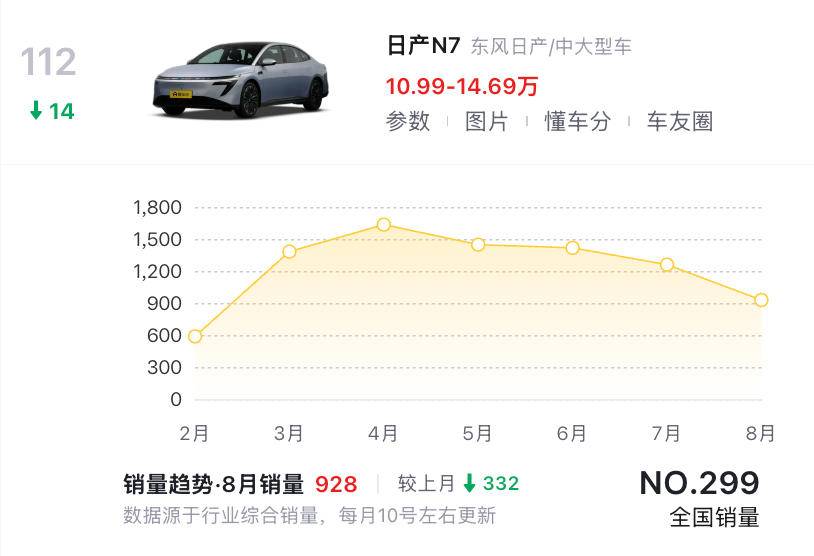
它最初能够快速打开市场的原因很简单,11.99 万元起的价格,换来接近 5 米的车身,宽敞的乘坐空间,以及日产本身擅长的座椅舒适性,再叠加当时已经具备一定竞争力的智能座舱和辅助驾驶能力,放在 2025 年上半年,确实容易被消费者注意到。

但 15 万元级纯电轿车的迭代速度也非常快,过去一年里,激光雷达、辅助驾驶、更强的座舱芯片以及后排舒适配置不断向更低价格带下放,N7 上市初期形成的部分优势,很快被后来者追了上来。

因此我们可以看到,新 N7 这次的调整基本围绕这些变化展开,它保留了原本比较鲜明的空间和舒适性特点,同时也补上了过去一年里变化最快的几项智能化能力。

对于已经经历过一次快速起落的 N7 来说,这次年款更新是一次重新校准产品竞争力的机会。

带轮子的都关注,欢迎交流。 邮箱:tanjiewen@ifanr.com

#欢迎关注爱范儿官方微信公众号:爱范儿(微信号:ifanr),更多精彩内容第一时间为您奉上。

2026-09-22 13:48:33 · 算力芯片,自动驾驶,政策监管,办公效率,设计创意,世界模型,图神经网络,招聘HR,模型发布,产品更新,榜单评测
继续滚动加载更多…