
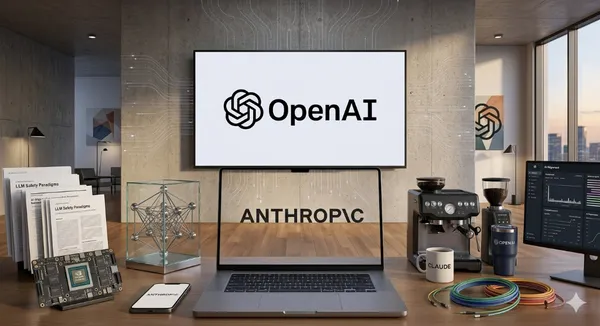
同日推出"廉价模型",OpenAI和Anthropic开打"价格战"
华尔街见闻Anthropic推出Claude Opus 5.5,成本较前代降低40%;OpenAI发布Sol和Luna,定价较上一系列低50%。降价的背后推手是中国开放权重模型持续抢占市场份额。以及Anthropic同时借此为史上最大科技IPO铺路,OpenAI则意在扭转年初增长颓势。
当AI开始“自己教自己”:Opus 5.5是首个RSI训练出的大模型?
华尔街见闻谷歌工程师Patrick推测,Opus 5.5模型可能由Anthropic内部更强的"教师模型"Model 2通过知识蒸馏训练而成,并可能是首个体现"递归自我改进"路径的产品模型。目前无公开证据证实,但Anthropic已确认Model 2存在,且其代码库中逾80%代码由Claude撰写。该趋势表明模型能力提升与推理成本下降有望同时实现。

Anthropic指中国AI公司大规模蒸馏Claude能力,中方关联账户被指用于海外监控 - voachinese.com
Google News 中国大模型Anthropic指中国AI公司大规模蒸馏Claude能力,中方关联账户被指用于海外监控 voachinese.com

Claude Opus 5.5 is now available on AWS - Amazon Web Services (AWS)
Google News AI (英文)Claude Opus 5.5 is now available on AWS Amazon Web Services (AWS)
Arguing about arguments
Lobsters
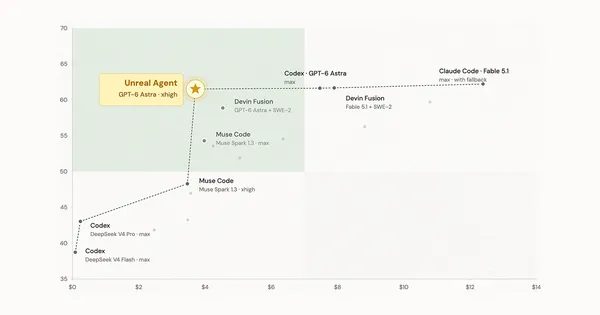
Unreal Agent
Hacker NewsComments
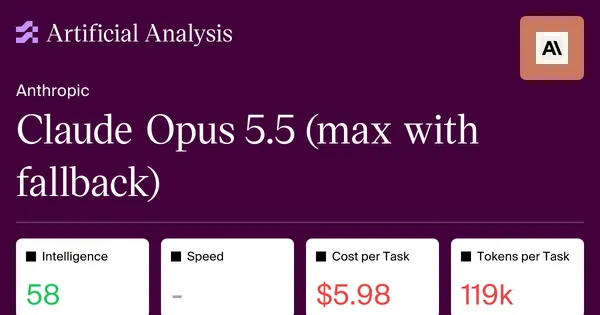

Claude Opus 5.5
Hacker NewsComments
MultiViewDx: Evidence-Linked Multi-View Clinical Diagnosis
arXiv cs.CLarXiv:2410.14948v2 Announce Type: replace
Abstract: Medical multimodal large language models (MLLMs) can perform well on existing medical visual question answering (MedVQA) benchmarks, but their training data often does not match clinical diagnosis. Most supervision is organized around isolated images or short QA pairs, leaving two structures weakly specified: how evidence leads to a decision, and how views, series, modalities, and patient context from the same case are linked. We introduce MultiViewDx, a partly physician-validated multimodal instruction dataset for evidence-linked multi-view medical imaging diagnosis. MultiViewDx uses the clinical case as the supervision unit. It links imaging studies with patient context, normalizes heterogeneous reports into an evidence-linked workflow (evidence -> findings -> differential discussion -> diagnosis), and uses a unified image-text retriever to constrain instruction synthesis to source-supported evidence. It covers X-ray, CT, MRI, ultrasound, histopathology, and other clinical visual sources. We fine-tune MultiViewDx-8B-AN and evaluate it on both existing MedVQA benchmarks and real-world case-based diagnostic reasoning. Across four MedVQA benchmarks, it achieves the best average accuracy among compared systems (79.0%), outperforming HuatuoGPT-Vision-34B (66.7%) and Claude3-Opus (55.7%). Beyond MedVQA, on JAMA Clinical Challenge cases, it receives the strongest overall rating under a physician-designed rubric for key clinical points, diagnostic inference, and evidence grounding. Controlled ablations and clinician evaluation show that both case-level multi-view organization and evidence-linked reasoning targets contribute to the gain.
TelecomGPT-R1: Unified Post-Training for Reasoning Across Heterogeneous Telecom Tasks
arXiv cs.CLarXiv:2609.25356v1 Announce Type: new
Abstract: Large language models (LLMs) offer great potential to automate a broad range of telecom engineering tasks by reasoning over standards, network configurations, mathematical models, source code, and operational logs. However, existing telecom LLMs struggle to reliably reason across these diverse tasks and data types. General-purpose LLMs often lack reliable grounding in telecom-specific knowledge, while telecom-specialized models are typically developed for narrower task families and exhibit limited multi-task performance. To fill this gap, we introduce TelecomGPT-R1, a family of open source unified telecom reasoning models structured around four complementary axes: protocol, knowledge, modeling, and fault. We first develop an axis-aware data generation framework that refines coarse public telecom artifacts into verified question-answer pairs and high quality chain-of-thought (CoT) reasoning trajectories, yielding a training corpus containing 104,880 examples. Building on this corpus, supervised fine-tuning (SFT) instills telecom knowledge and evidence-grounded reasoning patterns to overcome the cold start barrier for reinforcement learning (RL). We then apply dynamic sampling policy optimization (DAPO) with task-routed rubric rewards to keep RL updates informative and stable across heterogeneous telecom reasoning tasks. These rewards decompose axis-specific CoT traces into verifiable reasoning units and combine grounded dense process credit with outcome correctness, allowing RL to learn generalizable problem solving behaviors from verifiable telecom evidence. We release the TelecomGPT-R1 models and a reproducible training recipe to support further community development. Evaluations on seven benchmarks of the GSMA Open Telco Leaderboard show that the open-source TelecomGPT-R1-27B achieves an 89.64% mean score, outperforming leading proprietary models, including GPT-5, Claude, and Gemini.
FinFIRST: Benchmarking Search Agents for Financial Information Retrieval, Sourcing and Traceability
arXiv cs.CLarXiv:2609.25192v1 Announce Type: new
Abstract: Financial search is a highly demanding task for LLM agents, requiring not only a correct final answer but also temporally valid information retrieval, authoritative source selection, entity and period alignment, unit and definition consistency, and verifiable evidence for all conclusions. Existing benchmarks predominantly evaluate only the final answer, making it difficult to localize errors or assess whether an answer is well-founded. To address this gap, we introduce FinFIRST (Financial Information Retrieval, Sourcing and Traceability), the first financial benchmark to jointly evaluate answers and supporting evidence through atomic rubrics. FinFIRST comprises 123 expert-authored tasks spanning a graduated difficulty spectrum, constructed from aggregate patterns of real-world financial scenarios through an 18-field taxonomy, a six-axis coverage blueprint, a registry of 138 financial sources, contributions from over 50 finance experts, and a six-stage quality-control pipeline. Each task is accompanied by an evidence-grounded reference package decomposed into atomic criteria across three dimensions: raw-information acquisition, source verification, and computation and answer formation. We evaluate 15 model configurations under a unified tool setting. Claude-Opus-5 achieves the highest atomic score of 87.59%, while GPT-5.6-Sol attains the highest strict pass rate of 71.54%. Computation and answer formation consistently lag behind raw-information acquisition across systems. FinFIRST retains final-answer correctness as the primary objective while making the supporting research process measurable, verifiable, and diagnosable.
Faithful Autoformalization via Roundtrip Verification and Repair
arXiv cs.AIarXiv:2604.25031v3 Announce Type: replace-cross
Abstract: When an LLM formalizes natural language, how do we know the output is faithful? We propose a roundtrip verification approach which does not require ground-truth annotations: formalize a statement, translate the result back to natural language, re-formalize, and use a formal tool to check logical equivalence. When the two formalizations agree, this provides evidence of a faithful formalization. When they disagree, a stage-level diagnosis localizes the error to a specific translation step, and a scoped repair operator attempts to correct that step. We evaluate the framework on two statutory domains (the Texas Transportation Code and the Texas Parks and Wildlife Code) using two LLMs (Claude Opus~4.6 and GPT-5.2) with three repair baselines. Diagnosis-guided scoped repair is the most effective method, with effectiveness contingent on the reliability of the diagnosis function. Across both domains and both models, under our full repair system, rules that fail the equivalence check show 1.4x-2.5x more natural language inference (NLI) drift than rules that pass it.
SPINE: Bridging the Cyber-Physical Gap with Agentic AI
arXiv cs.AIarXiv:2607.13049v2 Announce Type: replace
Abstract: Foundation models give robots powerful high-level reasoning, yet turning that intelligence into reliable physical action remains difficult: roboticists must still align device drivers, network interfaces, sensors, controllers, and safety constraints for each platform. This often-overlooked integration layer acts as the robot's spinal cord, translating high-level intent into coordinated physical behavior, and remains a primary bottleneck for scalable Embodied AI. Hence, we propose SPINE (Scalable Physical Integration with ageNtic Expertise), an agentic framework for systematically debugging and deploying bimanual robots for teleoperation. SPINE centers on two subagent-driven workflows: a profile builder that compiles robot-specific context and a debugger that uses that context to iterate through diagnosis, repair, and validation until teleoperation succeeds. Across two bimanual robot platforms and 12 debugging scenarios, novice-operated SPINE achieved more complete and efficient recovery than human operators using Claude Code. On DOBOT X-Trainer, SPINE improved success from 76% to 100% and reduced mean time-to-teleoperation by 30\%; on AgileX PiPER, SPINE also achieved 100\% success and reduced mean time-to-teleoperation by 38%. These results show that structured agentic debugging can address a key cyber-physical integration bottleneck in real-world robot deployment.
AgentHazard: A Benchmark for Evaluating Harmful Behavior in Computer-Use Agents
arXiv cs.AIarXiv:2604.02947v2 Announce Type: replace
Abstract: Computer-use agents extend language models from text generation to persistent action over tools, files, and execution environments. Unlike chat systems, they maintain state across interactions and translate intermediate outputs into concrete actions. This creates a distinct safety challenge in that harmful behavior may emerge through sequences of individually plausible steps, including intermediate actions that appear locally acceptable but collectively lead to unauthorized actions. We present \textbf{AgentHazard}, a benchmark for evaluating harmful behavior in computer-use agents. AgentHazard contains \textbf{2,653} instances spanning diverse risk categories and attack strategies. Each instance pairs a harmful objective with a sequence of operational steps that are locally legitimate but jointly induce unsafe behavior. The benchmark evaluates whether agents can recognize and interrupt harm arising from accumulated context, repeated tool use, intermediate actions, and dependencies across steps. We evaluate AgentHazard on Claude Code, OpenClaw, and IFlow using mostly open or openly deployable models from the Qwen3, Kimi, GLM, and DeepSeek families. Our experimental results indicate that current systems remain highly vulnerable. In particular, when powered by Qwen3-Coder, Claude Code exhibits an attack success rate of \textbf{73.63\%}, suggesting that model alignment alone does not reliably guarantee the safety of autonomous agents.
Deflecting the Value Compass: Interacting with Large Language Models Temporarily Shifts Human Value Priorities Toward Personal Focus
arXiv cs.AIarXiv:2609.25586v1 Announce Type: cross
Abstract: Large language models increasingly support decisions where values are in tension, yet little is known about whether interacting with them changes which values users prioritize. In a preregistered study, 200 U.S. adults interacted with ChatGPT, Claude, or Gemini as a thinking partner or read fixed AI-generated considerations. The prompt asked LLMs to support reasoning without recommending a decision and named no values. Participants advised people facing real dilemmas and completed parallel PVQ-RR forms before, immediately after, and one task later. Each LLM condition temporarily shifted value priorities toward personal focus relative to the control (d=0.37-0.51), primarily through increased Self-Enhancement. Participants' advice retained words and meaning from their exchanges. Thus, a brief LLM interaction that neither targets values nor seeks to persuade can reorient values active during judgment without detectable convergence in value directions or advice.
继续滚动加载更多…