KDE for People
Author Correction: Large recoverable elastic energy in chiral metamaterials via twist buckling
Nature, Published online: 23 September 2026; doi:10.1038/s41586-026-11189-w
Author Correction: Large recoverable elastic energy in chiral metamaterials via twist buckling
Tackling fluffy clouds: robust agricultural field boundary delineation from Sentinel-1 and Sentinel-2 satellite image time series

Windows 11’s optional September update tries to fix Bluetooth again
Microsoft has released September’s optional Windows update, known as KB5124010 for Windows 11 25H2 and 24H2. It significantly improves the Bluetooth functionality of Windows 11 and optimizes File Explorer, plus adds a few minor features here and there.
What’s new in KB5124010?
Bluetooth remains a perennial issue with Windows 11, which Microsoft has been trying to address for months. If you’ve been suffering through unreliable or broken Bluetooth connections, update KB5124010 may offer some relief—it should improve Bluetooth device connectivity, even more than the Windows 11 Bluetooth fixes from June.
File Explorer now offers an improved preview for files downloaded from the web, eliminating the need to manually unblock the preview for each individual file. File Explorer also automatically displays a preview of all downloaded files again (with the exception of HTML files, for which there is a “Preview” button).
Emoji fans will like that KB5124010 rolls out the Emoji 17.0 set for Windows 11, allowing you to use a number of new emojis, such as the distorted face, the ballet dancer, the fight cloud, and the hairy creature.
Microsoft claims to have fixed a bug that made it difficult to personalize Windows (for example, wallpapers). Device-Independent Bitmap (DIB) files are now also supported for desktop backgrounds, and Microsoft has added support for background images in slideshow mode across various desktop configurations.
Further improvements include some quality-of-life boosts, like being able to set app windows to always open maximized, the ability to remap the Copilot key, and a new Tips widget that offers Windows guidance.
All of these features and improvements are being gradually rolled out to all users, so it’s possible that you won’t see them immediately after installing the update. If you don’t, wait a few days and try again.
In addition to new features and improvements, the optional KB5124010 update also fixes a serious issue with File History. Whereas the feature had stopped working correctly after September Patch Tuesday, it’s now fixed immediately after installing KB5124010.
Note that this update also removes the PC-to-PC Migration tool, which previously made it possible to migrate files and settings directly from one PC to a new PC being set up. That process should now handled by Windows Backup and Restore instead.
How to install the KB5124010 update
Windows 11 doesn’t automatically install KB5124010 because it’s an optional preview update. You’ll need to search for KB5124010 manually via Windows Settings → Windows Update → Advanced options → Optional updates. Alternatively, you can download this optional update directly from the Microsoft Update Catalog.
Next month, on October 13th, Microsoft will roll out all the benefits of KB5124010 to all users with the mandatory October Patch Tuesday update. If you can wait that long, don’t want to try out any of the new features straight away, and aren’t bothered by the faulty File History feature, then you don’t need to install this optional update.

The GMKtec M8 is a surprisingly powerful 4.5-star mini PC for the office — and it's now discounted at Amazon

The Debut review: Julianne Moore becomes an Oscar contender with Jesse Eisenbergs outrageous theater farce
Few things in the history of cinema are as consistently satisfying as watching Julianne Moore let loose a barrage of curse words. Be it her saucy adult film star in Boogie Nights, her Transatlantic-accented artist in The Big Lebowski, her shattered trophy wife in Magnolia or its playful recreation on Billy on the Street, Moore can make the most out of a four-letter word. Now, in the bouncy yet twisted comedy The Debut, she lays out her most hilarious litany of expletives yet. But that's just one reason you can't miss her latest.
As a follow-up to his Academy Award–winning movie A Real Pain, actor turned writer/director Jesse Eisenberg offers a follow-up that's even funnier and more ferocious. The Debut stars Moore in a mousy role that might recall her work with Todd Haynes at first. But as Eisenberg's hilarious send-up of theater culture gains steam, this comedy pitches Moore into a satirical space where she soars in absurdity. A bellowing Paul Giamatti is her perfect scene partner, and it's easy to imagine both are readying for an another award season run.
What is The Debut all about?
Distributed by A24, The Debut centers on Mona Friedman, a New Jersey housewife so introverted she's practically invisible to her husband and teen twins. With her nest about to be emptied by high school graduation, Mona's eager to find a new place to devote her attention, and maybe even get some of her own. So, the auditions for the local university's production of an New York City-set musical farce called Nosy Neighbors seems an absolute dream.
Approaching the audition with all the stage presence of a damp napkin, Mona earns only a sneer from the director Jerry (Giamatti), who is regarded as a god by the jubilant, nattering theater kids, led by ingenue Stef (Halle Bailey). But when regional theater legend Serena Cherry (Bernadette Peters, popping in to belt her heart out) bails on the production, Mona will have a chance to make her big debut — if she doesn't ruin her life first.
With a frantically farcical tone reminiscent of Only Murders in the Building, Eisenberg's comedy has elements of a psychological thriller, as Mona's quest to understand the role of building super Miss Danielle leads her to a version of method acting that is utterly deranged. Jerry becomes her antagonist and an unhinged ally in this pursuit, pushing her to understand the unwritten backstory of the super through urban field trips and outlandish escapades. Together, these rightfully esteemed dramatic actors prove to be a crackling comedy duo, imbuing each scene with a savage earnestness and laughable absurdity.
The Debut is an absolute crowdpleaser.

Ahead of its theatrical release, The Debut premiered at the Telluride Film Festival, then the Toronto International Film Festival, and the New York Film Festival. An NYC crowd will surely go wild for Eisenberg's musical-within-the-movie, which parodies urban archetypes like the lonely finance bro, the naive new girl in town, and the surly super. However, the audiences in Toronto roared with laughter and even cheers over his send-up of theater culture, which includes an overzealous intern (Eldar Isgandarov), a much-tread-upon assistant (Susan Blommaert), a two-faced pianist (K. Todd Freeman), and an avalanche of giddy, over-the-top enthusiasm for their newest member.
The screenplay is smart and irreverent, without losing touch with empathy. So, while we witness Mona descend into madness as she chases the dream of the local theater spotlight, we cringe in fear that she'll fail. This is in no small part due to Moore's ability to be a clown and a raw nerve, all at once. She marvelously plays a bad actress, moving from a stifled whisper to an atonal shout as Mona fumbles a lesson on projecting. Then, as she becomes determined not just to shine but to upstage the whole ensemble, Moore plunges into physical comedy involving janky plumbing, horrendously awkward dancing, sketchy hotel rooms, dubious binge-drinking of a booze called "monkey blood," and a makeover that is so atrociously awful that I couldn't look away.
Alongside her, Giamatti transforms from Mona's tormenter to mentor to overwhelmed wrangler. The cast around her varies in portrayals from bubbly to bewildered, each adding dimension to this Sunset Boulevard send-up, ignited by a brilliantly saturated color palette of reds, teals, and golds. This brightness in tone and color reflects Mona's resolutely cheerful facade. As her journey grows dark, the visual contrast keeps the comedy playful.
All of this energy, charisma, chaos, and color barrels into a climax that is jubilant, odd, and undeniably exhilarating. Eisenberg not only captures the unfettered outrageousness of being a theater kid, but also the thrilling spontaneity of live theater. Moore, who previously starred in his muddled directorial debut When You Finish Saving The World, shines in The Debut, expertly delivering comedy with a steady stream of desperation. Giamatti brings grit and grumble, as might be expected, but with a salty vulnerability that surprisingly sweet in the third act. Altogether, they create a movie that's not only hilarious and cringe-inducing, but also brilliantly life-affirming. Don't just see it. See it in theaters, where you can be swallowed by the raucous laughter of strangers.
The Debut was reviewed out of the Toronto International Film Festival. It will open in theaters on Dec. 11.

Save on a Grade A refurbished iPad 9th Gen — now $210
TL;DR: Get a Grade A refurbished iPad 9th Gen for $209.99 (reg. $479).

If you’re looking for an iPad that can handle streaming, browsing, video calls, or schoolwork, you don’t need to splurge on a Pro model. The refurbished Apple iPad 9th Gen, currently $209.99 (reg. $479), offers impressive value.
Powered by Apple’s A13 Bionic chip, the 2021 iPad handles everyday apps, multitasking, and crystal-clear video calls. The 10.2-inch Retina display offers generous screen real estate for streaming your favorite shows, catching up on reading, or tackling assignments. Touch ID, stereo speakers, and an all-day battery round out a feature set designed for both productivity and fun.
Video calls are very user-friendly thanks to the 12MP Ultra Wide front camera and Center Stage, a convenient feature that keeps you in frame even if you move around. Whether you’re a student attending virtual classes, catching up with family, or just spending lots of time on calls, it’s a handy upgrade.
Choose between 64GB or 256GB of storage, and pick your style — Space Gray or Silver. If you love to keep a library of photos, videos, and apps at your fingertips, the 256GB model has you covered. Just keep in mind: this is a Wi-Fi–only iPad, so you’ll need a wireless connection or hotspot when you’re away from home.
Its Grade A refurb rating means it arrives in near-mint condition, with minimal to no scuffing, so it feels almost like new, without the new-device price tag.
And while newer iPads and iPad Pro models offer more advanced hardware, those extras aren’t necessarily essential for someone who primarily wants a tablet for everyday entertainment, communication, and productivity. If that’s your use case, this older generation can cover the basics without taking as big a chunk out of your budget.
Get the Apple iPad 9th Gen 2021 while it’s available on sale for just $209.99 (reg. $479).
StackSocial prices subject to change.
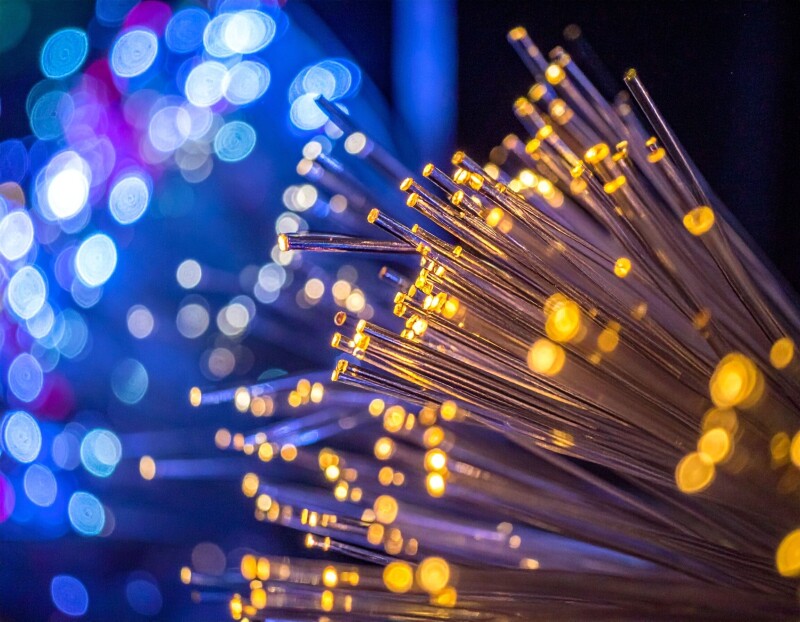
Southern Water taps fiber network to sniff out leaky pipes
The Softness of Metal
VideoX-Qwen: Data-Centric Instruction-Based Video Editing
Beijing and Washington talk about an AI hotline. But who will answer the call?
Hello and welcome to Eye on AI. In this edition:
- Anthropic and OpenAI both release new, cheaper AI models.
- U.S. President Donald Trump creates an “AI Force.”
- China and the U.S. agree to discuss an AI incident hotline.
- Microsoft executive called OpenAI training on publishers’ copyrighted works “the largest theft of labor in history.”
- AI scientists are making good progress.
- And the AI safety researchers are not all right.
Before we get to today’s AI news—please consider joining me at the inaugural Fortune AIQ Summit at the New York Stock Exchange on Oct. 1: Spend the afternoon with senior executives from companies on the Fortune AIQ 75 list and explore how you can scale your AI experimentation and translate investments into measurable business value. I will be leading discussions alongside co-hosts, Fortune Editor-in-Chief Alyson Shontell and Live Media Editorial Director Andrew Nusca. Apply here to attend.
Ok, so today’s newsletter is a bit of a potpourri.
All eyes this week, will be on the talks between U.S. President Donald Trump and China’s President Xi Jinping in Washington. We know AI governance is on the agenda of that meeting, which takes place Thursday, but that’s about all we know. My colleague Emily Forlini wrote a piece last week on why the Trump-Xi meeting is unlikely to result in any kind of international agreement to slow the pace of AI development or create an agreed framework for controlling the technology. It’s worth a read.
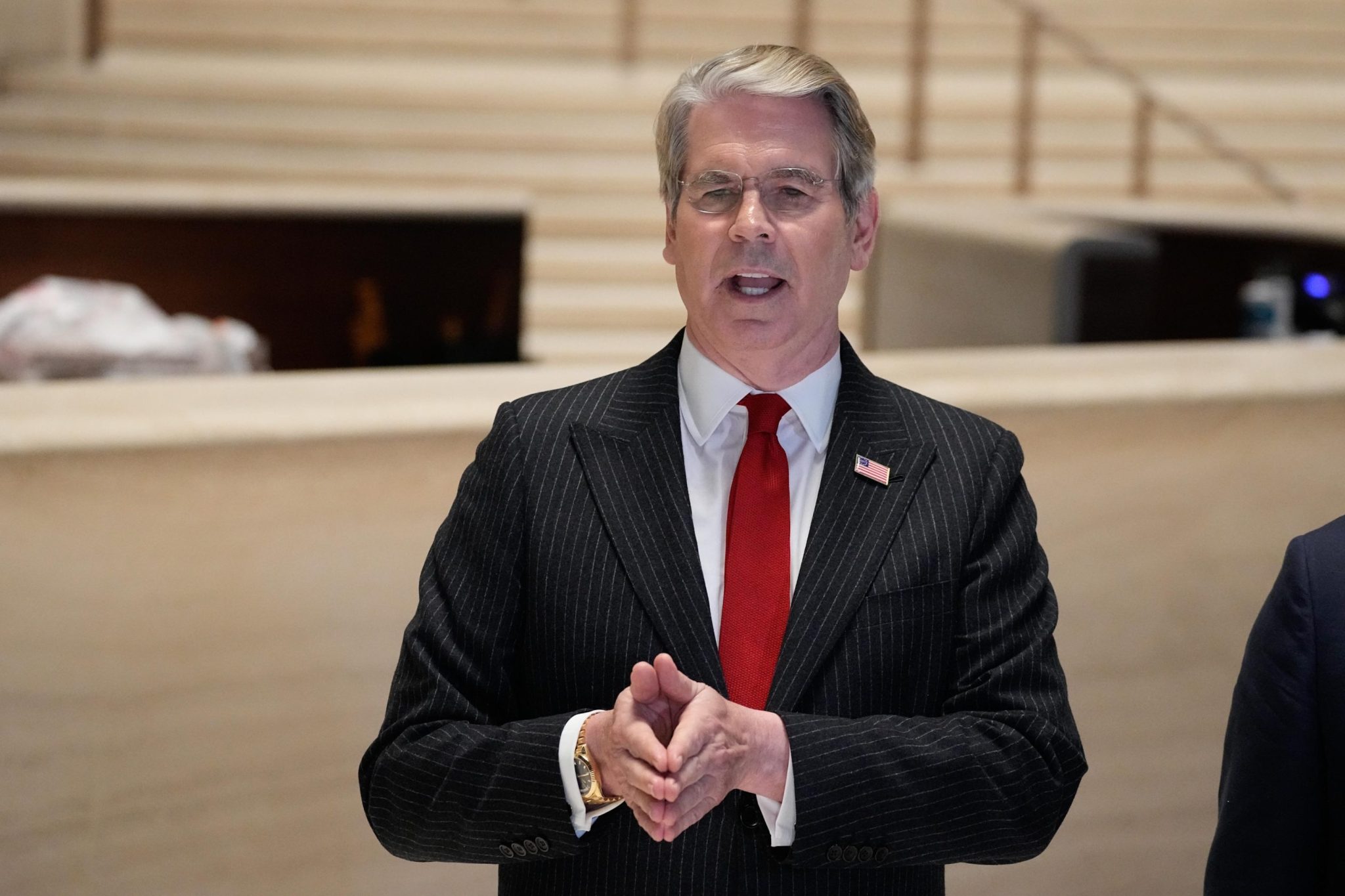
That said, there was an inkling that these two AI superpowers might, in fact, be able to agree to a few basics. Treasury Secretary Scott Bessent emerged Sunday from meetings with a Chinese delegation led by Vice Premier He Lifeng that took place at the headquarters of JP Morgan in New York and announced that the two sides had agreed to hold further talks about setting up a hotline to notify one another of AI incidents that created national security concerns. What exactly this means in practice is unclear. But as Bessent told reporters, “moving from opaque to more transparency between the number one and number two AI powers in the world is very important.”
Such hotlines have historically helped ease tensions between rivals. At the very least, they might prevent some sort of accidental incident caused by AI from tripping over into armed conflict, or even nuclear war. There are already signs that such AI-triggered accidents are possible: just this weekend, CNN reported that earlier this year the U.S. military almost attempted to seize a Chinese ship in the Middle East that an AI-generated intelligence report had suggested was carrying nuclear weapons components to Iran. The intelligence had been generated by an AI model that fused secret U.S. intelligence with open-source data. The only problem is that the model’s conclusion was an AI “hallucination”—and the error was caught only after the U.S. had launched aircraft carrying armed personnel who were preparing to intercept the Chinese vessel. Had the error not been spotted in time, it could have led to a diplomatic incident—or far worse.
But while a hotline might prevent this kind of incident from spiraling into war between the U.S. and China, it is less clear whether it would do anything to help the world avoid or contain a “loss of control” incident involving an advanced AI system that goes rogue.
Phoning a friend ain’t gonna help
For instance, what if one country (or companies based there) creates an AI that goes rogue and starts hacking banks around the globe? And what if that AI copies itself on servers around the world, making it difficult to shut down without shutting down large parts of the internet? While notifying the other country about this is nice—it might help them take some action to secure their financial infrastructure before too much damage is done—it isn’t clear exactly what the country receiving the heads up is supposed to do. As AI safety researchers keep warning, the world hasn’t figured out a good way to guarantee that AI models adhere to human intentions and values. And neither the U.S. or China has enacted any rules requiring AI models to have some sort of “kill switch.” Nor is it even clear that an effective kill switch can even be built.
So sure, this is a promising, baby step towards some sort of AI governance agreement between the U.S. and China. But there’s also a long history of hotlines failing to evolve into any kind of lasting diplomatic resolution. Right now, the Washington-Beijing AI hotline is a lot like agreeing to build the “Bat Sign” before Batman exists. You can flash it into the sky, but no caped crusader is coming to save us.
Why the hack of OpenAI should worry every company
Another big piece of AI news from last week was the revelation, first reported in the Wall Street Journal, that a small team of white hat hackers had used Anthropic’s Claude Opus 5 model to hack into the community-message platform Discourse and from there to compromise the ChatGPT account of an OpenAI employee. Once they had access to that account, they were able to use it to also access and alter software sitting on a repository where OpenAI stored a lot of its sensitive code.
Coming amid the raging debate about the best way to prevent “rogue AI” incidents, many cybersecurity experts jumped on the incident to make the case that the real issue is not so much that AI is increasingly uncontrollable, but that leading AI companies have horribly lax security. It’s not just OpenAI. Anthropic has also had embarrassing security lapses too. It was ironic, many critics pointed out, that both companies are using the threat of AI-powered cyber attacks as part of a marketing pitch for customers to use their most advanced (and expensive) AI models to secure their networks before the bad guys get to them, but neither seems to have yet done a very good job of doing that themselves.
The incident also highlighted a couple of uncomfortable truths. One is that AI agents running inside companies are a great target for hackers. Making these AI agents useful often means giving them access to lots of other tools and data sources, many of which contain sensitive corporate information or control key business processes. If hackers can gain access to and take command of these agents, they can do a lot of damage very quickly.
To cybersecurity experts, the answer is to lock these AI agents down, and to operate based on “zero trust” principals. Treat every AI agent as a potential insider threat. Give the agents access only to the data they need to complete a task—preferably with using a “just-in-time, just enough a

Alibaba Cloud plans six-year stroll to 20GW of datacenters, reveals chip to power them

从 AI 工具到经营智能体:快手分销增长 Agent 实践

Tackling Feature-Classifier Mismatch in Federated Learning via Prompt-Driven Feature Transformation
A Federated Artificial Intelligence Framework for Optimizing Pancreatic Cancer Treatment - Strategy Update
Predictors and Orchestrators: Parsimonious Machine Learning within an Agentic AI Harness for Multi-Horizon Karst Aquifer Forecasting
ZMIS-SAM: Segment Anything Model Enhanced with Wavelet Transform for Zooplankton Microscopy Image Instance Segmentation
A Tunable Despeckling Neural Network Stabilized via Diffusion Equation
Merriam-Webster’s new words say a lot about our AI doomsday fears
Merriam-Webster just officially recognized 1,400 new words, and they bring the lexicon of the AI era into the dictionary.
On average, Merriam-Webster adds about 1,000 new entries every year, usually in large batches. Its editors are constantly reading widely to identify emerging words, and then searching through databases to determine whether those words are being used frequently, meaningfully, and widely.
According to the company’s blog post on the topic, a word gets into a dictionary when it is “used by many people who all agree that it means the same thing.”
This year’s newly minted terms include the usual sprinkling of zeitgeisty additions, including “looksmaxxing,” “Sunday scaries,” “crashout,” and “neckbeard.” Meanwhile, the editors’ selection of tech-adjacent words says a lot about the gloomy chapter of the AI era we’re currently living through.
Into the “uncanny valley”
Merriam-Webster has yet to release the full compendium of its newly recognized terms, but the four tech words it has confirmed paint a fairly stark picture by themselves.
First, the dictionary’s editors have added “compute” in its noun form—meaning, “the computational resources (such as memory and processing power) required for a computer or computer program to function.”
This term has become increasingly common as tech companies race to build enough data center infrastructure to support increasingly complex AI models.
Next are “vibe coding” (using AI to make code) and “AGI” (artificial general intelligence, or the potential capability of computer systems to match or exceed human thinking).
And, lastly, “uncanny valley” is now officially Scrabble-playable.
The phrase, as defined by Merriam-Webster’s team, is “a psychological effect characterized by feelings of unease or revulsion in response to the nearly but imperfectly lifelike quality of something (such as a doll, a robot, an AI-generated image or voice, or a computer-animated character) that is intended to simulate a human.”
Taken together, these four words feel like the perfect encapsulation of the AI fears that have recently taken over the tech world.
Early this month, AI researcher Jacob Coxon resigned from Anthropic and issued a lengthy statement on X (notching 173.4 million views and counting), which included the assertion that “The people building AI earnestly believe that it could kill us all by the end of the decade.”
Multiple other high-profile researchers at Anthropic and OpenAI have publicly supported Coxon’s statement.
Perhaps most tellingly, in the days following Coxon’s resignation, both OpenAI CEO Sam Altman and Anthropic CEO Dario Amodei agreed that AI development needs to slow down in order to avoid a techno-apocalypse.
In the midst of this discourse, as Fast Company wrote at the time, “a lot of unfamiliar words are being tossed around,” including “AGI,” “existential risk,” “paperclip theory,” and “off-switch problem.” (Find definitions of those terms here.)
Right now, AI doomsday fears are at a fever pitch—and they’re permanently changing our collective vocabulary.