



“中国人工智能大模型名誉侵权第一案”最新进展:百度道歉! - 新华报业网
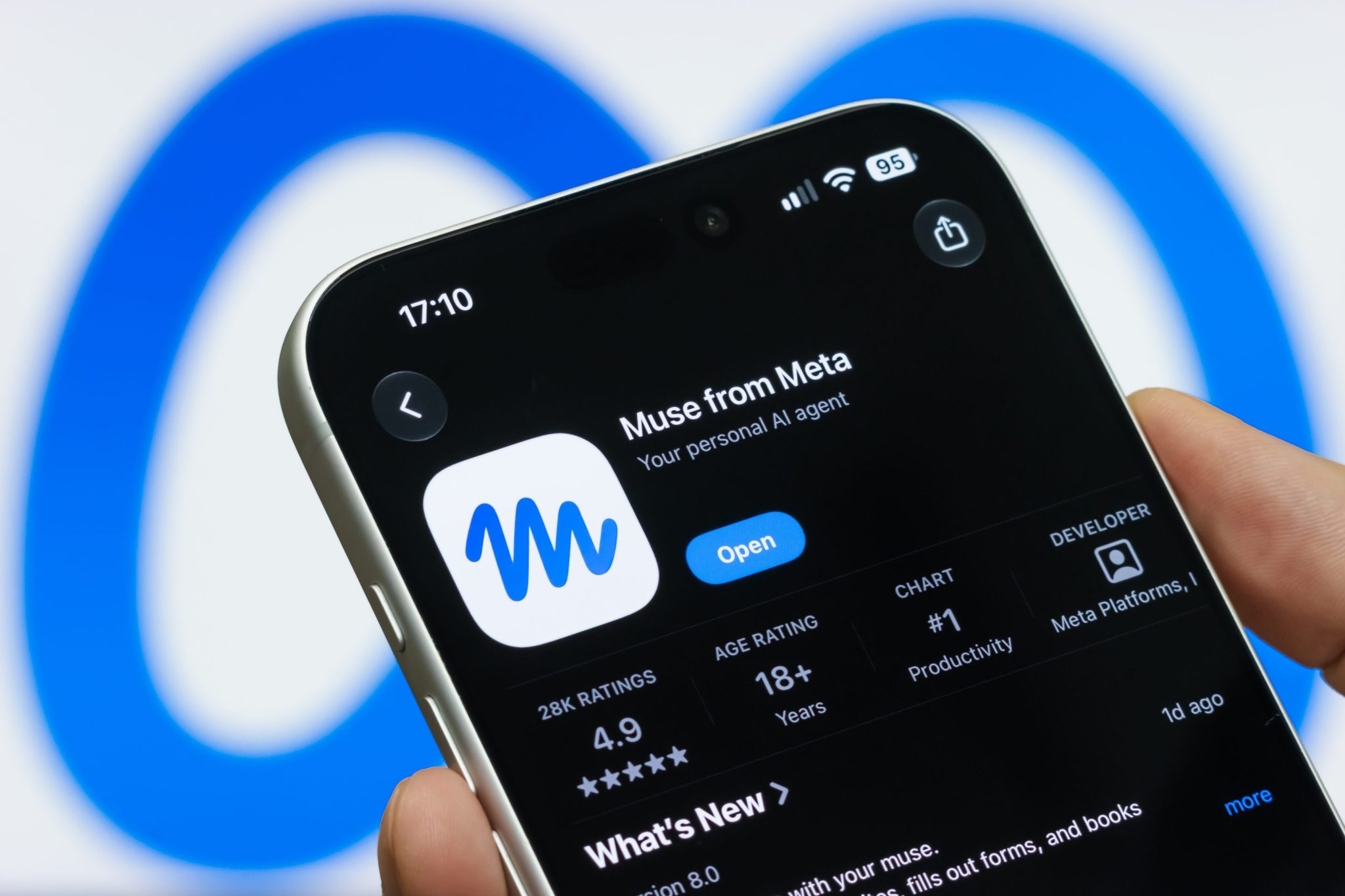
Meta’s Muse AI is exploding in popularity—and already drawing heated backlash from another tech giant
Meta’s new AI agent app is quickly taking hold of the consumer market, unseating ChatGPT as the top free app on Apple’s App Store in recent days. The app, which features a personal AI agent that books appointments, shops, and organizes calendars on people’s behalf, is the talk of tech circles this week.
Named Muse, the app, which uses Meta’s latest Muse Spark AI model, connects users to a range of services that its AI agent autonomously handles. That means handing over access to accounts across a user’s phone in exchange for Muse booking a vacation or handling restaurant reservations on their behalf. It’s the first major consumer AI agent push by Meta, and it’s catapulting the company for now, past its competitors.
Not everyone is rolling out the red carpet for Meta’s Muse, however. Amazon blocked Meta’s assistant from accessing its online store, saying that “continued access by an unauthorized AI agent violates Amazon’s Conditions of Use, to which our customers have agreed.” Amazon said Meta never asked for permission to access its site. Meta didn’t immediately respond to a request for comment, though the company announced it would partner with Shopify for some of Muse’s shopping features.
“It is only a matter of time before there is an Apple and Google version of Muse and possibly TikTok, in addition to the frontier LLM agents,” Nikesh Arora, chief executive at Palo Alto Networks, wrote on X. “Every app that is a services, marketplace or commerce app will need to existentially decide to open [Application Programming Interfaces] for consumer agents to interact. Smaller players have no choice. Either the consumer benefits or distribution aggregators will demand a higher transaction fare.”
Muse’s break-out success represents a much needed victory for Meta in the AI arena, following a series of struggles by the company to compete with frontier labs like OpenAI and Anthropic.
Muse’s fast-rising popularity, and Amazon’s reactionary block, show how quickly agentic technology is transforming the consumer space. Meta released Muse just as Anthropic and OpenAI released cheaper versions of some of their models. Apple also recently rolled out its revamped Siri as part of its newest iOS update.
The bigger questions raised by Muse’s release are who controls the shopping and user interfaces Meta is trying to access, and how major companies will agree to such access. For Amazon, Muse is a threat because it bypasses the usual process of humans visiting its website or app and seeing the advertisements that serve as a key profit driver.
“This is bigger than a dispute over bot detection or website access. We are moving toward a world where agents will increasingly act as our representatives online,” Liat Ben-Zur, CEO of executive consultancy LBZ Advisory and former Microsoft Vice President of Consumer Services, told Fortune. “The companies that control the rules of access will have enormous influence over whether those agents actually work for the consumer.”
Amazon has taken action against other companies over similar issues. Last year, it sued Perplexity over its Comet AI tool, which could access Amazon accounts much like Muse does. Amazon recently lost a ruling on that claim after the U.S. Court of Appeals for the Ninth Circuit found that users were ultimately choosing to access Amazon via Perplexity’s bot; Amazon is still fighting the issue.
Amazon has its own shopping agent, called Buy for Me, which performs tasks similar to Muse’s. The company has said brands can opt out of the feature, though doing so requires action, since brands are automatically opted in. CEO Andy Jassy has also said Amazon is exploring AI shopping agent partnerships with third-party companies.
Privacy is sure to be a key issue for consumers weighing assistants like Muse, which allow for personal touches—like the ability to name your assistant— but require access to sensitive information, such as bank accounts, to truly work on a user’s behalf.
Meta says user logins are kept secret and that online purchases use a one-time card number that hides a person’s actual card details. Still, Meta has been at the heart of previous privacy issues. Meta has faced multiple proposed class-action lawsuits related to its smart glasses, including one alleging that it sent some footage captured by the glasses, including highly personal material, to third-party human reviewers for annotation and AI development. Meta has disputed the allegations.
The rise of Muse is timely for Meta: CEO Mark Zuckerberg is expected to unveil updates to the company’s smart glasses at its annual Connect event in Menlo Park, Calif., on Wednesday.
This story was originally featured on Fortune.com
Nasdaq's new record, Paramount settles lawsuit, press pool suspends coverage and more in Morning Squawk

U.S. government urges Supreme Court to reverse Apple contempt ruling over App Store commission

Several legal and business groups, in addition to the U.S. government, filed briefs with the Supreme Court this week in the Apple vs. Epic Games lawsuit, urging the justices to reverse at least part of the contempt ruling against Apple. Here are the details.
more…
Google gets another $460 million fine for misusing user data
- Google has been fined €403 million ($462 million) for misusing European users’ location history and web browsing activity.
- The Irish DPC, acting on behalf of the EU, said Google stores users’ location data, violating the GDPR.
- It also said the data could have been used for targeted advertising or to influence users’ decisions.
Google hasn’t had a particularly rewarding 2026, and its legal troubles don’t seem to end. In July 2026, the European Court of Justice held that Google had violated its dominant position by pushing its own services and reserved its previous judgment in the landmark antitrust case, along with a penalty of $4.67 billion. Later that month, the European Commission fined Google close to $1 billion for allegedly violating the Digital Markets Act (DMA). While this was followed by some relief from previously suggested extreme measures in the United States vs. Google lawsuit regarding its monopoly in digital ads, Google has now been hit with another fine of close to half a billion dollars.
Google has now been fined €403 million ($462 million) by the Irish data privacy watchdog Data Protection Commission (DPC) for allegedly mishandling data related to users’ location history. The DPC, acting on behalf of the European Commission, said that Google infringed on the EU’s General Data Protection Regulation (GDPR) by:
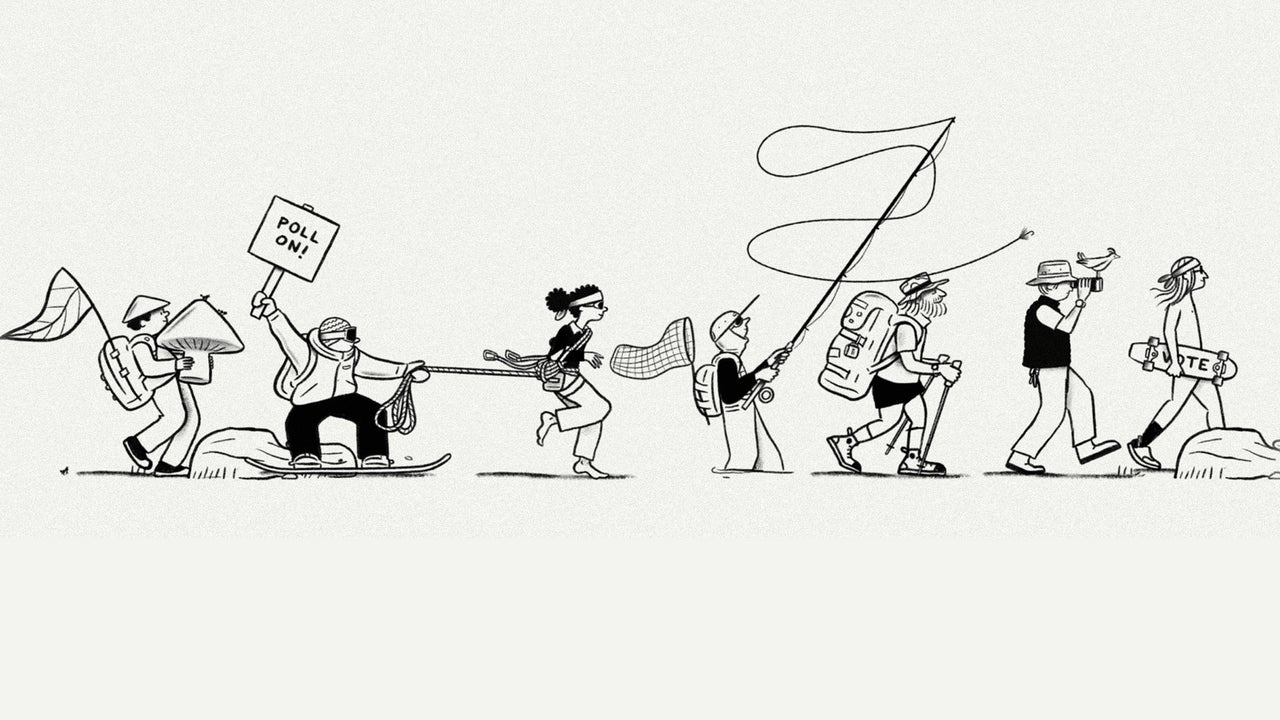
Patagonia will give you $100 to get your friends to vote
You probably know friends or family members who didn’t vote in the last election. Patagonia wants to offer you $100 to nudge three of them to vote in November.
The company is investing $11.2 million in the nontraditional get-out-the-vote campaign. The dollar amount (you get your money as a credit, not in cash) was inspired by a startling fact: An estimated 11.2 million environmental voters—Americans who see the climate and environment as a top priority—don’t vote.
“We couldn’t believe that,” says Corley Kenna, who leads Patagonia’s communications and policy team. “We thought, okay, if we know these people, we maybe can help get them out to vote in this election when the state of our planet, things have never been so dire. We need as many people who care about the health of our planet to vote. And so we want to do what we can to get those people out.”
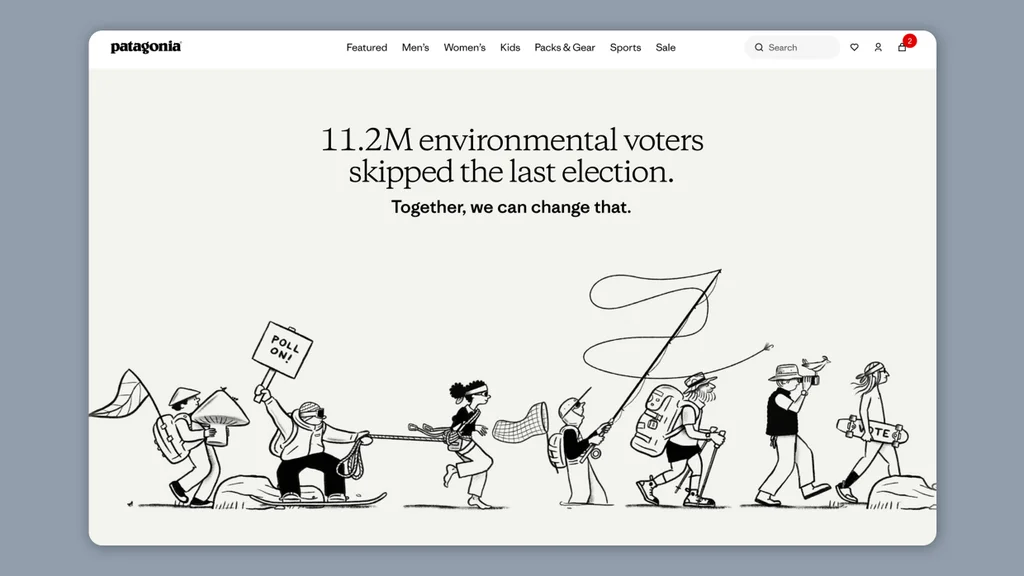
Anyone who’s interested will be able to sign up beginning September 26 via a platform called Relentless embedded on Patagonia’s site. After you enter the details for three people who you want to encourage to vote, the platform creates a voting plan based on their address, including information about where they can vote, whether they can vote early or by mail, and whether they’ll need to show an ID.
You can text or email them the information. Once you say that you’ve done that, you can choose between a $100 credit at Patagonia or a $100 donation to the League of Conservation Voters. (The incentive doesn’t depend on whether or not your friends end up voting; it’s just meant to get you to take the first step.)
A legacy of action
The outdoor retailer has always been known for its environmental protection work. And it has a history of encouraging people to vote that goes back to 1978, beginning with a local newspaper ad in Ventura, the company’s California hometown, that argued for pro-environment candidates and ballot measures. In the 2024 election, the company succeeded in getting around 5,000 people to vote and volunteer, Kenna says. Now, as the Trump administration has taken hundreds of anti-environmental actions, Patagonia wanted to go further.
Instead of traditional advertising, it chose to put money into relational organizing—asking Patagonia’s community to mobilize their friends, families, and neighbors.
An organization called the Environmental Voter Project, which focuses on encouraging environmentalists to vote, calculated the 11.2 million number through detailed research on voters. There are multiple reasons why someone who cares about climate and the environment might not be voting, says Nathaniel Stinnett, founder and executive director of the nonprofit.
“First, people who care deeply about climate are more likely to be young, people of color, or lower income Americans,” he says. “And it’s just harder for those people to vote because of voter suppression efforts.”
There’s another, hidden reason. “Our research shows that Americans view the climate crisis as a series of personal failings as consumers or commuters rather than as a systemic problem that should be addressed through political action,” Stinnett says. “And so political solutions don’t even occur to many environmentalists. They’re thinking about the recycling bin instead of the ballot box.” (That’s partly thanks to decades of efforts by the fossil fuel industry, which created concepts like the personal carbon footprint.)

Peer pressure can help nonvoters change their minds. Kenna, who started her career as a paid organizer before joining Patagonia, says she’s seen firsthand the difference between knocking on strangers’ doors and persuading your own friends or neighbors to vote. It’s also potentially more effective than traditional ads.
“We’re living in a world with just a lot of money in politics, and a lot of traditional ads on television, digital ads—we’re bombarded with them,” she says. “ I think the best way to break through with that is a text or an email or a phone call from a friend. An actual conversation with a friend.”
Patagonia is already involved in fighting the Trump administration to protect environmental policy, with a focus on public lands. Since January 2025, the company says that it has engaged hundreds of thousands of people on public land and climate issues. In early September, it joined a lawsuit to protect Bears Ears National Monument, a public space in Utah that Trump plans to shrink by around 90%.
Mobilizing voters is a natural extension of that work, says Kenna. “This is sort of the culmination,” she says. “If you care about these issues, you need to get your friends and family to make a plan to vote.”
If more environmentalists vote, it could make a material difference. In the last presidential election, for example, Trump won Pennsylvania by about 120,000 votes. But around 300,000 environmentalists in Pennsylvania sat the election out. “It is clear that climate voters could easily swing elections if they flood the polls in November,” says Stinnett.

Acer CEO says PC prices could drop in 2027
Acer CEO Jason Chen is offering a notably rosier timeline than the rest of the memory industry, predicting that price hikes tied to the ongoing RAM shortage could begin to reverse by late 2027.
Chen made the comments in an interview with DigiTimes, as reported by TechSpot, putting him at odds with executives at several major memory manufacturers who've painted a much bleaker picture.
The shortage has already had widespread effects. Since last year, surging demand from AI data center buildouts has consumed available memory supply and pushed DRAM prices up roughly fivefold, a squeeze that's rippled out to PCs, smartphones, graphics cards, and game consoles, along with the CPUs and motherboards built around them. As TechSpot notes, a recent industry study found the memory market now resembles, on a per-unit basis, conditions from nearly two decades ago.
Per TechSpot's reporting, Micron CEO Sanjay Mehrotra said earlier this year that tight supply would persist beyond 2027, while SK Hynix CEO Kwak Noh-Jung projected shortages peaking in 2027 and supply remaining tight through 2030. Adata chairman Chen Li-bai went further still, forecasting elevated prices for another full decade despite expansion plans across the industry.
Chen sees those forecasts differently, arguing they reflect an incentive to protect margins rather than a genuine supply problem. He contends that the supply of most RAM and SSD types has already caught up with demand, and that real shortages are now confined mostly to high-end components like the fastest DDR5 modules and chips such as Nvidia's N1X, according to TechSpot.
Even so, Chen still expects PC prices to climb another 5 percent to 20 percent before the year is out, with a peak in the first half of 2027 ahead of any relief. Part of his optimism hinges on cheaper supply coming from Chinese manufacturers like CXMT. Apple has reportedly been considering CXMT as a supplier despite the company’s inclusion on the Pentagon's blacklist, TechSpot noted.
Chen's prediction runs counter to what analysts told Mashable in our previous reporting, which suggested prices would likely rise before they fall, with elevated pricing persisting through 2027 and potentially into 2028.
Jitesh Ubrani, an analyst director with the International Data Corporation, told Mashable at the time:
"The memory supply will remain tight from a device's perspective for the remainder of 2026 and well into 2027," he said. "We will see some alleviation in 2028, but keep in mind that prices will continue to rise throughout. And even in 2028, assuming this new [memory] capacity comes online and is able to provide some alleviation, we don't see device prices dropping significantly."
That leaves consumers with a wide range of outlooks to sort through — from Acer's best-case scenario of falling prices by late 2027 to warnings that meaningful relief may not arrive until 2028, or could take considerably longer. For now, anyone shopping for a new PC should probably expect prices to keep climbing before they have any real chance of coming back down.

Anthropic launches Claude Opus 5.5, promising Fable-level performance at a lower price
Anthropic has released Claude Opus 5.5, a new AI model the company says performs at roughly the same level as its Claude Fable 5.1 model on most work, but at a significantly lower cost.
The model, announced on Tuesday, Sept. 22, is the first in Anthropic's new Claude 5.5 family. According to the company's announcement, Opus 5.5 costs about 40 percent less to run on typical workloads than Opus 5, which launched in July. Anthropic said Claude Sonnet 5.5 and Claude Haiku 5.5 will follow in the coming weeks.
Opus 5.5 is also the first new Anthropic model since CEO Dario Amodei called on AI companies to "pace the frontier" and put the brakes on AI development for safety reasons.
Claude Opus 5.5 leads in coding and knowledge work, Anthropic says
Anthropic said Opus 5.5 leads its benchmark suite in agentic coding, computer use, and knowledge work. On GDPval-AA v2.1, which tests real-world work across 44 occupations, the company reported that Opus 5.5 scored 1,846. Fable 5.1 scored 1,735 and Opus 5 scored 1,708.

On Terminal-Bench 4.0, Anthropic reported Opus 5.5 at 66.4 percent, compared with 57.9 percent for OpenAI's GPT-6 Astra, which launched earlier this month. Astra still led on some tests. Those included Terminal-Bench-Science 0.1, on which it scored 64.6 percent, compared to Opus 5.5's 58.7 percent.
Anthropic also cautioned that benchmark margins have become a less reliable guide at this level of capability. The company said the real-world gap between Opus 5.5 and Fable 5.1 is narrower than the scores suggest.
The company also said the model writes more clearly than Opus 5, which it described as a common complaint about the earlier model.
Want to learn more about getting the best out of your tech? Sign up for Mashable's Top Stories and Deals newsletters today.
Claude Opus 5.5 safety and safeguards
As the company's first new model since Amodei's "pacing the frontier" essay, safeguards are a particular concern.
The company said outside evaluators, including METR and Frontier Design, tested the model before release. Anthropic also said Opus 5.5 posted the best scores of any model to date on its automated behavioral audit.
This approach differed from Opus 5's. Mashable reported in July that Anthropic had deliberately left cybersecurity tasks out of that model's training. Anthropic now says Opus 5.5 is comparable to Claude Mythos 5.1 in biology and cybersecurity. Because of that, it is shipping with safeguards similar to those in Fable 5.1. Most cybersecurity tasks will be rerouted to Opus 4.8, and vetted organizations can apply for broader access to biology through a new Life Sciences Verification Program.
Anthropic acknowledged limits to its testing. The company said it has seen signs that Opus 5.5 often suspects it is under evaluation, making its real-world behavior harder to assess. OpenAI has reported similar behavior with GPT-Astra.
How to try Claude Opus 5.5
Claude Opus 5.5 is available now across Anthropic's platforms, including Amazon Web Services, Google Cloud, and Microsoft Azure. Developers can access it through the API as claude-opus-5-5.
API pricing is:
$4 per million input tokens
$20 per million output tokens
$0.20 per million tokens for cache reads
That's 20 percent less than Opus 5 for input and output tokens, and 60 percent less for cache reads, according to Anthropic. For comparison, GPT-6 Astra costs $10 per million input tokens and $50 per million output tokens.
Anthropic also says it's raising five-hour usage limits for Pro, Max, and Team subscribers.
Disclosure: Ziff Davis, Mashable’s parent company, in April 2025 filed a lawsuit against OpenAI, alleging it infringed Ziff Davis copyrights in training and operating its AI systems.

Elon Musks X launches X Numbers
X has introduced a new way for users to be contacted on its messaging service without sharing a phone number or following each other. The company launched X Numbers on Tuesday, giving XChat users a private code they can share with people who need to message or call them without a mutual follow.
This Tweet is currently unavailable. It might be loading or has been removed.
According to X's Help Center, anyone who enters a user's enabled X Number can message them even if the user doesn't follow them or has a closed inbox. Those conversations go straight to the inbox instead of message requests, and the sender can also place calls, depending on the recipient's call settings.
Despite its name, X says an X Number isn't a phone number. It's also separate from the safety numbers Chat uses to verify identities in encrypted conversations.
The feature is optional, and X says users can turn it off or refresh it at any time. Refreshing generates a new code, cutting off new contacts who only have the old one. X notes that people a user has already messaged can see their X Number and may share it with others, though a "Hide from others" setting can prevent that. The company also says users will be notified when someone contacts them through the code.
To set one up, X says users can open Chat, enter their Chat PIN if prompted, open the inbox dropdown menu, and tap "Number."
The launch is the latest step in Elon Musk's long-stated goal of turning X into an "everything app," a vision often compared to China's WeChat, which combines messaging, payments, and other services.
X launched its standalone XChat app on the App Store on April 24, positioning it as a WhatsApp competitor. The app has been pitched on the idea that users already have an X account and a network of contacts, so they don't need to exchange phone numbers. X Numbers extends that approach to people outside a user's existing network.
The company has also moved into payments. X Money went live on July 27, but only for premium subscribers. On Aug. 31, X announced that X Money was available to all Premium and Premium+ subscribers with U.S. accounts. The service isn't yet available to free users.
Want to learn more about getting the best out of your tech? Sign up for Mashable's Top Stories and Deals newsletters today.

ChatGPT-6 Sol and Luna are here: Pricing and benchmarks data
Not to be outdone by Anthropic, OpenAI is launching a couple of new ChatGPT models on Tuesday.
Mere hours after the launch of Claude Opus 5.5, GPT-6 Sol and Luna became available to users, per an OpenAI blog post. These new models are said to provide better accuracy at a more cost-efficient value than prior models. They can also be thought of as less-intensive versions of GPT-6 Astra, which launched earlier in September. OpenAI says Sol and Luna are better for work at different scales than what you might use Astra for.
"We trained GPT‑6 Sol and Luna with similar methods as GPT‑6 Astra, bringing the advances behind Astra’s state-of-the-art performance in professional work, factuality, coding, computer use, and alignment to faster, more affordable models," OpenAI's blog post said.
This Tweet is currently unavailable. It might be loading or has been removed.
If you want to try these new models right now, they're available in Work and Codex for Plus, Pro, Enterprise, Business, and Edu customers. Go and Free users can access Luna in the ChatGPT desktop app, but be warned: neither model is available in basic Chat just yet. Here are the prices for the new models, per 1 million tokens:
GPT-6 Sol: $2 input, $10 output
GPT-6 Luna: $0.10 input, $0.50 output
Those prices represent a 50 percent decrease in cost compared to GPT 5.6 Sol and Luna. Meanwhile, OpenAI says GPT-6 Sol and Luna outperform those older models to the tune of making half as many factual errors as before. It's worth noting that the 5.6 variants launched just a few months ago, so that means (if OpenAI is telling the truth) the company was able to cut down on errors by half in just one financial quarter.
If you want hard numbers to back that up, OpenAI says GPT-6 Luna beat the 5.6. release by 5.4 percent, using AutomationBench as a measuring stick, and it did so while costing 58 percent less per task. There are a handful of other benchmarks used in the blog post, and the new GPT-6 models come away looking better than their predecessors in all of them, naturally.
Disclosure: Ziff Davis, Mashable’s parent company, in April 2025 filed a lawsuit against OpenAI, alleging it infringed Ziff Davis copyrights in training and operating its AI systems.

If you have an iPhone, Apple might owe you money. Heres how to claim it.
Earlier this year, Apple settled a class-action lawsuit by agreeing to pay $250 million divided among U.S. iPhone owners. Here's how to claim your share.
Apple launched its iPhone 16 series in 2024, marketing it as introducing an enhanced, next-generation Siri as well as AI tool suite Apple Intelligence. The tech giant further stated at the time that such features would be coming to the iPhone 15 Pro and Pro Max models.
However, a class-action lawsuit claimed not only that these features failed to materialise when promised, but also that Apple knew it was incapable of delivering them on its advertised timeline.
An updated Siri recently launched in beta, two years after customers were told to expect it. As such, the class-action lawsuit alleged that Apple's marketing breached consumer protection laws, enticing people to buy new iPhones on the basis of features that didn't exist.
Apple hasn't admitted any fault, but has agreed to pay a $250 million settlement to impacted parties. If you bought an iPhone within the past few years, you may be one of them.
Are you eligible for Apple's $250 million class-action lawsuit payout?
However, not all iPhone owners in the U.S. will have a claim to a piece of the pie. In order to get a share of the $250 million settlement, you must first meet a few requirements:
You must live and have purchased an iPhone in the U.S. (and not just to onsell it);
You must have purchased the iPhone between Jun. 10, 2024 and Mar. 29, 2025; and
The iPhone must be one of the eligible devices, namely the iPhone 15 Pro, iPhone 15 Pro Max, or any iPhone 16 model. That is, the iPhone 16, iPhone 16e, iPhone 16 Plus, iPhone 16 Pro, or iPhone 16 Pro Max.
You also can't be an Apple representative or employee, though that isn't a criterion that the vast majority of iPhone owners will have to worry about.
If you fulfill these requirements, you may be entitled to a payout of approximately $25. This payout may change depending upon how much is deducted for legal fees, as well as how many people submit claims. (The class action complaint claims that there were approximately 37 million pre-orders for iPhone 16 series devices within the first weekend they opened, with that number subsequently continuing to grow.) However, while your individual payout could decrease, it could also increase to a maximum of $95.
How to claim a payout from Apple's $250 million class-action settlement
To claim your settlement from Apple, you can submit a claim via the dedicated website Smartphone AI Settlement. Simply click on the "Submit Claim" button and fill out the form, including selecting the method by which you'd prefer to be paid.
You'll also have to have your iPhone's serial number on hand so it can be verified as part of the relevant class. In order to find it, simply open your iPhone's settings, tap "General," tap "About," then locate your serial number. You can also press and hold on the number to copy it, so you don't have to try to type it out manually.
The deadline for submitting a claim is Dec. 21, 2026, though it's best to do it sooner if you're interested so you don't forget. Making a claim binds you to the settlement, meaning you won't be able to bring any future case against Apple regarding the specific issues in this case.
Dec. 21 is also the deadline for excluding yourself from the settlement. Doing so means that you'll get no money, but you keep the right to bring your own lawsuit against Apple about the delivery of Siri and Apple Intelligence features to the impacted iPhones. If you do nothing, you won't get a payout but will still be bound by the settlement, so it's best to decide which route you'd prefer now.
When will you receive Apple's settlement payout?
Once all claims have been received, the Court will have a final hearing on Feb. 24, 2027 to determine if Apple's settlement is fair, with payments expected to be made at some time after that. Unfortunately, you may have to wait a while, as such payments typically take several months. As such, while you won't have the cash for Christmas, you may have better luck by Memorial Day.

How to Use AI With Your Privacy Intact

Lawsuit demands OpenAI pay for new school after ChatGPT used in shooting
The families of victims killed in one of the deadliest mass shootings in Canada’s history have already sued OpenAI over its failure to warn law enforcement after discovering in advance that the shooter was using ChatGPT to plan the violence.
Now, British Columbia is suing, explaining for the first time how costly and extreme the disaster response has been. OpenAI and Sam Altman owe the tiny remote mining community shattered by the tragedy much more than an apology, the Canadian province argued. They must make meaningful changes to end ChatGPT-assisted violence and then pay whatever it costs to help Tumbler Ridge to rebuild, recover, and heal.
In a complaint filed Monday, British Columbia explained that Tumbler Ridge Secondary School had to be demolished after an 18-year-old transgender shooter, Jesse Van Rootselaar, died by suicide there in February after killing five kids and an education assistant. In total, eight lives were lost, as prior to the school shooting, Van Rootselaar shot their mother and half-brother.

San Francisco sues Trump Media for selling early access to Trump posts

San Francisco is suing the Trump Media & Technology Group, the parent company behind Truth Social, for selling early access to President Donald Trump's posts on the social media site. The lawsuit, filed today in California state court, alleges that the Truth API feed is a "corrupt business scheme" that violates both California's Unfair Competition Law and federal ethics and anti-corruption laws that prohibit insider trading.
White House spokesperson Davis Ingle recently called Truth Social the "most powerful and popular social media platform in the world." While the latter part of that statement is objectively untrue based on any credible e …

Paramount will need to release way more movies to make this merger work

Now that Paramount has reached a settlement with the 12 states that were suing to block its $110 billion merger with Warner Bros. Discovery (WBD), the studio is even closer to becoming one of the world's biggest production houses. In addition to spending at least $300 million more on film and TV projects produced in the US, Paramount says that it will release a minimum of 30 movies annually after it absorbs WBD. On paper, these goals make it sound like Paramount is trying to ensure that the entertainment industry won't be harmed by its WBD acquisition. But when you look at the studios' recent output, it seems very much like Paramount CEO Dav …

单网页开源,纯离线:汉语拼音注音小工具,包含33.7 万词典
简单粗暴,把普通的文字:
修改为带有汉语拼音的样子:

可以直接阅读,或者导出、打印,适合于幼儿园到低龄小学生的…家长。
来自发现频道,@tjsky 的自荐:https://meta.appinn.net/t/topic/91955
【开发者自荐】汉语拼音注音小工具,单网页,纯离线
它可以把文章一键转成汉字上方带拼音的注音读物,专为幼儿园到小学低年级的孩子做朗读材料,纯本地运行。
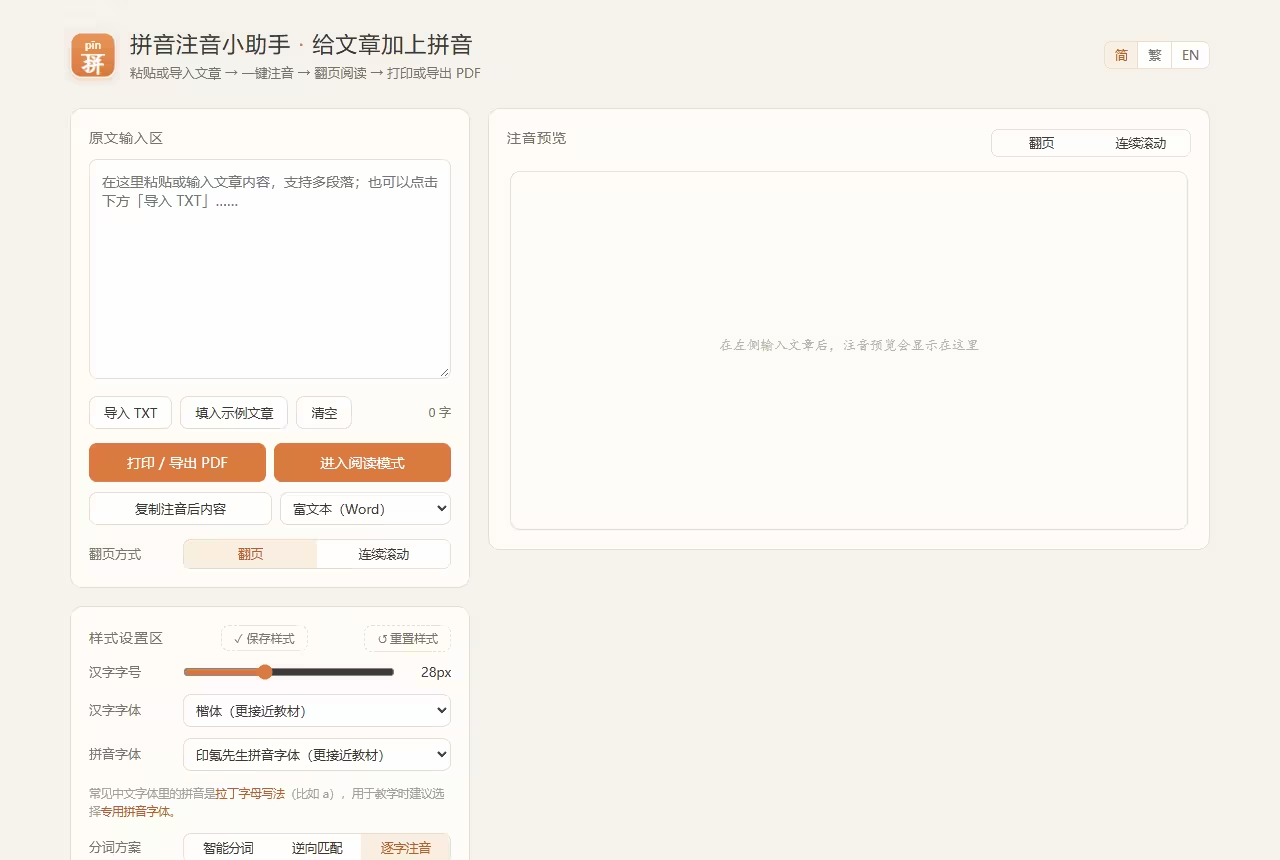
这就是全部样子了,非常简单易用,在左上角输入你要标注的文字,就行了,右侧预览区会自动显示标记了拼音的内容。
下方,还可以设置汉字字号和字体,以及拼音字体,甚至还能设置自字间距、行间距等等,适合不同年龄段
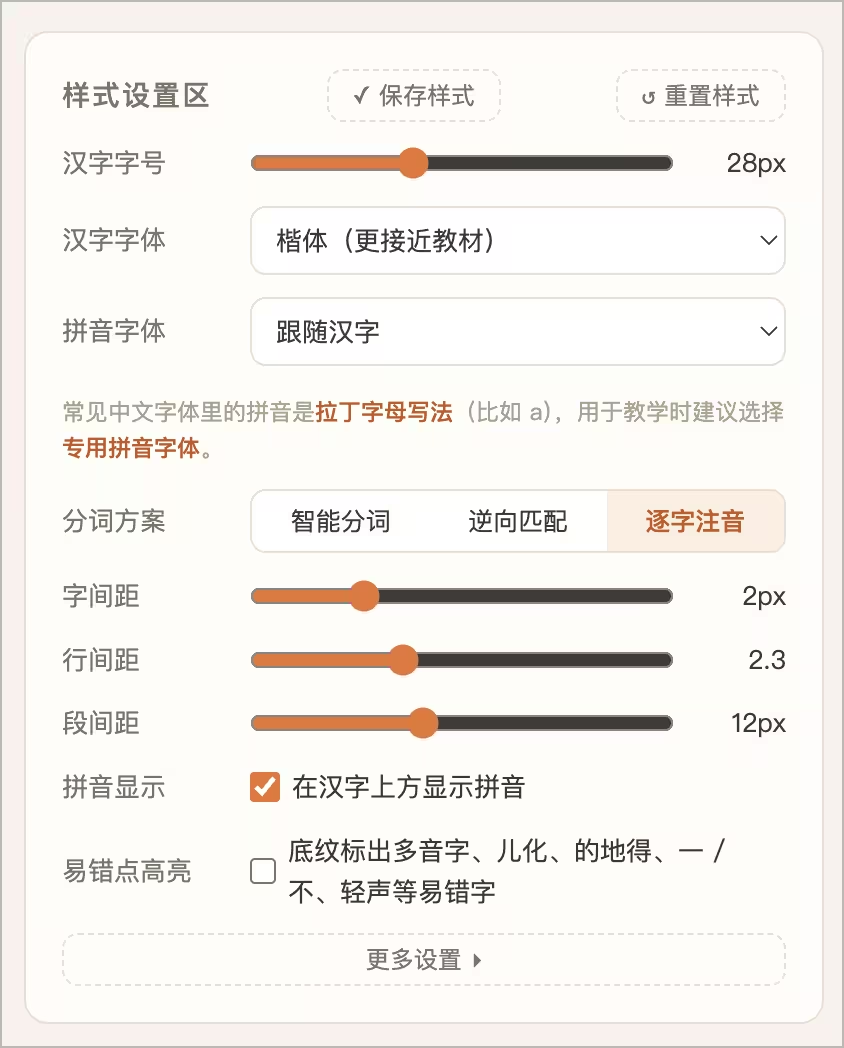
以及,tjsky 甚至做了三个版本,我称之为小小班、中班、大班  :
:

不过,包含33.7万词汇的完整词典版本,也不过才6MB大小…就选它吧。
最后,列一下核心功能:
- • 教材式排版:汉字上方标拼音,轻声自动不标调(妈妈 mā ma)
- • 一 / 不变调开关:一个 → yí gè,也可切回标原调
- • 儿化音双模式:花儿 huā er / huār,人名误判点一下就改
- • A4 所见即所印:自动分页不留大空白,导出 PDF 一页不少
- • 易错点高亮:多音字、的地得、一/不 加底纹,打印核对
- • 纯本地运行:文章不上传服务器,断网双击就能用
获取
原文:https://www.appinn.com/chinese-pinyin-annotation-tool/
相关阅读
- GoogleDicMaker – 谷歌拼音输入法词库转换器
- Google 拼音输入法 2.0 测试版
- Google 中文搜索结果屏蔽黑名单
- Google 拼音输入法
- 搜狗输入法 for Mac 2.6.0 – 新增自动英文、动态皮肤
©2021 青小蛙 for 小众软件 | 加入我们 | 投稿 | 订阅指南
3659b075e72a5b7b1b87ea74aa7932ff
点击这里留言、和原作者一起评论