
中国AI大模型上周调用量61.17万亿Token 连续二十周超美国 - 观点网
Google News 中国大模型中国AI大模型上周调用量61.17万亿Token 连续二十周超美国 观点网

Plain-text files are at risk
Lobsters
Walkie
Product Hunt
Dictation + meetings + read aloud in one app on-device
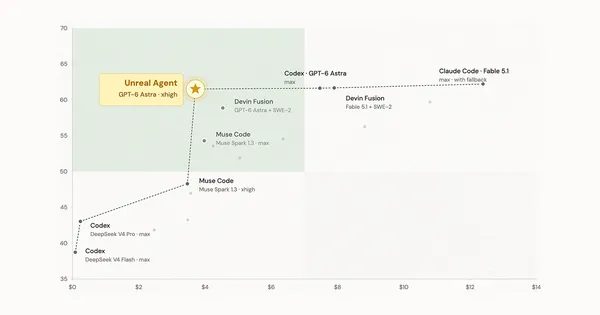
Unreal Agent
Hacker NewsComments

Converge to Surprise: Evolutionary Self-supervised Image Clustering
arXiv cs.LGarXiv:2607.06887v2 Announce Type: replace
Abstract: A variety of self-supervised image clustering approaches are invented in the past years. However, all dominant approaches are exploitative: The direction of parameter updates is determined by known states (observed input samples and existing parameters). We propose an explorative self-supervised learning framework that steps out of this zone. We define a surprise score that measures how unlikely the model's output representation is, assuming that all pixels are i.i.d. random noise. Maximizing the surprise score forces the deep learning model to reject the random noise null hypothesis, or equivalently, to discover non-randomness from data. Also, we propose a fundamental assumption: a surprise score cannot, in general, be fully optimized by exploitative optimization approaches. Thus, we propose the converge-to-surprise scheme to optimize a model: an evolution-strategy (ES) outer loop, which maximizes the surprise score using the mutation-selection mechanism, paired with a periodic gradient-descent inner loop, which uses the surprising clusters already discovered by ES as surrogate targets. On simple image benchmarks, our framework trained from scratch achieves new state-of-the-art results in non-parametric self-supervised image clustering --- the strictest deep-clustering setting, where the number of classes is unknown during training.
Evidential Fusion Network for Multimodal Survival Prediction under Missing Modalities
arXiv cs.LGarXiv:2606.20757v2 Announce Type: replace
Abstract: Recent multimodal survival prediction models have demonstrated strong predictive performance by leveraging complementary information across modalities. However, such models generally assume data completeness and exhibit limited robustness toward missing modalities, which are frequently encountered in real-world clinical settings. We propose the Evidential Missing Modality Survival Fusion (EMMS) model for multimodal survival prediction under missing modalities. EMMS offers a straightforward, computationally effective approach to survival analysis without requiring a generative phase for missing data. By employing Dempster-Shafer theory and Gaussian Random Fuzzy Numbers for multimodal decision fusion, it considers both aleatoric and epistemic uncertainty alongside modality reliability for fusion. Moreover, the model treats missing modalities as vacuous evidence, preventing interference with available inputs and naturally reflecting increased uncertainty and calibrated predictions. Extensive experiments on four cancer datasets demonstrate state-of-the-art performance while providing calibrated and interpretable uncertainty estimates under incomplete multimodal observations, without introducing additional computational overhead.
CAffNet: Hard Constraint-Affine Neural Networks
arXiv cs.LGarXiv:2605.24437v2 Announce Type: replace
Abstract: We present a novel framework for embedding hard constraint satisfaction into neural network (NN) architectures, specifically feedforward neural networks and transformers, with input-dependent affine constraints of arbitrary cardinality. Traditional constraint enforcement approaches either rely on penalty-based soft constraints, which offer no guarantee of satisfaction, or on post-processing methods that enforce constraints after the NN is trained, which may lead to suboptimality. We introduce a trainable constraint-affine (CAffine) layer into NNs, yielding CAffNet, which goes beyond enforcing affine constraints via fixed orthogonal or parallel projections and enables joint optimization with network parameters. Moreover, we impose no restrictions on the constraint space dimensions and establish that our construction preserves the universal approximation properties of NNs, while providing provable guarantees on constraint adherence for all inputs. Experimental validation demonstrates robust performance across diverse domains requiring guaranteed constraint satisfaction. The code is available at https://github.com/ice-t-lab/CAffNet.git.
Event-Based Early Warning of Vineyard Disease Risk from Environmental Time Series
arXiv cs.LGarXiv:2605.04548v2 Announce Type: replace
Abstract: Accurate early warning of vineyard disease risk from environmental observations is essential for timely intervention and more sustainable crop protection. However, many existing studies formulate disease prediction as daily presence classification, which can favor persistence-driven predictions and provide only limited support for actionable short-horizon warning. In this paper, we present an event-based approach for early warning of vineyard disease risk from environmental time series and evaluate it through a vineyard case study. Rather than predicting daily disease status, the task is reformulated to predict transitions into annotated disease-risk periods within a future window of 3-7 days. To reduce fragmentation caused by short interruptions in the binary labels, new events are defined only after a minimum disease-free gap. This formulation encourages models to capture environmental precursors associated with upcoming risk periods instead of merely reproducing temporal persistence. Using multi-year agro-meteorological data, we construct input representations that capture humidity dynamics, rainfall accumulation, temperature variability, and seasonal structure through cyclic temporal encoding. We evaluate representative methods from classical machine learning and deep learning, including XGBoost, Long Short-Term Memory (LSTM) networks, and Temporal Convolutional Networks (TCNs), using both standard classification metrics and an event-oriented early warning protocol. The results show that the event-based formulation supports practical short-horizon warning, while the compared models exhibit distinct trade-offs between event recall, lead time, and false-alert behavior. Overall, the study underscores the importance of problem formulation in environmental time-series learning and demonstrates the value of event-based prediction for vineyard disease warning systems.
Diffusion-Induced Spatial Attention Overlapping Community Detection
arXiv cs.LGarXiv:2609.26737v1 Announce Type: cross
Abstract: Detection of overlapping communities is essential for modelling networks in which nodes participate simultaneously in multiple structural or functional groups. Existing graph neural network approaches commonly rely on local message passing, which can obscure community boundaries through smoothing and limit the representation of structurally relevant long-range dependencies. We introduce Diffusion-Induced Spatial Attention Community Detection (DISCO), a deep-learning framework that combines a structural prior derived from influence spreading dynamics, sparse multi-head attention, and non-negative community-affiliation learning. The prior identifies candidate interactions beyond immediate graph neighbours and biases attention according to their structural proximity, while a Bernoulli-Poisson edge-reconstruction objective enables overlapping community inference from node attributes and structural profiles, or both. Benchmark experiments show that DISCO performs competitively against established graph convolutional and graph attention approaches across different input configurations. To demonstrate its practical applicability, we present a proof-of-concept cybersecurity use case in which changes between community assignments inferred from consecutive communication-network snapshots provide an interpretable anomaly signal. Temporal community similarity identifies structural deviations, while node-level contributions help locate the devices associated with them. DISCO therefore provides both a flexible method for overlapping community detection and a foundation for analysing structural change in dynamic networks.
On Basis Function Selection for Sparse Gaussian Process Regression
arXiv cs.LGarXiv:2609.26624v1 Announce Type: cross
Abstract: Sparse Gaussian processes achieve $O(N)$ inference by replacing the kernel with an appropriate expansion in a fixed basis $\{\phi_j\}$ on the input space. Given a compute budget $M \ll N$, practitioners conventionally truncate the basis to its first $M$ entries. Nothing in the formalism, however, prevents one from selecting only those $M$ basis functions that matter for the data at hand. This would avoid spending budget on basis functions where there is no signal, but it requires a criterion for ranking the candidates. We propose three such criteria derived from an information-theoretic view of the basis-function selection problem. Each criterion matches a different state of knowledge at selection time: a no-data state, a no-prior state, and an in-between state. We then study the performance of truncation versus selection strategies on six UCI regression benchmarks across three basis families: Hilbert-space Gaussian processes (HSGP), variational Fourier features (VFF), and variational inducing spherical harmonics (VISH). We observe that the no-data criterion is a safe default, matching or improving on truncation for HSGP, VFF and VISH, with substantial gains for VISH and improvements over a recently developed selection heuristic for that basis family. The data-aware no-prior and in-between criteria provide substantial gains over truncation specifically for HSGP, which is the most broadly used of the three families in practice.
MMAP: Multimodal Missing-Aware Pretraining for Longitudinal Alzheimer's Prediction
arXiv cs.LGarXiv:2609.26617v1 Announce Type: cross
Abstract: Clinical decision making heavily relies on predicting the disease progression trajectory by seeking to understand patient's health status which is characterised by multimodal medical data. AI holds great potential for learning useful representations from multimodal medical data to predict disease progression and aid clinical decision making. However, development of predictive AI models is constrained by missing modalities and incomplete tabular data frequently occurring in medical datasets. In addition, disease labels alone may only provide limited supervisory signals for learning representations from high-dimensional multimodal data. Here, we present MMAP, a novel Multimodal Missing-aware Alignment Pretraining method for learning image-tabular representations from incomplete data. An image encoder is pretrained with efficient sigmoid contrastive learning combined with generative reconstruction. A tabular encoder is built upon a tabular foundation model. A missing token generator enables the two encoders to take incomplete data as input, enabling the model to be robust against missing modalities, either with missing images or missing tabular data. We evaluate the clinical usefulness of the learnt multimodal representations on two challenging longitudinal clinical tasks for Alzheimer's disease: predicting disease stage conversion and predicting amyloid status. The proposed method outperforms strong multimodal and unimodal baselines.
Bridge of $\Psi$'s: Quantum Circuit Optimization with Schr\"odinger Bridges
arXiv cs.LGarXiv:2609.25947v1 Announce Type: cross
Abstract: Quantum circuit optimization replaces a circuit with an equivalent one of fewer gates and lower depth, reducing execution cost and error rate. We ask whether a generative model can learn this transformation directly from examples, rather than selecting from a fixed rewrite library or rigid algebraic routines. We present Bridge of $\Psi$'s (BOPS), a generative model based on Schr\"odinger bridges, using a custom denoiser architecture, that learns a transformation from a source circuit into an equivalent optimized circuit. We train it on data constructed to be hard for existing optimizers, by applying rewrite rules backwards so that each input has a known lower-cost target. On held-out 8 qubits $\times$ 64 depth Clifford+$T$ circuits, BOPS reduces gate count by $2.46\times$ and depth by $2.45\times$ in geometric mean, outperforming all nine baseline optimizers. This constitutes the first generative model bridging quantum circuits and frontier machine learning methods, opening up the quantum compilation stack to learned optimization along multiple axes.
FAST-ML: A Hybrid Physics-Machine Learning Framework for Tropical Cyclone Intensity Forecasting
arXiv cs.LGarXiv:2609.25505v1 Announce Type: cross
Abstract: Rapid intensification (RI) remains one of the most consequential and difficult aspects of tropical cyclone (TC) forecasting. Although full-physics numerical weather prediction models can represent the processes governing RI, resolving storm-environment interactions remains computationally expensive, while purely data-driven approaches often lack physical interpretability. We present FAST-ML, a hybrid framework that bridges data-driven efficiency with physical constraints. A physically informed dual-stream neural parameterization ingests 3D ERA5 fields to diagnose ventilation controls---environmental wind shear and mid-level entropy deficit. By optimizing these parameters end-to-end through a differentiable FAST intensity model, this architecture establishes a robust new paradigm for observation-driven parameter optimization, ensuring storm evolution remains strictly governed by thermodynamic principles. By better capturing the storm's continuous intensity evolution, FAST-ML improves upon its physical baseline, reducing ensemble CRPS across forecast lead times, with a reduction of approximately 31% at 60 h and nearly halving the RI false alarm ratio without sacrificing detection skill. In a 100-member ensemble configuration, FAST-ML produces intensity forecasts comparable to FNV3 for selected storms under the evaluated input configurations. Furthermore, zero-shot tests on selected Eastern Pacific storms provide encouraging evidence of cross-basin transferability. FAST-ML provides a modular intensity forecasting framework that can be coupled with externally supplied storm tracks and environmental fields. It demonstrates that observation-driven parameter learning within physically constrained dynamics simultaneously enhances accuracy, interpretability, and computational efficiency.
Learning from Humans for Proactive Assistance in Human-Robot Collaborative Transport
arXiv cs.LGarXiv:2609.25351v1 Announce Type: cross
Abstract: We focus on human-robot collaborative transport, a challenging task of broad relevance spanning logistics, manufacturing, and the home, in which a user and a robot work together to relocate a large or heavy object. To act as an effective partner, the robot should reduce the user's effort by contributing to efficient relocation of the object while remaining physically responsive to them. Prior work often addresses these capabilities separately, producing robots that may move the object efficiently but resist user input, or accommodate the user but depend on continuous guidance. Our key insight is that obstacle-constrained collaborative transport requires integrating predictions of human collaborative behavior with compliant robot control. To this end, we introduce PROACT, a framework for human-robot collaborative transport that incorporates anticipation into compliant whole-body control through a learned model of human collaborative behavior. Trained on a large-scale, real-world dataset of dyadic human transport demonstrations, our transformer architecture distills collaborative behavior into predictions of future object motion. Across 108 real-world trials with a 9-DoF mobile manipulator, PROACT reduces mean interaction work by 59.2\% and 20.4\%, and mean completion time by 12.9\% and 6.9\%, relative to compliance-only and MPC baselines, respectively. Footage from our experiments can be found at https://youtu.be/qAGvQfVPjbk.
GINIO: A Geometric SO(3)-Equivariant Interface for Neural Inertial Odometry
arXiv cs.LGarXiv:2609.25338v1 Announce Type: cross
Abstract: Neural inertial odometry increasingly uses networks as learned measurements inside filtering pipelines. Such measurements should transform consistently under arbitrary IMU mounting conventions: their mean must transform as a vector, and their covariance must transform congruently as a second-order tensor. We present GINIO, a geometric SO(3)-equivariant interface for neural inertial odometry under arbitrary rotations of the IMU measurement frame. Given calibrated IMU windows, our framework predicts a motion measurement and uncertainty obeying these tensorial laws. To support efficient sensor-frame learning, we introduce Last-Frame Alignment (LFA), a deterministic preprocessing step that is provably equivalent to world-frame training for SO(3)-equivariant predictors. The connected estimator tracks sensor-local states such as IMU bias, separating nuisance estimation from the geometric law enforced by the learned measurement. We instantiate the same interface in filter-connected NIO, AirIO-style recurrent aerial prediction, EqNIO-style full-SO(3) canonicalization, and ResNet-style temporal backbones. On TLIO, GINIO achieves 2.018 m ID/SO(3) ATE while EqNIO degrades to 76.389 m, using 11.6x fewer FLOPs. On NanoBench, our AirIO-style instantiation improves ATE from 5.579 m to 1.430 m without external attitude input, and our ResNet-style instantiation reaches 0.581 m ATE versus 0.645 m for ResNet1D. On Fetch, GINIO empirically reduces unseen physical-remount ATE from 8.15 m to 0.50 m without retraining, demonstrating robustness beyond the exact coordinate-frame guarantee. For uncertainty, spectral covariance reduces covariance-equivariance error by over three orders of magnitude compared with a diagonal head.
Empirical Auditing of Edge-Private Graph Generators
arXiv cs.LGarXiv:2609.25155v1 Announce Type: cross
Abstract: We empirically audit privacy leakage by testing whether outputs from edge-neighbouring inputs remain distinguishable, using statistically valid lower bounds on the privacy loss witnessed by our attacks. Our framework compares direct-edge, local-structural, and GNN-based attacks through the geometry surrounding a target edge. Experiments across two generators and two networks show that privacy leakage is both mechanism- and network-dependent, with learned representations revealing information not captured by conventional local statistics.
继续滚动加载更多…