



沙特7月原油出口升至四个月高位,俄罗斯9月海运原油出口收入三个月新高

美联储Perli:美联储购债将视市场情况调整,关注融资压力信号,维持准备金充裕
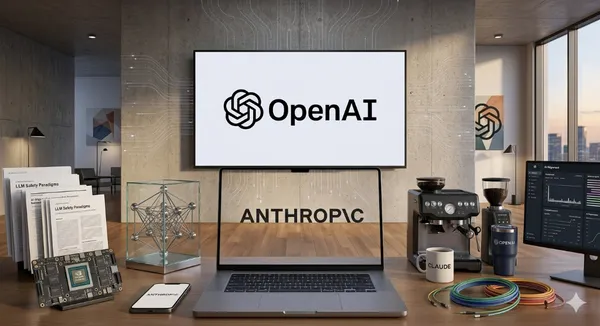
同日推出"廉价模型",OpenAI和Anthropic开打"价格战"

Professors Call on Trinity to Divest from Artificial Intelligence - trinitytripod.com


After 40 investors rejected Jeff Bezos’ Amazon pitch, his parents offered $245,573 of their retirement savings
Sometimes the best investments are more about a gut feeling than hard numbers. At least that holds true for Jeff Bezos’ parents, who bet on their son when few others would.
In 1995, a mere two years before Amazon would go public, and more than 30 years before it would surpass Walmart to become the biggest company in the world (and clinchingMike Bezos recalled his son saying in a 2015 interview the No. 1 spot on the Fortune 500 as a result), Bezos received a lifeline from his parents.
According to a 1997 prospectus, his mother Jacklyn Gise Bezos, who died in 2025, and stepfather Miguel “Mike” Bezos, gave their son $245,573 from their savings so he could get his business off the ground. The six-figure sum represented a “large fraction” of their life savings at the time, according to Bezos, but it would eventually make them both billionaires.
Yet, before he accepted his parents’ money, Bezos made it abundantly clear to them that they might never get it back.
“I want you to know how risky this is,” Mike Bezos recalled his son saying in a 2015 interview. “Because I want to come home at dinner for Thanksgiving and I don’t want you to be mad at me.”
Bezos put the odds that his online bookseller would succeed at about 30%, which he previously said was generous given that the overall success rate for startups is closer to 10%.
A year before his parents invested, Bezos had approached 60 investors asking for $50,000 minimum investments as he sought to reach $1 million in funding. Only 22 of the people he approached agreed to invest, including his parents and two younger siblings, Mark and Christina Bezos Poore.
Still, in the end, his parents made the investment despite the long odds—and despite his stepfather’s first question about the company being “What’s the internet,” Bezos joked.
“He wasn’t making a bet on this company or this concept,” Bezos said of his stepfather in an interview with the Academy of Achievement. “He was making a bet on his son, as was my mother.”
“The rest is history”
Almost immediately after opening Amazon’s online store in 1995, Bezos told the Academy of Achievement he was surprised to see orders coming in from all 50 states and from 45 different countries.
At that time, the company had about 10 employees. By 1997, the company had grown to more than 600. It went public that year at $18 per share, and raised $54 million. Bezos became a billionaire by 1998 thanks to his 40% stake in Amazon, and today, he holds the title of the world’s third richest person, with a net worth of $283 billion, per the Bloomberg Billionaire Index.
As for Bezos’ parents, their initial bet on their son turned out to be one of the most successful venture investments of all time. It’s unclear how many shares Mike Bezos has in his possession after his wife died last year, but the couple donated 595,027 shares to the Bezos Family Foundation from 2001 through 2016.
If Mike Bezos still retained the rest of their original 1.4 million shares, they would be worth an estimated $51.7 billion at today’s stock price, according to Fortune’s calculations. Bezos’ siblings Mark and Christina, who each invested $10,000 in Amazon in 1996, according to the prospectus, would also each have shares worth more than $1 billion today if they had never sold any.
Amazon’s shares have skyrocketed more than 208,000% since its IPO in 1997. And just last month, the company’s shares hit their all-time-high stock price of $287 per share.
The Bezos family later turned some of the wealth they got from Amazon toward philanthropy. In 2000, Mike and Jackie founded the Bezos Family Foundation with their three children—Jeff, Mark and Christina—and their spouses. Since then, the foundation has focused largely on education and child development, funding research and programs aimed at helping young people from birth through high school.
“We were fortunate enough that we have lived overseas and we have saved a few pennies so we were able to be an angel investor,” Mike said of him and his wife’s initial Amazon investment. “The rest is history.”
This story was originally featured on Fortune.com
The backwards AI pacing debate and how far business is from the frontier
Washington and Silicon Valley have found a new fight to pick over artificial intelligence in “pacing,” or the deliberate throttling of frontier model development until safety, alignment, and society at large can catch up. To its detractors, pacing is unilateral disarmament in the race with China. To its champions, pacing is the only responsible path for a technology whose own creators warn of catastrophic risk.
Both camps have fallen prey to the “Compute-to-GDP Fallacy”—the mistaken belief that every incremental leap in AI model performance immediately translates into macroeconomic output. Every prior general-purpose technology took decades to diffuse into measurable productivity. AI is following the same curve at an accelerated pace, but everyone seems to buy the hype that the laws of history or of economics do not apply this time.
In reality, Corporate America is already years behind the AI frontier, and the labs’ commercial fortunes will be decided by trust and adoption, not raw capability. Pacing would cost the economy remarkably little. Here’s why we—whether out of arrogance or misdiagnosis—are simply having the wrong argument.
The pacing skeptics’ suspicions are not frivolous. Is pacing real, or a savvy marketing gambit by frontier labs and cybersecurity companies polishing their financials ahead of IPOs? Would pacing cede the U.S. lead in AI to China, or would Beijing reciprocate and pace in its own manner?
The Frontier Problem
AI has plainly reached a critical capability milestone. Warnings of catastrophic or existential risk can no longer be dismissed outright, even if the near-term probability remains modest. Yet by focusing almost exclusively on cutting-edge models, frontier labs have mismanaged both their messaging and the public trust. More than 100 recent conversations with CEOs, policy leaders, and AI scientists for our coming book, When Machines Act, have convinced us that the pacing debate has lost sight of first-principles thinking.
Lost in the noise is the distinction between the cutting-edge research the labs conduct behind closed doors and the products they release to the public. The real question may be whether the labs need to slow down at all or simply do a better job of ensuring their products are safe for consumption.
The Alignment Problem
Since the release of ChatGPT in 2022, corporate leadership has scrambled with a speed unmatched in modern commercial history. Even so, while executive suites have mobilized with unprecedented urgency, the structural physics of enterprise architecture—fragmented data silos, legacy ERPs, strict compliance regimes, and basic data hygiene—make true economic absorption an inherently slow slog. As corporate budget shocks from runaway “tokenmaxxing” demonstrated, many daily enterprise workflows require far simpler models, and precious few tasks at the average Fortune 500 company demand a frontier system at all. Pacing, therefore, will neither harm economic output nor choke off the labs’ commercial revenues, because enterprises need time simply to assimilate the capabilities already on the table.
Among high-performing companies, more than two-thirds identify data as the primary barrier to implementing AI, a figure that has proven stubborn even as the models themselves have leaped forward. Only 7% describe their data as “completely ready” for AI; fewer than a quarter have a data strategy at all; and 63% either lack AI-suitable data management or are unsure whether they have it.
The Fallacy Problem
As McKinsey Senior Partner Asutosh Padhi emphasized on air with Fareed Zakaria, technical availability is fundamentally different from economic transformation. General-purpose technologies have historically required decades to reorganize workflows and generate broad-based productivity gains. Electricity took 75 years to lift productivity economy-wide. Computers required 50 years, and the Internet and mobile devices demanded 25. The underlying models may be ready, but the systemic organizational restructuring they demand will take substantial time. When McKinsey surveyed the business community, the firm found that only 6 percent of companies reported a “significant” impact and modest earnings attribution.
Companies are concentrating on the high-reward, low-risk automation tasks that models one or two generations old can already solve. As one highly respected former Wall Street CEO told us, these systems will run in parallel with legacy systems for years to confirm they operate correctly and that no regulatory risk is unknowingly absorbed.
Despite advances in frontier labs, corporate America will set the pace itself, ensuring a secure rollout regardless of what the labs decide. No company in any industry should release a product it believes to be dangerous, and AI is no exception.
A parallel dynamic has emerged in the economics of silicon. Older-generation chips, initially cast aside in the scramble for cutting-edge accelerators, are finding a second life as workhorses for the practical inference tasks that dominate enterprise demand. As Growth Protocol founder and CEO Miro Dimitrov noted at last week’s Yale CEO Caucus, deploying neuro-symbolic architectures has allowed his enterprise reasoning platform to slash inference costs by roughly 80-fold in live client deployments, largely by shifting workloads off ultra-expensive GPUs and onto everyday enterprise CPUs.
The Three Phases of AI Adoption
Corporate AI adoption is best understood in three phases, distinguished by how much work a company can responsibly hand over, which is gated by data readiness and the trust systems have earned. The first phase, assistance, consists of off-the-shelf copilots that ride atop enterprise platforms

34 work-from-home tech upgrades actually worth your money
Working from home is the dream for many people. But despite being more comfortable than a traditional office, your home office may not be optimally suited for productivity. Thankfully, it’s easy to upgrade your WFH life with a few choice products. With the right tools and equipment, your home workspace can be as efficient as you need it to be.
Our entire newsroom has had to adjust to remote work over the past few years—like most of the world—so we’ve spent a long time testing and reviewing hardware and optimizing our own workspaces. Here are some of our favorite work-from-home essentials.
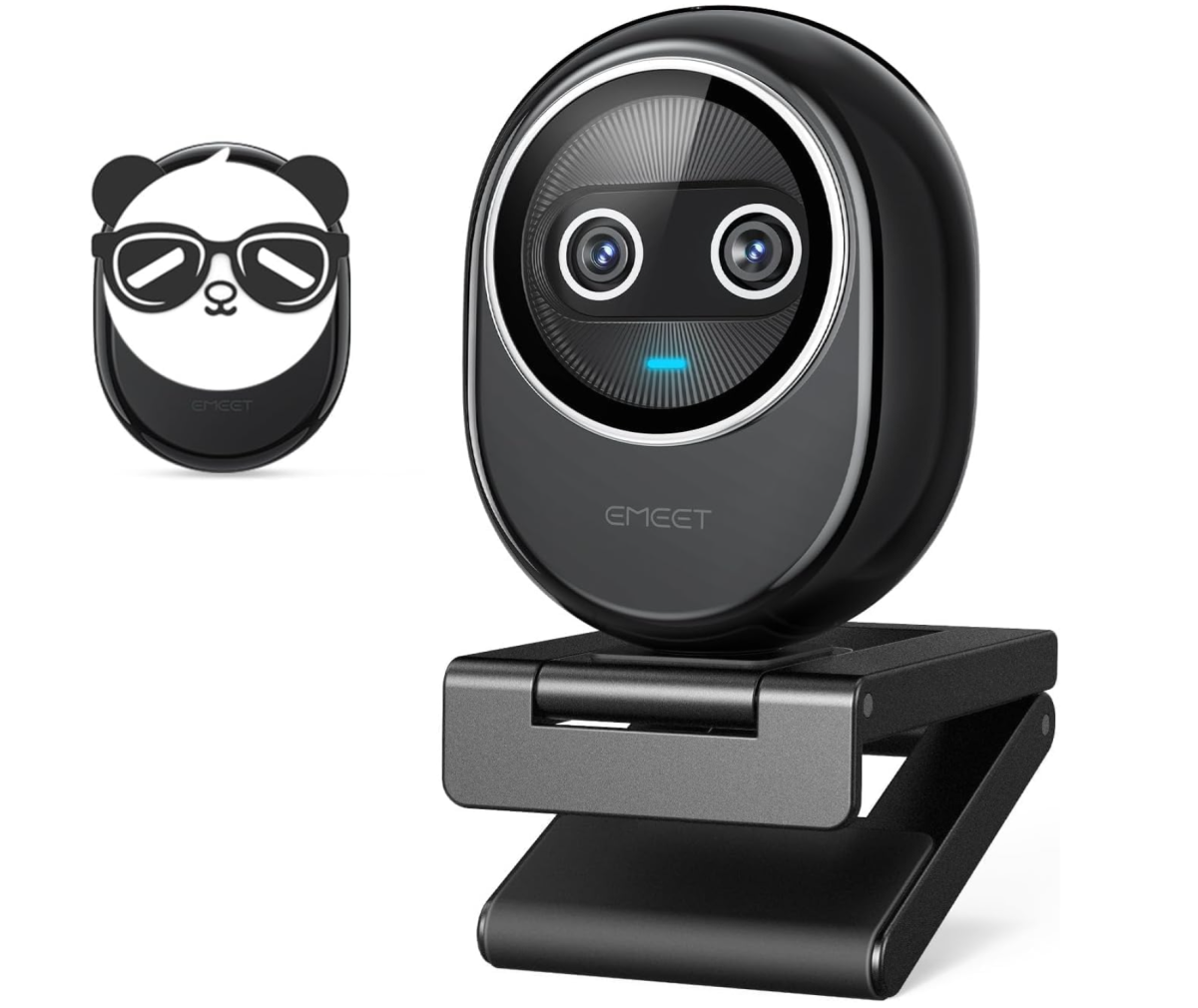
Look sharp during Zoom meetings: Emeet Piko Plus
eMeet / Amazon
Working from home often requires joining in on video meetings. Whether you love them or hate them is beside the point because you need to join them anyway. And since your laptop’s camera is probably not up to par, you need a reliable webcam like the Emeet Piko Plus. This is a 4K webcam with autofocus and an adjustable field of view, and though it retails for $90, we’ve seen it go as low as $63 on sale.
Improve your posture with a laptop stand: Lamicall Adjustable Laptop Stand

Lamicall
A good laptop stand will do wonders for your comfort and health. Not only can a stand keep you in a good ergonomic position, but it will keep your laptop safe and secure on your desk. Plus, a stand makes using a mouse and keyboard with your laptop a lot easier.
You don’t need to drop a ton of money on something expensive, either. A solid lightweight aluminum stand like the popular Lamicall Adjustable Laptop Stand will do just fine. It supports almost any laptop, from 10 inches up to 17.3 inches. It lets you adjust both tilt and height, and comes with ventilation holes to help dissipate laptop heat. Despite its $36 MSRP, it can often be found on Amazon for less than $30.
If this one’s too tall for you, Ugreen’s X-Fit Laptop Stand is a bit lower but still allows four different angles. The best part about it is that it’s also a USB hub, featuring one USB-C, two USB-A, an HDMI, and even an SD card slot. This one’s going to cost you $50.
Store your important files for easy on-the-go access: WD My Passport 2TB SSD

WD / Amazon
You might work at home, but you might also need to transport your work files for occasional trips to the office, or just a convenient way to take your data on the go. External drives are a great way to store and back up your files, and their ever-decreasing size means you can now easily take mass amounts of storage anywhere you go.
The

Why Governments and Institutions Are Putting Sovereign Debt Onchain
On 21 September the European Central Bank did two things it had never done before. It switched on Pontes, a service that lets tokenised securities settle in central bank money, with a first group of banks and ledger operators already connected. It also announced that a portion of its own funds will be invested in tokenised bonds issued by euro-area governments, agencies and supranationals, settled through the new rails. Piero Cipollone of the ECB's executive board described it as bringing the stability and trust of central bank money to tokenised finance. That is a central bank saying, in its own name and with its own balance sheet, that government debt on a distributed ledger is an asset class it intends to hold.
The rest of the world got there earlier and by different routes. Hong Kong has sold three digital green bonds worth a combined HK$16.8 billion, the latest settled in tokenised central bank money. The Marshall Islands issued a Treasury-backed sovereign bond onchain to fund a basic-income programme delivered to citizens' phones. Slovenia became the first euro-area sovereign with a digital bond in 2024. The UK's DIGIT pilot is booked for early 2027. Against a $102 trillion global public debt stock, the onchain slice is still tiny. The question worth asking is not how big it is but what, precisely, the ledger changes about how a government borrows. This piece works through five answers and then looks at the network that has quietly become the largest home for non-US sovereign paper: Stellar.
What a government bond does today and why it is slow
A sovereign bond is a promise to pay, recorded in a register, held through a chain of intermediaries and settled on a schedule. When a fund in Singapore buys a German Bund, the trade is agreed in an instant and then spends a day, sometimes two, moving through a custodian, a sub-custodian, a central securities depository and a payment system before the bond and the cash actually change hands.

That gap is called settlement risk. The entire architecture of modern bond markets, from margin to netting to the $45 billion that changes hands in gilts on an average day, exists to manage it. The US moved Treasuries to T+1 in 2024 and treated it as a milestone. Markets close on Friday evening and reopen on Monday. A coupon payment is a batch file sent to a paying agent. None of this is broken, exactly. It is just built for a world in which the register and the payment lived in different buildings, whereas a blockchain is a register and a payment system in the same place.
Change one: settlement that closes in seconds, every day
On a public ledger like Stellar, a transaction reaches finality in about five seconds and costs fractions of a cent. The bond and the cash move in the same atomic step, so there is no window in which one side has delivered and the other has not. There is no weekend. That sounds like a convenience until you count what it removes. Settlement risk, together with the capital held against it, largely disappears when delivery and payment are the same transaction. The GFMA and BCG estimated that ledger-based settlement at scale would free about $100 billion of collateral a year globally and save $15 to $20 billion in operational cost.

A treasury that can settle at 3am on a Sunday can also manage its cash on a Sunday, which matters more to an emerging-market finance ministry rolling short paper than to a G7 debt office. Hong Kong's digital green bonds recorded a 10.8 percent liquidity gain and halved issuance time against the conventional process. That is with much of the surrounding plumbing still analogue.
Change two: a bond that carries its own rules
A tokenised bond is not a PDF with a hash. It is an asset whose issuer can define, at the protocol level, who may hold it, where it may move and what happens on a coupon date. Stellar was designed with this in mind and it is the least discussed reason institutions choose it. Asset-level controls let an issuer require that every wallet holding a token has been authorised, freeze or claw back a position if a court orders it and restrict transfers to approved counterparties, all without a smart contract that has to be audited from scratch.
The Stellar Development Foundation's own framing is that compliance is native: the KYC and control primitives sit in the ledger rather than in an application layer bolted on top. For a sovereign issuer that means a bond can be sold to a permitted investor base, pay its coupon automatically in a stablecoin on the due date and be pledged as collateral in a lending protocol such as Templar or Blend on the same network, with every step visible to the regulator in real time. Programmability is the difference between a digital record of a bond and a bond that does things.
Change three: cash that lives where the bond lives
Everything above depends on a detail that most tokenisation coverage skips: the money has to be onchain too. A bond that settles in five seconds against cash that settles tomorrow has not solved anything. This is the missing piece the UK's digital gilt is waiting for. Sterling stablecoins barely exist, the largest has a market cap of $34 million and the UK's crypto regime does not take effect until October 2027, so the pilot has to solve for a risk-free settlement asset before it can settle anything.

The ECB's answer is Pontes: tokenised assets settle against central bank money held at the Eurosystem. Hong Kong's answer for i
I Refused to Fake AURADUEL’s Crowd for Its 117-Second Shipaton Demo Video
1. The rules, read before anything else
Devpost is strict about the video, so the rules were copied literally into the first lines of the script file on September 12: under two minutes, public on YouTube or Vimeo, it must show the app working on the real device, no third-party music or trademarks, in English or with English subtitles. After September 30 it cannot be edited.
Two more rules were mine. Nothing in the video promises what the app does not do. And nothing inside a screenshot gets retouched. Both of them cost work later. Both were worth it.
2. The script came before the camera
I dictated three blocks in this order: the emotional part, the design, the technique. The order stayed. What changed was the shape.
The judges watch dozens of videos, so the first four seconds carry one sentence in my voice: "Being me was always a battle." The bullying is one line, not a story. The video is framed by training, not by damage. It opens with the battle and closes with "I trained for years to stop being afraid of being seen. I built AURADUEL so you don't have to wait that long."
The script does not name why I was bullied. That is a personal decision, and the text works without it.
Before I saw it, the script went through two of my AI reviewers. The behavioral one scores every piece against a rubric and needs a 7 to pass: it gave 47 out of 60, a 7.83. The brand guardian took five passes to approve. One sentence it would never let through is "ranks climb with every battle", because that is not what the code does. The script says "you earn your rank battle by battle".
3. The decision: no bots in the stands
AURADUEL has a crowd mode. Spectators scan a QR, enter the stands from their own phones, send reactions and vote. I was filming with two people and no audience. The obvious trick was on the table, because the tool already exists: a test harness that fills a room with simulated voters.
The answer was no, for four reasons that are written in the script file.
- The project's own anti-scam law forbids it. The header of that harness says it is only for my test rounds and never for public material. The HUD is honest by design: simulated spectators are labelled SIMULATED ROOM, real ones are labelled CROWD. A fake vote without the label deceives the jury. With the label, it confuses them.
- The rules ask for footage of the project functioning. Bot votes are not the product functioning. If a judge tries the stands with a friend and does not see what the video showed, I lose credibility exactly where I am asking for it.
- It is the wrong symbol. One of the hard rules of the game is "no vote buying". Showing bots voting in the demo of an app that competes on integrity contradicts the product inside its own video.
- It costs hours and adds nothing. The show was already there: a real duel with the aura drawn on top.
Opening three browsers ourselves to fake a bigger crowd was discarded too. It is the same trick with more steps.
What the video shows instead is the real door: the lobby with the real QR, and one real spectator on a third iPhone. The result screen prints exactly what happened: crowd vote 1 to 0, one person in the stands. The measured score decided that round. That is what the video shows: the real door, not a staged result. The subtitle says friends can scan a QR and vote. It does not say a crowd did.
4. Shooting day: two people, three iPhones
September 13, by daylight. The field QA notes of the project mark night as the hardest condition for body detection, and the design rule "dark first" is about the interface, not about the footage.
The golden rule of the day: the app runs on one iPhone and another device films it. We recorded five takes. One solo round of "Measure your aura", 31 seconds. Then one mirror duel between my partner and me, captured four ways at once: the screen recording of each player's phone, a fixed aerial shot of the two of us with a phone on a tripod in front of each, and the third iPhone entering the stands by QR and voting.
Only two game modes were allowed on camera: solo and mirror. The local referee mode starts ambient bots, and the HUD would have printed SIMULATED ROOM in the middle of my demo. The checklist has a line for that: zero frames with that label. My partner signed an image release, one page. Nobody else appears, so there were no minors and no third parties to manage.
The store screens were recorded with the app switched to English: the wardrobe, a cosmetic at $2.99, the Apple payment sheet in sandbox, and the Premium screen with its sentence, "Premium never improves your result. Not one aura point, not one advantage: that's earned by playing." One of the test accounts is on the Swiss store, so its Apple sheet came out in German with prices in francs. That one never made the cut.
5. Frame by frame
I cannot watch five videos and remember where everything is. So Claude did what an assistant editor does. It extracted one frame every half second from each screen recording, one per second from the aerial shot, and zoomed at ten frames per second into the rings and the corner where crowd reactions appear. The result is a table per take: second by second, what is on screen.
That density was a correction of mine. The first pass sampled one frame every two seconds and declared that some shots were missing. They were not. The final result screen lasts 1.9 seconds, the consent screen 0.8, the tap on the vote 0.4. Nobody gets to say "it is not in the footage" after looking at one frame every two seconds.
That table found things I had not seen. Both screen recordings have internal cuts. The aerial shot has no audio. There is a 🔥 reaction from the stands floating up the corner of one phone for half a second. And there are exactly three windows where the sources can be synchronized, using the countdown on the phones and my high kicks as the clapperboard. The best one lasts 4.5 seconds: the aerial shot and both phones at the same instant, one screen saying "Round for you" and the other "Round for your rival".
The same analysis produced a list called "never in the cut": sandbox purchase errors, the iOS screen-capture UI, the German payment sheet, an "update available" toast, and the line of the Apple sheet that shows an account email. The red recording pill of iOS is removed by framing, never by painting over it.
6. English without touching a single screenshot
We recorded the game in Spanish. It is built for the Latino community first, and that was my decision. But the jury reads English.
The easy way is to edit the screenshots. I did not want a single pixel changed inside the phone, because the video has to show the project functioning. So the labels live outside the capture: an English word on the dark background, in the same typeface the app uses, with a thin cyan line that goes to the edge of the screenshot at the exact height of the Spanish word. It appears and disappears with the word. It works like a live concept map.
The part I like most: every label must be the official English string of the app, taken from its translation files. The script that renders the labels has a verify flag that checks each text exists literally in those files, and fails if it does not. The only exceptions are three words from Apple's payment sheet, marked as our own translation. So the English in the video is not a subtitle I invented. It is what the app itself says when you switch th

Poitras Center to fuel early careers of 50 young scientists dedicated to psychiatric disorders research
Patricia and James Poitras ’63, longtime MIT supporters, have launched a fellowship program for graduate students and postdocs studying major mental illness, expanding their MIT philanthropy to directly support early-career scientists. The commitment establishes 50 two-year fellowships through the Poitras Center for Psychiatric Disorders Research at MIT’s McGovern Institute for Brain Research. Five fellowships will be awarded every year for the next decade, creating a long-term talent pipeline focused specifically on psychiatric disorders.
The $10 million gift is the latest in a series of philanthropic investments from the Poitras family to strengthen MIT’s capacity to address the growing burden of severe depression and anxiety, bipolar disorder, schizophrenia, and other complex psychiatric conditions. “Pat and Jim have remained steadfast in their decades-long commitment to bold research that can transform mental wellness,” says Robert Desimone, director of the McGovern Institute and head of the Poitras Center. “Their remarkable support of rising talent in the MIT ecosystem is yet another emblem of their commitment to that cause.”
A philanthropic legacy
Many recent mental health discoveries emerging from MIT — from molecular tools that can rewrite DNA to artificial intelligence-powered technologies that can calculate a person’s risk for developing mental illness — were hard to imagine two decades ago. Yet, Patricia and James Poitras envisioned a future where enigmatic mental health conditions could be solved. They understood this future would require not just research, but a fundamental reimagining of how psychiatric research itself is conducted.
In 2007, inspired by meetings with leadership at the McGovern Institute, the Poitras Family gifted $20 million to launch the Poitras Center. By bridging the fields of basic neuroscience, clinical psychiatry, and molecular biology, the center sought to establish a unified blueprint for understanding how psychiatric disorders hijack the mind at every level, from molecular mechanisms to whole brain systems, and guide the creation of novel therapies to better treat them.
Since the center’s establishment, additional investments by the Poitras family have supported research ranging from genome engineering to cognitive neuroscience. These investments have empowered scientists across disciplines to pursue innovative research questions, including how ketamine acts on synaptic communication and why schizophrenia distorts inner speech and reasoning. These efforts have ushered in major breakthroughs in mental health: an AI-powered calculator for predicting bipolar disorder risk in adolescents, molecular carriers that precisely deliver therapies throughout the body, and strategies that use patients’ brain activity patterns to match them with optimal treatments, among other advances.
Expanding support for early career scientists
The Poitras family’s latest gift invests directly in the PhD students and postdocs who will carry the field of psychiatric research forward. It comes at a time when federal funding has grown especially precarious. “To make the greatest impact on the world’s mental health, we recognize that we must not only support transformational research, but also the young people driving its progress,” says James Poitras, who is also chair of the McGovern Institute’s board.
Five McGovern Institute researchers have been selected as the inaugural cohort of Poitras Center Fellows and Graduate Scholars. Their projects span multiple areas in brain research and could reveal a suite of new ways to heal the mind.
- Amrita Lamba: Postdoc, Saxe lab
Drawing on her expertise in social neuroscience and game theory, Lamba will examine whether a two-player economic game could be used to distinguish generalized anxiety from social anxiety — a critical step toward personalized treatments for disorder subtypes. - Hoonwon Lee: Postdoc, Jasanoff lab
As a molecular biologist who studies memory formation in the brain, Lee examines how fear memories develop and persist across brain networks, connecting what’s happening at the cellular level to larger brain-wide patterns. His findings may lead to new targets for post-traumatic stress disorder. - Karen Pang: Graduate student, Anikeeva lab
Pang studies how the gut communicates with the brain to influence anxiety and depression, developing new tools to understand this connection and ultimately create treatments that address both digestive and mental health problems together. - Smriti Saini: Graduate student, Gabrieli lab
Saini is using brain imaging and computational techniques to identify which people with severe social anxiety will benefit from cognitive behavioral therapy, so doctors can personalize treatment decisions rather than relying only on symptoms. - Linghua Zhang: Postdoc, Wang lab
Exercise is known to boost mood, but how it reshapes the mind is unclear. Zhang will study the circuit-level mechanisms behind the brain benefits of physical activity.
The new gift extends the Poitras family’s support of mental health research at MIT to over $100 million. It also marks another step toward a bold vision years in the making.
“Serious brain disorders profoundly affect patients, families, and caregivers,” says Patricia Poitras. “We believe that investing in the next generation of researchers will accelerate powerful discoveries that lead to life-changing treatments and better future for countless patients and families.”
The next application window for Poitras Center fellowships will open in May 2027.

Z.ai says sorry for slurping up your code, open sources ZCode
Nscale’s IPO will test Wall Street’s appetite for concentrated AI bets once again

[投资] 做了一个指数投资相关的网站,听听 V 友们的反馈
网站以 ETF 投资为主,还有一些数据、策略、工具等功能,感兴趣的可以 V 友可以试用看看
送 30 个会员,该邀请码注册送六个月会员时长:ETF150
欢迎体验,有任何使用问题或者想要的功能也欢迎向我反馈。如果觉得不好用或者没有用,也欢迎反馈