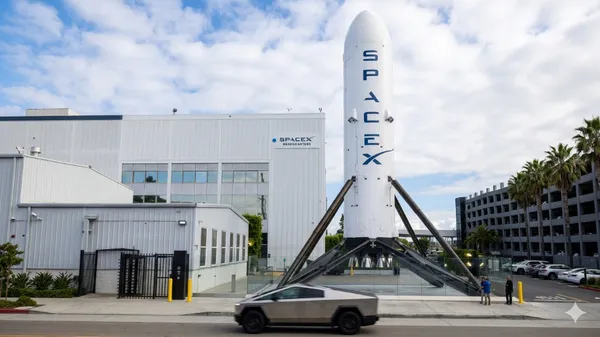
马斯克中选后要被“秋后算账”?德银:算力越紧张SpaceX越赚钱,政治风险被高估
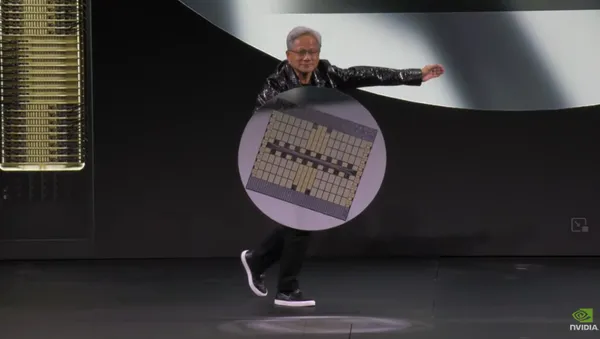
事关AI交易走向,硅谷、华尔街热议“黄仁勋绯闻”,马斯克力挺、特朗普也发声

美国蓝潮,为马斯克的太空算力按下加速键?

中国大模型何时能达Fable级别?马斯克预计明年Q1 唐杰称不用那么久 - 财联社
中国何时出最强大模型?智谱回应马斯克:比你想得快 - 观察者网
中国何时做出最强大模型?马斯克:明年一季度 - 观察者网

MotionBench-XAI: Benchmarking What Shapes Shapley Explanations in Spatiotemporal Machine Learning
TopoSHAP: Shapley for Explainable and Efficient Topological Deep Learning
Foundation-Model Residuals as Signals of Urban Bus Irregularity
PolSAM: Polarimetric Scattering Mechanism Informed Segment Anything Model
PathXAI: Evidence-guided structured pathology reporting by transferable tissue segmentation
Comparing Explanations is Not Enough, Explain the Change: New Standards are Needed to Explain Behavioral Shifts in Large Language Models
RAG-Enhanced LLMs for Interactive Explainability in Clinical Decision Support Systems

Meta Superintelligence – Leadership Compute, Talent, and Data
Meta’s shocking purchase of 49% of Scale AI at a ~$30B valuation shows that money is of no concern for the $100B annual cashflow ad machine. Despite seemingly unlimited resources, Meta has been falling behind foundation labs in model performance.
The real wake-up call came when Meta lost its lead in open-weight models to DeepSeek. That stirred the sleeping giant. Now in full Founder Mode, Mark Zuckerberg is personally leading Meta’s charge, identifying Meta’s two core shortcomings: Talent and Compute. As one of the last founders still running a tech behemoth, Mark doesn’t need SemiAnalysis to tell him to slow down stock buybacks to fund the future!

In addition to throwing money at the problem, he’s fundamentally rethinking Meta’s approach to GenAI. He’s starting a new “Superintelligence” team from scratch and personally poaching top AI talent with pay that makes top athlete pay look like chump change. The typical offer for the folks being poached for this team is $200 million over 4 years. That is 100x that of their peers. Furthermore, there have been some billion dollar offers that were not accepted by researcher/engineering leadership at OpenAI. While these offers aren’t all successful, Zuck is crushing the competitors by drastically increasing their cost per employee.
Perhaps even more iconic, Zuck threw his entire Datacenter playbook into the trash and is now building multi-billion-dollar GPU clusters in “Tents”!

As this report details, nothing is off the table. We unpack Meta’s unprecedented reinvention from Compute to Talent in the pursuit of Superintelligence as well as the story of how we got here. From Llama 3.0 open-sourced dominance to the epic fail of Llama 4 Behemoth, this Titan of AI is down but not out. In fact, we believe Meta’s ramp in training FLOPS will rival even that of OAI. The company is going from GPU-poor to GPU-filthy-rich on a per researcher basis.

Meta GenAI 1.0: AI Incrementalism
Compared to pure-play AI labs like OpenAI, companies like Meta and Google have followed an “AI Incrementalism” strategy by enhancing existing products with better recommendation systems and GenAI to improve ad targeting, content tagging, and internal tools. This has paid off handsomely in financial results, allowing Meta to shrug off Apple’s attempts at stopping them from tracking users with the release of their App Tracking Transparency (ATT) feature in iOS 14.5 (late 2021, early 2022).

While Meta is arguably more insulated from GenAI disruption than Google, LLM efforts at both companies have been somewhat disappointing. One reason is the allocation of capital primarily for the core business rather than pursuing superintelligence.
“Our CapEx growth this year is going toward both generative AI and core business needs with the majority of overall CapEx supporting the core.”
Source: Meta Q1 2025 earnings call, emphasis SemiAnalysis
GenAI acts as an extension to these tech giants’ businesses. They don’t have the same existential need to dominate new use cases like OpenAI in chatbots and Anthropic in coding APIs. This is readily apparent in the compute vs human capital allocation of a leading AI foundation lab like OpenAI compared to Meta. Zuck’s impact on competing offers and inflation of salary will hurt badly.

As a result, when measuring GenAI consumer app traction, Meta and Google meaningfully lag ChatGPT in its reach and engagement.

But that’s changing. Leveraging our proprietary Accelerator Industry Model and Datacenter Industry Model, we forecast a meaningful step up in GenAI investment from Meta in the coming years.

Meta GenAI 2.0 – Part 1, Re-Inventing the Datacenter Strategy (Again)
From Buildings to Tents
Just a year ago, Meta scrapped its decade-old “H”-shaped datacenter blueprint for a new AI-optimized design.

Now in 2025, Zuck decided to re-invent the strategy again. Inspired by xAI’s unprecedented time-to-market, Meta is embracing a datacenter design that prioritizes speed above all else. They’re already building more of them!

Amazon’s AI Resurgence: AWS & Anthropic’s Multi-Gigawatt Trainium Expansion
Two-and-a-half years ago, we flagged a looming “cloud crisis” at AWS. Today, the evidence has mounted. AWS is the crown jewel of the Amazon empire, generating ~60% of group profits, and dominating the lucrative Cloud Computing market. But it struggles to translate this strength into the new GPU/XPU Cloud era.
Microsoft Azure now leads the market on quarterly new cloud revenue, and the gap between Google Cloud and AWS has materially narrowed especially with Google’s big moves on the TPU that we’ve been posting about for over a month. Markets have noticed. Year-to-date, Amazon is the clear laggard among the four tech-and-AI titans as investors mark down the company most for losing momentum in AI.

Today, SemiAnalysis is back with another out-of-consensus call. While the market overplays the Cloud Crisis theme, we call for an AWS AI Resurgence. We laid out our thesis a month ago to our Core Research subscribers, forecasting an upcoming acceleration beyond 20% year-over-year growth by the end of 2025.

Subscribe to get notified of all SemiAnalysis articles
By subscribing, you agree to the Privacy Policy and Terms and Conditions.
Amazon’s savior has a name: Anthropic. The startup has been the clear outperformer in the GenAI market in 2025, multiplying revenue fivefold year-to-date to reach $5B annualized.

To keep that trajectory, Anthropic is betting hard on Scaling Laws. While Dario’s startup draws fewer headlines than OpenAI, xAI and Meta Superintelligence, it isn’t shy about investment. AWS has well over a gigawatt of datacenter capacity in final stages of construction for its anchor customer. AWS is building datacenters faster than it ever has in its entire history. And there’s much more on the horizon.

To understand and forecast GPU/XPU power capacity by AI Lab broken down by Cloud Provider, we rely on our proprietary Datacenter Industry Model powered by real-time satellite imagery. Trusted by all hyperscalers, AI labs, and the world’s largest investors, it provides a quarterly building-by-building datacenter forecast for OpenAI, Anthropic, xAI, Meta Superintelligence, Google DeepMind, and more. Contact us for more information.
Trainium vs GPUs
While Amazon’s AI Datacenters are impressive in scale and speed, the design of individual building is unremarkable. Hyper-optimized for air-cooling, this blueprint is identical to 5-year-old traditional AWS Cloud datacenters.
What makes these facilities unique is their inside: they’ll host the world’s largest cluster of non-Nvidia AI chips, with just under a million Trainium2 in the largest campus. To understand everything about the Trainium2 system, read our December 2024 technical deep dive.

Trainium2 lags Nvidia’s systems in many ways, but it was pivotal to the multi-gigawatt AWS/Anthropic deal. Its memory bandwidth per TCO advantage perfectly fits into Anthropic’s aggressive Reinforcement Learning roadmap. Dario Amodei’s startup was heavily involved in the design process, and its influence on the Trainium roadmap only grows from here.
Put plainly: Trainium2 is converging toward an Anthropic custom-silicon program. This will enable Anthropic to be, alongside Google DeepMind, the only AI labs benefiting from tight hardware–soft

xAI’s Colossus 2 – First Gigawatt Datacenter In The World, Unique RL Methodology, Capital Raise
Much has been written about xAI’s Colossus 1. The Memphis build belongs in the history books: the largest AI training cluster, erected from scratch in 122 days. With roughly 200,000 H100/H200s and ~30,000 GB200 NVL72, it remains, today, the largest fully operational, single-coherent cluster (setting apart Google, master of multi-datacenter-training).
However, Colossus 1’s ~300 MW looks modest next to the Gigawatt-scale clusters under construction by OpenAI, Meta and Anthropic. Their hyperscaler partners are happy to leverage their balance sheet and win the market by throwing dollars at it.
Was xAI’s prowess a one-time wonder? Today we will publicize some data from our industry leading datacenter model over the last year that is accessible to clients. This is the our same proprietary data that called the Oracle deals many months ahead of the announcement.

Short answer: no. xAI is still squarely in the frontier-AI race and is positioned to leapfrog most rivals again on compute. By our estimates, its total datacenter capacity for a single training cluster will surpass Meta Superintelligence and Anthropic by Q3 2025. The datacenter capacity will be ready for the GPUs to be moved in to create the largest single datacenter in the world, yet again. xAI has to raise the capital for those GPUs, but they have the allocations from Nvidia to have it fully training large scale models early next year.
Elon came up with a new genius trick to beat rivals at time-to-market. Colossus 2 will be an even more impressive achievement than xAI’s first cluster. Let’s dig in.
The first half of this report will dig into the Colossus 2 prowess. The second half will discuss Grok models, our mid-to-long term thoughts on xAI, and the unique RL method xAI is using that may lead them to leapfrog OpenAI, Anthropic, and Google.
SemiAnalysis Is Hiring
We are seeking a highly motivated & skilled Member of Technical Staff to join our growing special projects engineering team. You will play a crucial role in developing industry leading gpu cloud benchmarks & evaluation framework. Our gpu cloud evaluation frameworks is endorsed by many tier 1 & 2 frontier labs. You may be a good fit if you have the following experience:
- Demonstrated experience in ML frameworks such as PyTorch or JAX through professional experience, personal projects, or personal Substack blogs
- 1-2 years using GPU or TPU clusters and/or running a multi-tenant GPU cluster
- Past experience working at a hyperscaler or a GPU cloud (preferred)
- Solid understanding of SLURM, Kubernetes, NCCL & GPU Cloud industry
- Strong research skills and the ability to synthesize information from various sources to draw insights
Compensation is competitive & as part of the interview process, you’ll complete a paid coding challenge designed to reflect typical daily tasks at SemiAnalysis
Colossus 2: from zero to 200MW in six months
The Colossus 2 project was kicked off on March 7th, 2025, when xAI acquired a 1m sqft warehouse in Memphis, and two adjacent sites totaling 100 acres. By August 22nd, 2025, we count 119 air-cooled chillers on site, i.e. roughly 200MW of cooling capacity. That’s enough to power roughly 110k GB200 NVL72. And an Elon tweet shows some racks were already installed in July.
xAI built in six months what took 15 months for Oracle, Crusoe and OpenAI!

Looking closer at the picture above, readers familiar with our Datacenter Anatomy series might wonder where the power infrastructure is. The picture doesn’t show any onsite substation, nor does it show onsite turbines… How is the datacenter powered?
Subscribe to get notified of all SemiAnalysis articles
By subscribing, you agree to the Privacy Policy and Terms and Conditions.
Colossus 2: in Tennessee, Mississippi… or both?
Things get more confusing once factoring-in a Greater Memphis Chamber&

Text is so 2023
Hi folks,
Personal agent season is still in full-swing. Hark (from Brett Adcock - Figure robots) launched which suggests tasks as one-tap action buttons. Tab came out of stealth at a $300M valuation. Every put an agent in Slack. Meta and Sierra want a standard for how these agents deal with businesses.
My favourite take came from Sonia Baschez (who worked with me on Makerpad years ago!):
Proactive has a downside, though. Shane Mac’s agent posted his personal bank balances in the company Slack, as him. Then said sorry 😂. A community note popped up to flag this may have been a fake post, but I’m not sure…
I’m now carefully trying to think about which agents have access to what, and where that access is. So I’m using Executor (v2). It’s basically one app that you connect all your other apps to, and you can add your skills too. My whole setup was a bit of a mess so I’ve started spring cleaning and will let you know if/when I feel like I have a good setup.
Headlines
ChatGPT now answers with interfaces. GPT-6 and Intelligent UI are rolling out to everyone. Answers can include charts, maps, forms and small tools, like a bill splitter for dinner with friends. Free users get GPT-6 Luna from today. (tweet)
Claude Haiku 5.5 costs ~75% less to run than Haiku 4.5. Anthropic pitches it as a subagent for Opus and Sonnet. Simon has great notes on the model. Max and Team plans also now get monthly API credits to build your own apps and agents. (tweet). Anthropic also expanded their Claude startup program, and people were getting accepted in minutes.
Nano Banana 2.1 is Google’s new image model. Live in AI Studio. But ChatGPT images is still better.
OpenAI released 700+ new maths results from an unreleased model. Someone built a tool to spend your spare tokens on open math problems.
Grok Bot can search and monitor X now. Also, it now uses Claude Opus 5.5 as the primary model. It’ll still delegate tasks to other models based on the complexity.
My feed
AgentHog - stop guessing what your users do: pipe product analytics into Claude and Codex so your agents learn from real user behavior.*
How OpenAI’s Dots took over Every: pulling info out of school emails and catching missed Slack messages. I, however, still can’t get Dots to do anything good at all. Currently diving more into Grok Bot (until a completely custom Pi personal agent comes out!)
Lauren (poteto) automated Cursor’s release and QA with Grok bot.
New ChatGPT plugin: Meetings. It takes notes and helps with follow-ups. Pro and Business, Mac app only.
Claude now sits in a sidebar in Google Docs, Sheets & Slides. You approve each edit.
Gamma 5 is a full rebuild, so your decks look less like everyone else’s.
Figma Agent is out of beta and on all paid plans. It now uses AI credits.
Playground - make a game from a prompt. A Google Labs experiment, US only.
Rhem - a robot for your parents. It makes calls and books appointments.
Someone rebuilt Adobe’s apps with Opus 5.5 and open-sourced them.
An open-source Clay alternative for people search inside Claude Code/Codex.
OptionAFK - Transcribe large audio/video files on your device. Private and fast.
Try this
Turn a podcast into an interactive explainer. Boris Cherny asked Opus 5.5 to make one for Acquired’s Home Depot episode (a great episode btw).
Make an interactive website companion for [episode link or transcript]. Add a timeline, the key people and the big ideas, with illustrations.
Here was the result:
Afters
and Theo reckons its way less…
Read about me and Ben’s Bites
📷 thumbnail via @keshavatearth
* sponsors who make this newsletter possible :)
Wanna partner with us for the next quarter?
Email us at shanice@bensbites.com or k@bensbites.com
Ben's Bites is a reader-supported publication. To receive new posts and support my work, consider becoming a free or paid subscriber.