

【社论】全国推行,让校外实践成为成长沃土




习近平抵达华盛顿对美国进行国事访问

加拿大总理:美加贸易协议仍有可能,但渥太华不会放弃与欧盟深化合作的权利

习近平抵达美国安德鲁斯空军基地发表书面讲话

How Meta took the lead in the race for the post-smartphone world
There are moments when you experience emerging tech for the first time, and it feels genuinely different. That’s the case the first time you put on a pair of Meta’s most advanced smart glasses on the market, which project a high-resolution digital box inside the right lens and allow you—with the help of a smart wristband—to control objects on the screen by moving your fingers. Tap your pointer finger and thumb together, and an app opens. Say, “Hey, Meta,” and you’re suddenly chatting with an AI bot.
This, as Meta sees it, is how most of us will eventually use AI. The company recently took Fortune inside a private demo room at its Menlo Park, Calif., headquarters to show off its growing family of smart glasses. The collection included the flagship Ray-Ban Wayfarer camera-enabled glasses, with an updated nine-hour battery life; the Ray-Bans with the lens display and “neural” wristband; new audio-only smart glasses that ditch the built-in camera; new styles including Aviator frames; and prototypes like the Orion augmented reality glasses.
Few companies have managed to crack the code for AI-enabled wearables—and specifically glasses—as Meta has. A strategic partnership with Ray-Ban parent EssilorLuxottica has played a major part, and despite widespread privacy concerns, Meta’s glasses are the most popular on the market.
It’s a relatively small market, but one the tech industry is taking very seriously. Silicon Valley’s elite companies are racing to create hardware in new, AI-friendly “form factors,” betting that there are better ways for consumers to interact with AI—whether that’s through smart glasses or some yet-to-be-invented gadget. Leading AI labs such as OpenAI and, reportedly, Elon Musk’s SpaceX, are hard at work developing new devices. Musk disputes the report. Numerous smaller startups and industry giants like Apple are also working on new hardware.
At a time when the race to build the best frontier models is center stage, the competition to establish the next hardware platform is shaping up to be just as important. At stake is control over how billions of people access AI, regardless of whose bots are the smartest.
Meta’s lead
Meta is a case in point. Its AI models generally lag those of rivals like OpenAI and Anthropic. But Meta stands above all in AI-enabled glasses, having grown its sales of smart glasses threefold last year; EssilorLuxottica says it sold 7 million pairs of AI-enabled glasses in 2025.
Alex Himel, Meta’s vice president of wearables, credits the company’s early bet on the category and its decision to prioritize fashion. Customers use the smart features on the glasses only about 10% of the time, he said, so it’s critical that people crave the glasses for their look and weight. EssilorLuxottica held Meta to 50 grams or below for most glasses.
“We’re able to keep adding this stuff into something that you’re already wearing for other reasons,” Himel said of the tech features.
One new capability he’s excited about is agentic AI powered by Meta’s latest Muse Spark model, allowing the glasses to execute multistep routines like managing personal schedules and scanning through emails.

“As the AI gets better, you want something that’s always with you, can see what you see, hear what you hear,” Himel said.
A new hologram feature scans your face and records your expressions, producing a 3D animated simulacrum of your visage. When you’re wearing the glasses and call a friend via Meta-owned WhatsApp, your hologram appears on their screen—and their hologram, if they have one, appears in your glasses. It’s impressive, but also a bit jarring: My hologram looked like a deepfake version of me.
Meta also continues to work on new devices. On Wednesday, it announced virtual reality glasses that it said weigh only 100 grams and are built for movies, gaming, and spatial computing. The glasses, which the company said will ship in the spring, will cost $1,299.
There are still rough edges. The display glasses didn’t always respond to thumb swipes and sometimes lagged after voice commands. Meta’s AI also occasionally struggled to identify objects cleanly, such as when it attempted to calculate the number of calories in a trayful of food. The company pointed out that there is a natural learning curve and that the tech usually works for most people without issue.
Meta’s Ray-Ban Display glasses start at $799, while its third-generation flagship camera-enabled Ray-Bans cost $449. The new audio-only glasses start at $349 and are shipping in two styles: The Ray-Ban Clubmaster and Burbank.
The privacy problem
The bigger concern surrounding this tech, however, is privacy. Already, Meta has had to respond to some users disabling the glasses’ LED light that turns on to alert people nearby that the video camera is recording. The company recently created a policy to deactivate recording if the LED has been tampered with, and Meta will delete the accounts of anyone who uses a modified device and posts harassing content.

Stopping depraved users is only part of the challenge. The coolest features of AI devices come from AI’s ability to make sense of the world around you, operating not from on-screen data alone. That creates an inherent tension with norms around privacy and personal space.
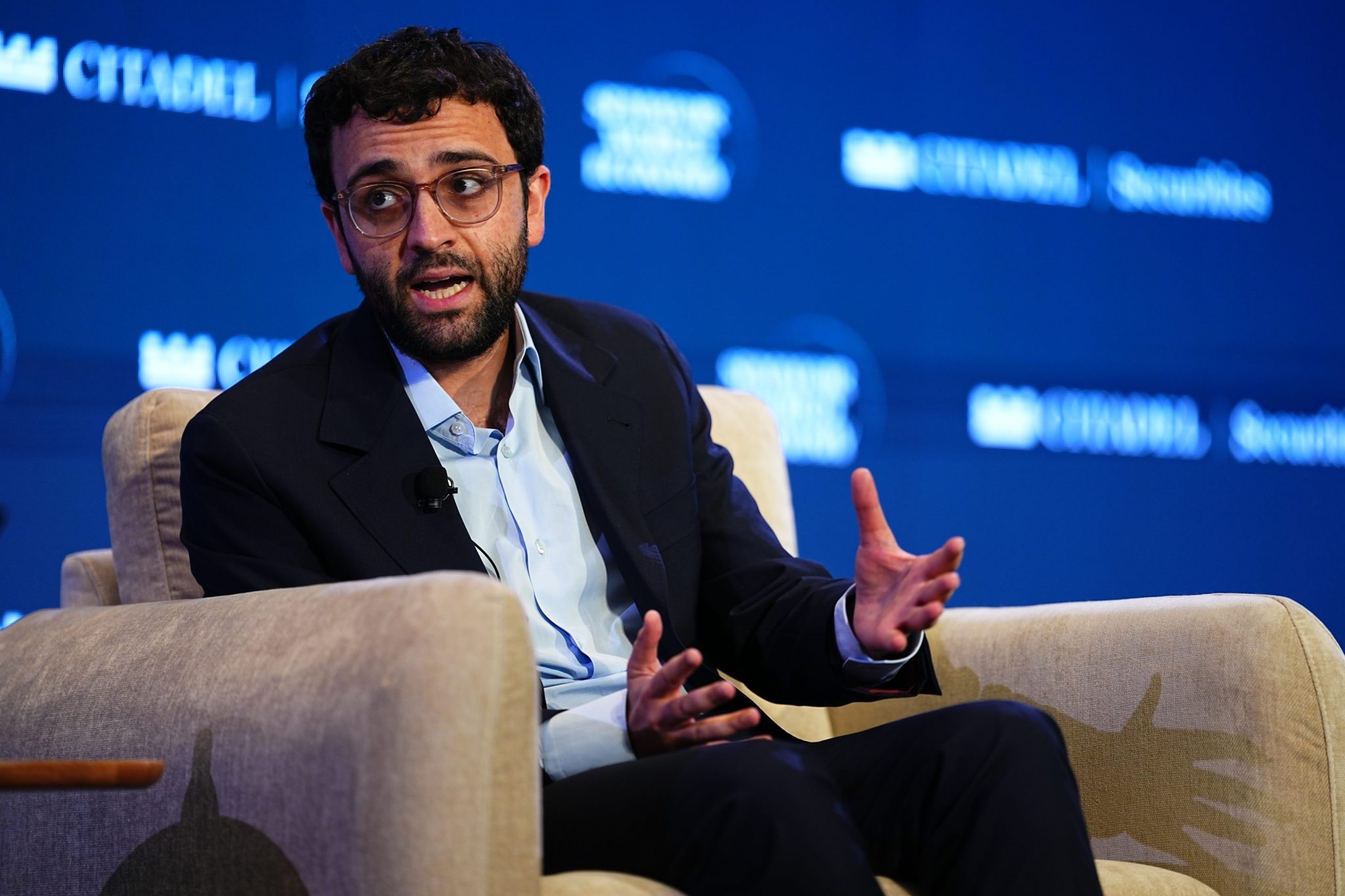
How much is Kalshi really worth? A detailed report says as much as $42 billion—if everything goes right
Since prediction markets exploded in popularity in 2024, the industry’s two leading players, Kalshi and Polymarket, have been raising staggering amounts of money. In the case of Kalshi, the startup notched a $1 billion Series F in May that valued it at $22 billion, and investors are eyeing an initial public offering as soon as next year. But even as the company pulls in gobs of revenue, its business model faces huge uncertainty due to a looming Supreme Court case that raises the question of whether that valuation is justified. Now, research firm PitchBook has put out a 46-page report that seeks to define Kalshi’s true worth.
The detailed report by analyst Franco Granda parses financial metrics and examines the legal landscape confronting prediction markets, and ultimately concludes Kalshi should be valued at $30.4 billion based on expected 2028 adjusted earnings. The report qualifies that figure by forecasting that assigns a $22.8 billion valuation to the company in the event of a bear case scenario, and a $42.1 billion figure for a bullish scenario.
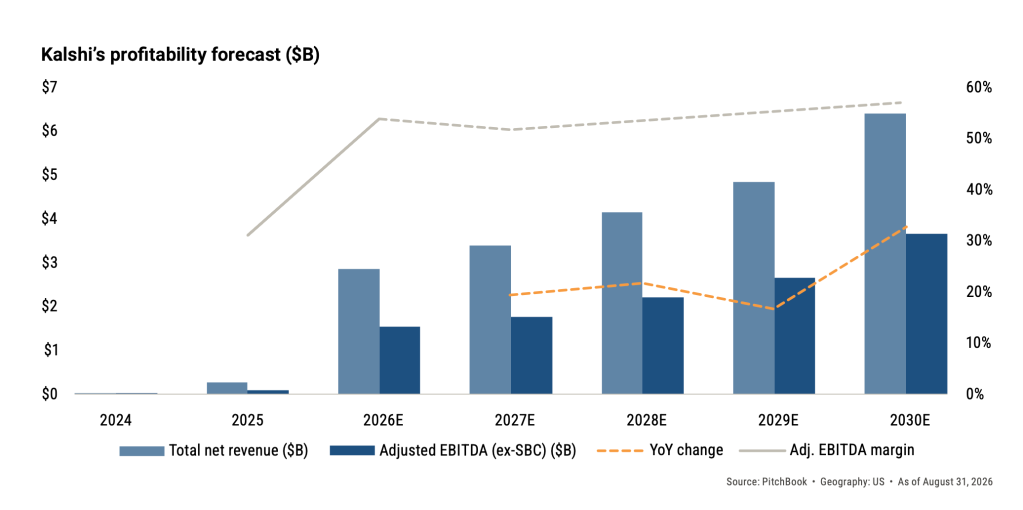
As the following graphic shows, PitchBook predicts Kalshi’s revenue will reach $6.4 billion by 2030, and that the company will pull in $3.7 billion in adjusted earnings:
In an interview with Fortune, Granda shared his view that the company is an enviable competitive position since its main rival, Polymarket, has been able to overcome the early lead Kalshi built among U.S. consumers thanks to a more cautious revenue strategy. Granda added that Polymarket is also spending considerably more on promotions to acquire new customers, and the prediction market industry has become effectively a two-horse race that will see a handful of other players fighting for scraps.
“Third parties will pick up crumbs here and there but the window of opportunity for people to get in has passed,” said Granda. The report, meanwhile, included a graph showing the respective volume for the two industry leaders:
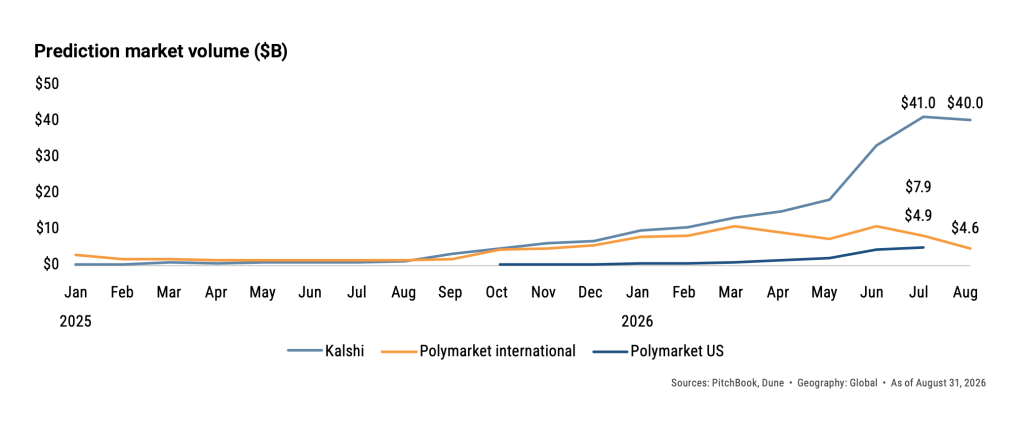
The PitchBook report further predicts that Kalshi will be able to consolidate its lead on the strength of partnerships with distribution platforms like Robinhood, market makers like Susquehanna, and numerous other tie-ups.
Since Kalshi is a private company that is not obliged to publish its financials, PitchBook’s predictions are based in some cases on estimates rather than hard figures. According to the company, its report contract draws on data from Kalshi’s API, PitchBook’s internal data, Dune databases, government filings, management commentary, and public peers’ disclosures.
And while the PitchBook offers a broadly bullish outlook for Kalshi, that calculation is based on a reading of the legal tea leaves that some may view as optimistic.
The Supreme Court wildcard
Prediction markets differ from traditional sports books in that customers don’t bet against the “house” but against anyone willing to take the other side of a yes/no contract. This distinction means sites like Kalshi are typically more profitable than regular betting sites since they are not at risk of losing money in the case of an unexpected outcome.
This business advantage offers one explanation for why prediction market startups have become so valuable. But, for now, they also enjoy what may be an even bigger advantage: a different regulatory regime that allows the likes of Kalshi and Polymarket to pay fewer taxes and court younger customers.
Unlike conventional sports books, which operate on the basis of licenses issued by states, Kalshi and Polymarket argue they are exclusively regulated at a federal level by the Commodity Futures Trading Commission. This has allowed them to offer their products to customers as young as 18, versus 21 for sports books, and also to avoid paying state taxes.
The problem for Kalshi and others is that their legal case is strong when it comes to prediction markets related to elections, entertainment and so on—but is weaker when it comes to sports. That has led states and Indian tribes to sue Kalshi on grounds that it is allegedly offering unlicensed sports gambling.
This is a major concern for investors since, as PitchBook notes: “The sports dispute threatens Kalshi’s main source of fees, with the category accounting for 69.9% of event fees YTD, rising to 82.4% when including exotics.” (In this context, “exotics” describes parlays and other multi-leg forms of betting that require a user to correctly guess the outcome of multiple different games.)
The issue of whether or not Kalshi and Polymarket’s sports offerings are legal is being hotly litigated in dozens of states and, so far, courts are for the most part ruling against the company. Contradictory rulings from two appeals courts, the 3rd Circuit and the 9th Circuit, have teed up a so-called circuit split and made the case ripe for the Supreme Court, which is widely expected to hear it next year.
While PitchBook acknowledges that an adverse legal ruling at the Supreme Court would be a blow, the report concludes that it would not be existential, noting that “For illustration, a 25% reduction in sports and exotics gross fees would remove $642 million from our 2026 forecast and $1.4 billion from 2030.”
In Granda’s view, Kalshi would be able to quickly adapt in the event the Supreme Court rules against the company, in part by adopting a state licensing model. That view may be sanguine, according to legal experts, however, who told Fortune that the company has angered many state law-makers and that it would be hard-pressed to reconstruct its business model.
A final consideration informing Kalshi’s future valuation is how quickly the company can build out wagers that are not related to sports. The most promising of these is perpetual futures, according to PitchBook, which forecasts net transaction revenue of $50.7 million in 2026, and $275.7 million in 2030—healthy figures but hardly enough to meaningfully offset a total loss of sports-related revenue.
You can read the full Pitchbook report, titled “Kalshi Initiation Report: A prediction market for anything, but its own future” here.
This story was originally featured on Fortune.com

Raiffeisen to offer crypto trading across 11 European markets via Bitpanda

Bitpanda will provide crypto infrastructure to Raiffeisen network banks, potentially extending digital asset access to about 18 million customers.

NYSE, Blockchain.com in tie-up to bring tokenized US stocks to crypto users
Blockchain.com users could gain access to tokenized US stocks and ETFs through NYSE’s planned digital trading platform under a new partnership, as bourses rush to deliver new trading.

Bitwise launches first Lighter ETP amid Hyperliquid rivalry

The product gives European investors brokerage access to the LIT token as Bitwise expands its lineup of products tied to decentralized derivatives platforms.

Upwind Acquires AI Security Startup Aegis, Launches AI Security Labs
Artificial intelligence is rapidly changing both enterprise technology and the cybersecurity landscape, creating new challenges around AI agents, plugins, skills and the attacks that can be generated with increasingly capable models. Against that backdrop, cybersecurity company Upwind has acquired AI security startup Aegis and launched Upwind AI Security Labs, as first reported by Axios.
The initiative brings Aegis co-founders Omri Limor and Saar Ankonina into Upwind, where they will lead a research and engineering effort focused on advancing security capabilities for AI-powered attacks. The move also expands Upwind’s existing focus on securing cloud and AI environments.
Bringing Aegis Into Upwind
Aegis was founded by Limor and Ankonina, two entrepreneurs and 8200 alumni who began their careers together in the intelligence unit, which focuses on offensive cybersecurity. The founders worked alongside one another during their time there, later serving in a commander-subordinate relationship before eventually becoming peers again.
After leaving the unit, the pair launched Aegis to address security challenges emerging around AI infrastructure. Its work focused on protecting against sophisticated AI-generated attacks, including autonomous exploitation pipelines and large-scale credential harvesting that can reduce the traditional skill and expertise barriers associated with cyberattacks.
Aegis initially approached Upwind for strategic partnership and investment as it developed its technology. After several months of working together, the relationship progressed into an acquisition, bringing the Aegis team and technology into Upwind.
“AI security is developing extremely quickly, and by acquiring Aegis and bringing Omri and Saar on board, we are building a team that can move just as quickly,” said Amiram Shachar, CEO and Co-Founder at Upwind. “The Aegis team brings a deep understanding of the challenges around securing agents, skills, and plugins, and by combining that expertise with Upwind’s existing platform, we can move from research to real-world security capabilities much faster.”
A New Focus On AI Security
Upwind AI Security Labs will work across areas including scanning, attack detection and AI security capabilities. The initiative combines Aegis’s technology and development work with Upwind’s existing runtime platform, with the stated goal of accelerating the transition from emerging AI security research to enterprise-grade capabilities.
The focus comes as organizations increasingly deploy AI agents and AI-powered workflows. These systems can interact with applications, access information and execute tasks, while skills and plugins can expand their capabilities while also introducing additional components that require security controls.
Recent industry findings cited by Upwind have highlighted cases involving compromised API keys and session tokens being harvested at scale for malicious campaigns. In response, the new labs will place particular emphasis on secret scanning both in transit and at rest to help prevent unauthorized access across cloud and AI environments.
“We initially built Aegis as a startup to tackle the missing security layer around AI agents, skills and plugins,” said Omri Limor, Co-Founder of Aegis. “After spending several months working together with Upwind, it became clear that joining forces through an acquisition and establishing AI Security Labs inside Upwind would allow us to move much faster and combine our technology with the capabilities Upwind has already built.”
Saar Ankonina, Co-Founder of Aegis, said the integration provides a path to broader deployment.
“Integrating our technology directly into Upwind’s platform gives us an immediate path to scale,” added Saar Ankonina, Co-Founder of Aegis. “The establishment of AI Security Labs provides the ideal environment to accelerate research and protect enterprise AI workflows.”
Expanding The Research Team
The newly established labs currently include 12 developers and researchers drawn from Aegis and Upwind. The company plans to expand the group significantly over the coming months.
According to Upwind, the team is expected to reach approximately 25 people within three months, with the potential to grow to 35 as the initiative develops. The expansion is intended to give the labs greater capacity to investigate emerging AI security risks and translate that work into new capabilities.
“We built AI Security Labs on the foundation of the Aegis acquisition with the ambition to create a significant research and engineering capability within Upwind,” said Shachar. “We expect the team to grow from 12 people today to 25 and potentially 35 in the coming months, allowing us to expand our research and accelerate the development of new AI security capabilities.”
Shortening The Research-to-Market Cycle
For cybersecurity companies operating in the AI era, identifying new attack techniques is only part of the challenge. Turning that research into practical defenses quickly is becoming increasingly important as AI capabilities evolve.
Upwind says AI Security Labs is designed around that transition, combining Aegis’s team and technology with Upwind’s market strategy and existing platform. The objective is to shorten the path between identifying emerging AI security risks and developing and delivering capabilities designed to address them.
“As AI transforms both the threat landscape and the speed of modern cyber operations, this is the ideal moment to build, innovate, and lead in cloud and AI security,” added Shachar. “With AI Security Labs, Upwind is reinforcing its mission to protect modern enterprise infrastructure and ensure organizations can safely embrace the next era of AI innovation.”
**This story was published on HackerNoon under our Business Blogging Program

Soviet ‘sea monster’ inspired this futuristic ‘flying boat’
Visitors traveling across Rhode Island’s Narragansett Bay earlier this month may have seen a strange-looking boat with wings and a whale-like tail floating in the estuary’s calm late-summer waters. Eventually, the vessel’s 12 electric propellers, six on each side, spun up and sent it churning forward. The “boat” advanced across the bay, faster and faster, rising onto hydrofoils until its hull cleared the surface. Then the foils lifted free, and the ship took to the sky, gliding low over the water like a pelican skimming the waves. It remained airborne, flying about 33 feet above the bay for another 30 seconds before gently landing back down on the water’s surface. In all, the flight covered 1,956 feet.
This marked the first crewed flight of the Viceroy Seaglider, a prototype part-plane, part-boat craft built by a Rhode Island startup called REGENT. The company hopes to bring to market a modern wing-in-ground-effect craft that combines the convenience of a boat with the speed and power of an aircraft. As currently designed, REGENT says their ship can carry 12 passengers at up to 180 miles per hour, or alternatively transport up to 3,500 pounds of cargo. The startup hopes this speed and flexibility could make it an attractive option for travelers looking for a breezy ride between coastal towns. It’s also already courting attention from the US military, which sees an opportunity to utilize the seagull glider for stealth missions and naval resupply efforts.
“Completing this flight test validates years of rigorous engineering and operational work and gives us the confidence to move into full-rate production,” Regent co-founder and Chief Technology Officer said in a statement. “We showed today that flying a Seaglider is every bit as smooth and safe as we designed it to be.”
Resurrecting Soviet ‘flying ships’
The Viceroy follows in the footsteps of the Soviet Union’s “ekranoplans,” massive Cold War-era craft that took advantage of an aerodynamic phenomenon called ground effect. When a winged vehicle flies within about one wingspan of a surface, air gets trapped beneath it, creating extra lift and reducing drag. The result is a craft that can carry more weight than a similarly sized plane flying higher in the sky. The Soviets built several of these types of craft, with the most famous amongst them being a 380-ton vessel referred to as the “Sea Monster of the Caspian.” That giant part boat, part ship stretched out longer than an Airbus A380 super jumbo jet and could reach a top speed of 340 miles per hour. But ekranoplans were more bark than bite. They generally struggled to take off in rough water and were notoriously hard to dock.
REGENT hopes to address those handling problems by introducing hydrofoils, which are essentially underwater wings that lift the hull out of the water as the craft speeds up. The resulting reduced drag from waves should make takeoff fast, smoother, and more stable. Those foils then retract once the ship gets airborne.
While operating on the water, REGENT pitches the result as a high-speed electric ferry, designed to cover up to 180 miles on a charge. The company is also building a smaller, sibling craft for the military called the “Squire.” That more nimble vessel operates autonomously and is designed to quickly carry a payload of 50 pounds.
REGENT sees its vessel as “dual use” with both commercial and military application, but the latter is the one already drawing checks. The company has secured $15 million in contracts with the US Marine Corps and has development agreements with US Special Operations Command, as well as the Coast Guard. Last year, the Viceroy completed several field demonstrations showing how the vessel might be used in a combat zone. In those demos, the Viceroy was used as a part of a beach extraction simulation, removing an injured person from the shore as well as an open water life raft rescue.
Though ambitious in design, in practice the Viceroy looks like it is filling many of the roles already occupied today by helicopters. Still, its larger carrying capacity sets it apart. And while not the most obvious sell, its all electric motors also means it’s considerably quieter than notoriously loud choppers.
The post Soviet ‘sea monster’ inspired this futuristic ‘flying boat’ appeared first on Popular Science.

ChatGPT in Siri 'Persistently Underperforming,' Says OpenAI
Apple added ChatGPT to Siri in December 2024, but users had to go through a multistep opt-in process, which added a layer of friction. By January 2025, OpenAI said the integration was "off to a slow start" and the company cut its forecast for the number of incremental logged-in weekly active users that it expected to get from the partnership.
Much of the filing is redacted, but OpenAI said that by the time Musk's companies filed an antitrust lawsuit against Apple and OpenAI, "it was clear that Apple's integration of ChatGPT was dramatically underperforming." In a later section of the filing, OpenAI said again that the Apple integration was "persistently underperforming," leading to a March 2026 conversation between Apple and OpenAI that is redacted.
OpenAI asked Apple for a two-year exclusivity period, but Apple refused. The agreement between the two companies explicitly said the deal was non-exclusive and Apple had the right to "integrate products or services that provide the same or similar functionality as [ChatGPT]." Apple told OpenAI that it planned to integrate one provider and then add more, and it made similar statements publicly when announcing the feature. Apple also signed a deal with Google, and Apple's newest models are based on Gemini.
OpenAI's filing disputes many of the claims in the xAI lawsuit. Musk alleged OpenAI and Apple had an exclusive deal and that the agreement harmed xAI's growth and customer acquisition. OpenAI says the contract proves there was no exclusive deal, and even if there were, xAI can't prove harm because the ChatGPT Siri integration just didn't draw many new ChatGPT users.
Even if the Court assumes that Apple users who elect to use ChatGPT through Apple Intelligence are foreclosed from OpenAI's rivals (which they are not), the amount of foreclosure caused by the Agreement is indisputably de minimis. While Plaintiffs' experts declined to calculate foreclosure shares, OpenAI's expert, Dr. Catherine Tucker, calculated the share of GenAI consumers who accessed ChatGPT through Apple Intelligence across multiple metrics using the same data and market definition relied upon by Plaintiffs' experts. On these assumptions, Dr. Tucker found foreclosure shares of [REDACTED] across all metrics, consistent with OpenAI's internal view that Apple Intelligence saw minimal usage.
Musk's companies dropped their claims against Apple earlier this month, leaving OpenAI as the sole defendant in the lawsuit. OpenAI's filing asks the court to toss out xAI's claims prior to the trial planned for January 2027.
This article, "ChatGPT in Siri 'Persistently Underperforming,' Says OpenAI" first appeared on MacRumors.com
Discuss this article in our forums
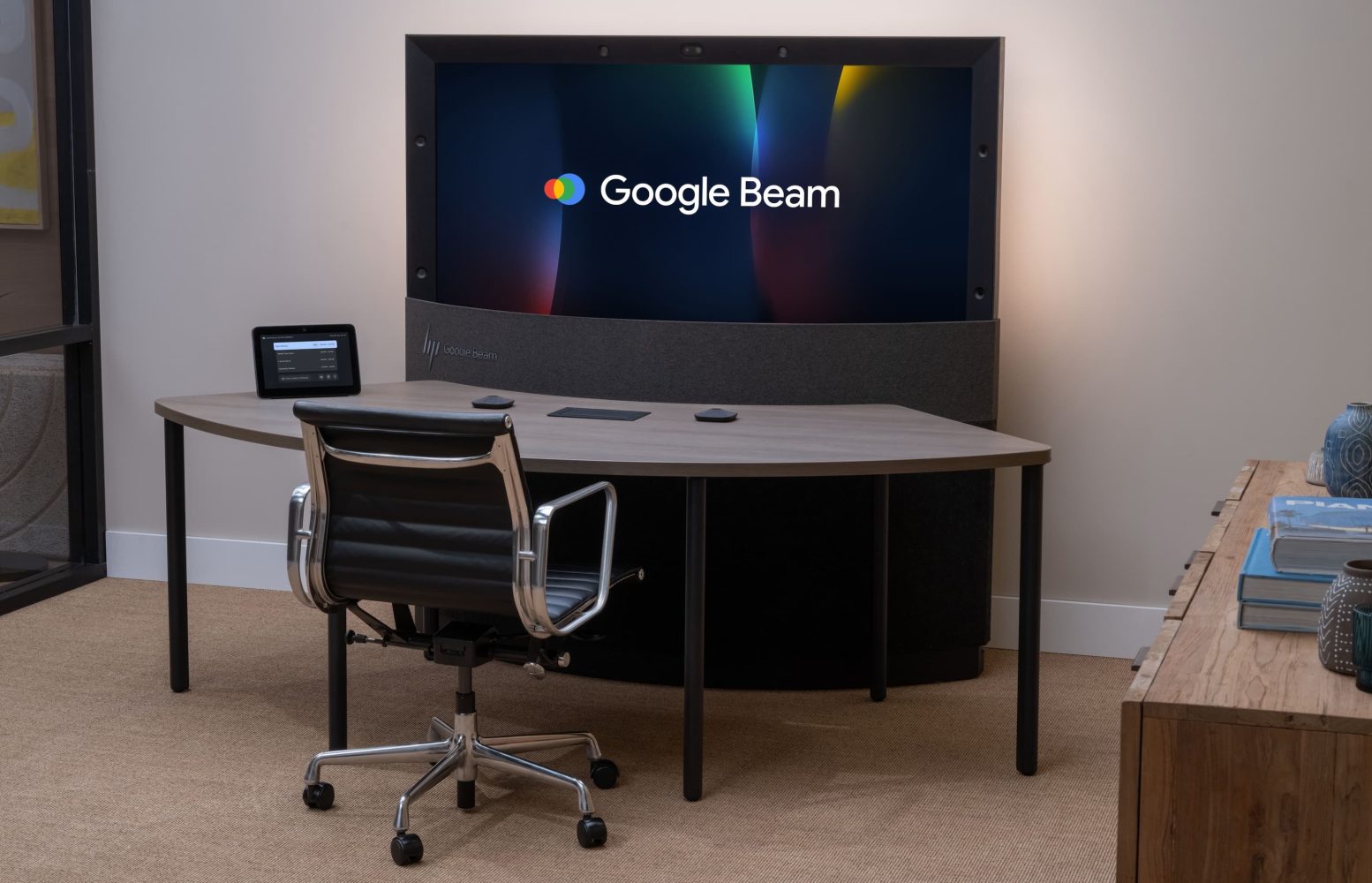
Google Beam 3D meeting booths coming to co-working spaces

Google today announced the latest expansion of its 3D meeting booths, including a partnership that brings Google Beam to co-working spaces in the US.
more…
Wayve’s AI will reach Mercedes cars within two years, Kendall says
“It’s going to take them a while. Maybe they don’t know that yet,” Wayve co-founder and CEO Alex Kendall said of humanoid robot makers. Kendall spoke on stage at HumanX in Amsterdam on Wednesday. It was a day after Wayve announced a global partnership with Mercedes-Benz. He said self-driving cars, not robots, will be the […]
This story continues at The Next Web
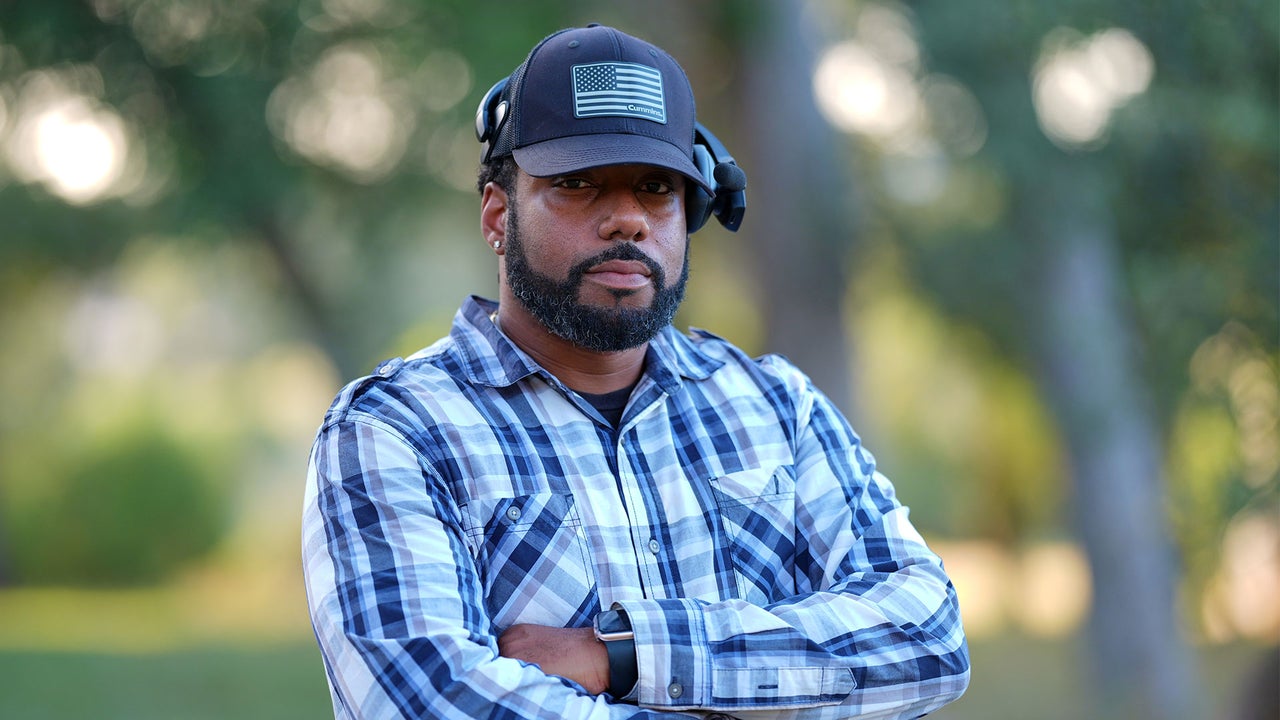
This new poll reveals 5 takeaways about rural American voters, a key bloc for Trump
A new poll from The Associated Press in partnership with KFF finds that about half of rural American voters believe the economy is worse off now than when President Donald Trump returned to office, pointing to economic frustration among a key group that has backed Trump and other Republicans in recent elections.
The poll of more than 2,000 rural registered voters found that costs of groceries, gas and healthcare are among the top pain points for rural voters. They are also more likely than voters overall to say they are worried about being able to afford groceries or gas.
Rural Americans skew Republican and historically have been an instrumental voting bloc for Trump. The findings suggest that many rural voters haven’t turned against Trump but that they also largely don’t think he has delivered on his economic promises. While rural voters seem unlikely to support Democrats on a large scale, Trump and the Republican Party could face challenges with them in November.
The full story can be read here. Here are the takeaways:
Most rural voters disapprove of Trump on the economy
As the election approaches, only about 4 in 10 rural voters surveyed approve of Trump’s performance on the economy. Roughly 6 in 10 disapprove.
They rate him similarly on his handling of the Iran war, an entanglement that has proved expensive for the U.S. and increased oil and gas prices. And rural voters rank pocketbook concerns and fraud in government programs higher among the things they want to hear about from politicians than other perennial issues, such as gun policy and abortion policy.
In the poll, about three-quarters of rural voters rated the cost of living in their communities as “only fair” or “poor.”
Rural Americans, who have consistently lower wages than those who live in suburban and metro areas, have been hurting economically for decades, according to Tim Slack, a professor of sociology at Louisiana State University and co-author of the book “Rural and Small-Town America.”
“Many folks are connecting the cost-of-living crisis to many of the Trump administration’s policy choices: the war in Iran, tariffs, trade wars,” he said. “None of those things are going to bring down prices at the pump or the local Walmart.”
Rural Republicans have a rosier view of Trump
At the same time, about half of rural voters approve of Trump’s job performance, more than among U.S. adults overall in separate AP-NORC polling.
Rural Republicans do have a brighter economic perspective than rural Democrats or independents, particularly about the U.S. as a whole, according to the survey. About 6 in 10 rural Republican voters say Trump has improved the national economy, compared with roughly 2 in 10 independents and fewer than 1 in 10 Democrats.
But only 45% of rural Republican voters say Trump has made their local economies better off. About 1 in 4 say there are fewer good-paying jobs where they live than five years ago.
Trump’s healthcare policies go unnoticed
The AP-KFF poll found that rural voters overall don’t perceive much positive impact from the Trump administration’s healthcare policies even as they have been a top priority for Republican leaders, who have promoted efforts to lower drug costs and touted a $50 billion rural health program.
Only 17% of the voters said the Trump administration’s healthcare policies have had a “positive impact” on their healthcare costs, while 41% said they’ve had “no impact” and another 41% said they’ve had a “negative impact.”
A year after the passage of the Rural Health Transformation Program, more than 8 in 10 rural voters said they’d heard either “a little” or “nothing at all” about the health fund. About 6 in 10 said they had heard nothing, according to the survey.
Rural Republican voters still trust the GOP more
When asked which political party they trusted to do a better job of handling issues such as the cost of healthcare or the cost of living, rural voters tended to side with their own party.
The finding signals that Democratic candidates are more likely to benefit from rural Republicans staying home this November than from them voting across party lines in large numbers.
Rural Republicans are more ambivalent about their party’s ability to handle key healthcare issues, compared with Democrats. About 8 in 10 Democratic voters say they trust the Democrats to address healthcare costs, while closer to 6 in 10 Republican voters say the same of the Republicans.
Many rural voters don’t feel respected by Trump or the parties
Trump’s approval among rural voters, while higher than among U.S. adults overall, is down slightly, from 56% approval in a similar question asked in a 2017 KFF-Washington Post survey.
Many rural voters also don’t think the major parties or the president respect people like them.
About half, 48%, of rural voters say the GOP respects people like them “a lot” or “some,” while 45% of rural voters say this about Trump and 37% say this about the Democratic Party.
This year’s competitive elections feature key Senate races in states including Ohio, Michigan and Maine, all of which have large rural populations. In close races, Democrats may have a chance to “show up and give a message that rural people might find appealing,” said Nicholas Jacobs, a political scientist at Colby College and co-author of the book “The Rural Voter.”
“But it’s nothing more and it’s nothing less than that — an opportunity,” Jacobs said. “And time and time again, Democrats have shown a certain proclivity for not seizing that opportunity.”
The poll of 2,241 U.S. adults registered to vote in rural areas of the country was conducted Aug. 12-24, 2026, using a sample drawn from the probability-based SSRS Opinion Panel. The margin of sampling error for the full sample is plus or minus 3 percentage points. In collaboration with the AP, KFF researchers worked to design the survey sample and questionnaire, analyze and report findings.