

Pritzker establishes AI cabinet amid calls for greater regulation - Capitol News Illinois
Google News AI (英文)Pritzker establishes AI cabinet amid calls for greater regulation Capitol News Illinois
Arguing about arguments
Lobsters
Blurt
Product Hunt
Push-to-talk dictation on the AssemblyAI Dictation API
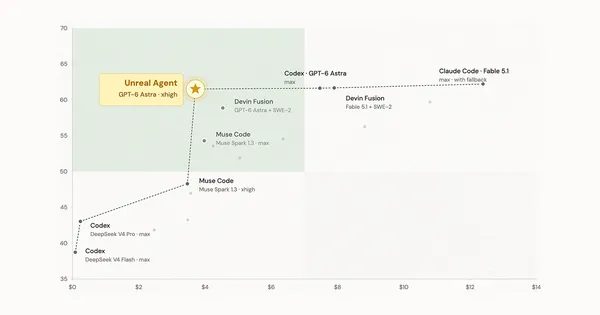
Unreal Agent
Hacker NewsComments

MUNI Heritage Weekend in San Francisco
Hacker NewsComments


The worst El Niño in recorded history is brewing — here’s how governments must prepare
Nature
Nature, Published online: 22 September 2026; doi:10.1038/d41586-026-02939-x
From southern Africa to the Amazon, the risks are mounting and the window for action is rapidly closing.
Parameter-Efficient Adaptation of Pre-Trained Vision Foundation Models for Active and Passive Seismic Data Denoising
arXiv cs.LGarXiv:2605.10953v2 Announce Type: replace-cross
Abstract: The demand for high-resolution subsurface imaging and continuous Earth monitoring has driven rapid growth in active and passive seismic data from dense geophone deployments, distributed acoustic sensing (DAS) arrays, and large-scale 2D and 3D surveys. This expansion makes complex noise suppression increasingly challenging, especially when signal fidelity must be preserved. Conventional supervised deep learning methods are often task-specific, require large paired datasets, and can suffer from domain shift under new acquisition conditions. Foundation models offer a promising alternative, but pre-training seismic foundation models from scratch requires massive domain-specific data and substantial computation. We propose an efficient framework that repurposes general-purpose Vision Foundation Models (VFMs) for geophysical tasks through Parameter-Efficient Fine-Tuning. The architecture uses a pre-trained VFM, a DINOv3 encoder, adapted with Low-Rank Adaptation (LoRA) to enable effective feature adaptation with few additional parameters. To improve robustness under unseen field conditions without ground truth, we introduce a kurtosis-guided unsupervised test-time adaptation module that updates only LoRA parameters during inference. This module self-calibrates the model to site-specific noise by identifying information-rich regions via kurtosis and performing self-training without labeled data. Experiments on public exploration seismic images and DAS vertical seismic profiling data from the Utah FORGE site show that the framework matches or outperforms domain-specific models. Tests on unseen cross-site data from a land survey in China and the Gro{\ss} Sch\"onebeck geothermal site in Germany further demonstrate strong generalization and effective signal-noise separation. These results highlight the potential of adapting pre-trained VFMs to data-intensive problems in exploration seismology.
SuperPCA: subspace analysis and an efficient algorithm for high-dimensional PCA
arXiv cs.LGarXiv:2609.26406v1 Announce Type: cross
Abstract: Principal component analysis (PCA) is a fundamental tool to reduce the dimensionality of the data in many applications. PCA finds a few signal directions that contain most of the variability of the data by computing the eigenvectors of the sample covariance matrix. In this work, we focus on the spiked covariance model, in which the data vectors are defined by a few orthogonal signals plus an isotropic Gaussian noise, and our goal is to estimate one or more of the leading signals. Our main theoretical finding is that the subspace spanned by several leading eigenvectors of the sample covariance matrix contains significant information about the desired signals long before the individual eigenvectors converge to the population principal components. To prove this, we derive a posteriori bounds for the angle between the subspace spanned by the desired population signals and the subspace obtained from the sample using perturbation theory for singular vectors. This leads to a new algorithm, SuperPCA (SUbsPace subsamplER PCA), which capitalizes on an approximate eigenspace of the sample covariance matrix to find the leading signals far more efficiently and accurately than classical PCA in the high-dimensional, multi-signal setting. SuperPCA exploits only a small number of subsampled coordinates of the data, which can lead to tremendous savings in data acquisition cost, especially when the signals are approximately sparse. For the same number of measurements, SuperPCA can offer a factor $10$ improvement in accuracy compared to the classical PCA method.
HYDRA: Proactive Android Malware Drift Adaptation via Hierarchical Graph Contrastive Learning
arXiv cs.LGarXiv:2609.26352v1 Announce Type: cross
Abstract: Concept drift, driven by the rapid evolution of Android malware, severely degrades the performance of machine learning detectors. Current adaptation strategies are often reactive, responding only after performance has dropped and imposing a significant manual annotation burden, or they are proactive but rely on unstable adversarial training and incomplete, single-level graph representations. To overcome these limitations, we propose HYDRA (Hybrid Drift Adaptation), a proactive adaptation framework that learns drift-invariant representations from hierarchically structured data. HYDRA first models applications using a hybrid graph structure, combining fine-grained Control Flow Graphs (CFGs) and coarse-grained Function Call Graphs (FCGs) to capture comprehensive behavioral patterns. It then introduces a novel cross-domain contrastive learning objective that aligns historical (source) and new (target) data distributions. By generating pseudo-labels for unlabeled target samples, our method pulls representations of semantically similar applications together, regardless of their domain, within a single, stable optimization process. This approach unifies feature learning and domain alignment, eliminating the need for complex adversarial objectives. Extensive experiments on large-scale, time-ordered malware datasets demonstrate that HYDRA achieves substantially lower False Negative and False Positive Rates than state-of-the-art baselines while requiring up to 87.5% fewer labeled samples. Our work thus offers a robust and efficient solution to combat concept drift in security applications.
FAST-ML: A Hybrid Physics-Machine Learning Framework for Tropical Cyclone Intensity Forecasting
arXiv cs.LGarXiv:2609.25505v1 Announce Type: cross
Abstract: Rapid intensification (RI) remains one of the most consequential and difficult aspects of tropical cyclone (TC) forecasting. Although full-physics numerical weather prediction models can represent the processes governing RI, resolving storm-environment interactions remains computationally expensive, while purely data-driven approaches often lack physical interpretability. We present FAST-ML, a hybrid framework that bridges data-driven efficiency with physical constraints. A physically informed dual-stream neural parameterization ingests 3D ERA5 fields to diagnose ventilation controls---environmental wind shear and mid-level entropy deficit. By optimizing these parameters end-to-end through a differentiable FAST intensity model, this architecture establishes a robust new paradigm for observation-driven parameter optimization, ensuring storm evolution remains strictly governed by thermodynamic principles. By better capturing the storm's continuous intensity evolution, FAST-ML improves upon its physical baseline, reducing ensemble CRPS across forecast lead times, with a reduction of approximately 31% at 60 h and nearly halving the RI false alarm ratio without sacrificing detection skill. In a 100-member ensemble configuration, FAST-ML produces intensity forecasts comparable to FNV3 for selected storms under the evaluated input configurations. Furthermore, zero-shot tests on selected Eastern Pacific storms provide encouraging evidence of cross-basin transferability. FAST-ML provides a modular intensity forecasting framework that can be coupled with externally supplied storm tracks and environmental fields. It demonstrates that observation-driven parameter learning within physically constrained dynamics simultaneously enhances accuracy, interpretability, and computational efficiency.
WeightBridge: An Efficient Weight Transfer Library for Reinforcement Learning
arXiv cs.LGarXiv:2609.25442v1 Announce Type: cross
Abstract: Weight transfer - the propagation of updated parameters from trainers to rollout generators - is becoming an important performance bottleneck in reinforcement learning (RL) systems for LLMs. The central challenge is supporting the diverse trainer and rollout layouts and synchronization requirements of modern RL workloads without sacrificing efficiency. Existing solutions are efficient under some configurations but perform poorly or lack support under others. We present WeightBridge, a flexible, efficient weight-transfer library designed to deliver high performance across diverse RL configurations. WeightBridge first automatically extracts the correspondence between trainer and rollout weight layouts, then plans and executes redundancy-free and load-balanced weight transfer. It exposes a small, general API while coordinating workers across diverse synchronization modes. Across configurations spanning different models, parallelization layouts, and synchronization modes, WeightBridge reduces average GPU stall time by up to 42$\times$ over the state-of-the-art open-source RL framework and achieves high performance in all settings. A coding agent was able to integrate WeightBridge into two different RL frameworks without manual guidance, demonstrating the generality and ease of use of its APIs.
MAGIC: Mixed-Granularity Agent Graphs via Incremental Construction with Dense-Reward Reinforcement Learning
arXiv cs.LGarXiv:2609.26667v1 Announce Type: new
Abstract: Collaboration topology shapes both the performance and execution cost of LLM-based multi-agent systems. Because tasks differ in complexity and required capabilities, recent approaches generate task-specific collaboration graphs that specify agent participation and information flow. However, representative topology generators use either individual agents or predefined groups throughout an organization, overlooking differing collaboration needs across subtasks. Our key insight is to select granularity locally for each functional role, combining fine-grained control with reusable collaboration patterns within one organization. Learning such organizations requires exploring a combinatorial construction space with limited intermediate feedback from final-answer rewards. Therefore, we propose MAGIC, a dense-reward reinforcement learning framework for mixed-granularity graph generation. Specifically, MAGIC constructs a mixed-granularity agent graph by sequentially selecting a functional role, instantiating it as a single agent or reusable group, and connecting it to existing units. We directly optimize the construction policy using returns from trajectories sampled under the current policy and use potential-based reward shaping to provide intermediate feedback from probe-based utility and structural signals while preserving the cumulative task reward. MAGIC outperforms state-of-the-art baselines across eight benchmarks and demonstrates strong inference efficiency in our efficiency study.
JAMPR+/L2D: scalable neural heuristic for constrained vehicle routing problems in dynamic environment
arXiv cs.LGarXiv:2609.26275v1 Announce Type: new
Abstract: The vehicle routing problems with real-world constraints (we consider vehicles capacity limits, time windows constrains, pickup-and-delivery multi-depo --- CPDPTW) pose significant computational challenges. While classical exact and heuristic methods remain effective to solve problems of small/medium size ($N\lesssim100$), they often lack adaptability and scalability for larger logistics tasks. In this work, we show how JAMPR+/L2D RL deep learning model, proposed in to solve large CPDPTW problems can be adopted in the case of substantial changes of graph distance matrix. We test performance of JAMPR+/L2D model for medium-sized CVRP and VRPTW problems on CVRPLIB benchmarks: JAMPR+/L2D outperforms the state-of-the-art heuristic HGS in over 85\% of instances, achieving improvement in objective gap. We show that the JAMPR+/L2D model trained on CPDPTW problem, generalizes well for tasks with simpler constraints (CVRP, VRPTW), for different problem sizes and for moderate changes in distance matrixes. For more substantial changes in distance matrixes, we propose here to make fast finetuning of JAMPR+: on ORTEC data (for CPDPTW) the proposed strategy remarkably reduces the objective gap without full model retraining, what will give both accuracy and rapid inference of the model in the practical routing scenarios with distance matrix changes.
Disentangling Heterogeneous Traffic Dynamics for Multi-Step Traffic Forecasting via Adaptive Spectral Decomposition
arXiv cs.LGarXiv:2609.25777v1 Announce Type: new
Abstract: Accurate multi-step traffic forecasting remains challenging because observed traffic signals contain heterogeneous temporal dynamics with different characteristics and levels of predictability. Existing approaches typically model these dynamics within a unified representation or rely on predefined decomposition rules, which may limit their ability to flexibly separate persistent patterns from rapidly varying fluctuations. To address this issue, we propose the Adaptive Decomposition Network (ADNet), a component-specific forecasting framework that adaptively disentangles traffic dynamics into dominant and residual components. ADNet introduces a learnable complementary spectral decomposition mechanism that determines the contribution of each frequency bin to the two components. Unlike hard frequency partitioning, every frequency bin can contribute to both components with different learned proportions, allowing the decomposition to be optimized jointly with the forecasting objective. The reconstructed components are then modeled by two dedicated spatiotemporal forecasting branches, and their predictions are integrated to generate the final multi-step forecast. Experiments on the Alameda and Orange regions of the TraffiDent dataset show that ADNet achieves the best performance in 20 of the 24 reported region-horizon-metric comparisons, with particularly clear gains at longer forecasting horizons. Capacity-controlled ablation experiments further show that the learnable decomposition substantially outperforms a fixed decomposition and provides additional improvements beyond the dual-branch architecture alone. These results demonstrate the effectiveness of adaptive decomposition and component-specific modeling for multi-step traffic forecasting.
Learning Defensive Policies against Diverse Inference Attacks for Smart Meter Privacy
arXiv cs.LGarXiv:2609.25484v1 Announce Type: new
Abstract: Smart meter (SM) data provides fine-grained visibility into household energy consumption, but also exposes users to privacy risks. Inference attacks, known as non-intrusive load monitoring (NILM), can perform appliance-level inference from aggregate signals and recover sensitive behavioral patterns. In practice, attacker models are unknown and heterogeneous, making robust defense challenging. We formulate SM privacy protection as a black-box inference defense problem, aiming to reduce the recoverability of appliance-level information while generalizing across diverse and unseen attackers. We propose a proxy-guided hierarchical reinforcement learning framework that learns battery-based load-shaping policies to inject realistic but misleading appliance-level signatures into the aggregate signal, thereby disrupting the structured patterns exploited by NILM. A self-supervised aggregate-structure privacy probe provides a reconstruction-error-based surrogate reward for disrupting recoverable load structure, while a signature library makes the perturbations appliance-relevant and physically realizable through battery control. We provide theoretical rationale showing that proxy-guided optimization improves inference robustness under attacker diversity. Experiments on real-world datasets UK-DALE and REDD demonstrate strong cross-model and cross-appliance generalization. Across six unseen NILM attackers, covering four appliances on UK-DALE and five on REDD, our proposed defense increases average appliance-level RMSE by 107% and 166%, respectively, while reducing F1 score by 79% and 80%.
Extending FunctionGemma for Practical On-Device Mobile Function Calling
arXiv cs.LGarXiv:2609.25373v1 Announce Type: new
Abstract: On-device assistants require function-calling models that map natural language to local system actions, but existing resources emphasize web APIs or narrow mobile-action catalogs. We extend FunctionGemma 270M-it to practical Android workflows by introducing MOBILEACTIONSEXTENDED, a synthetic, schema-validated dataset of ~9,500 conversations covering fifteen device-control categories, including messaging, phone calls, camera/screenshot, brightness control, device-status queries, flashlight control, and application management. We fine-tune the 270M model with TRL supervised fine-tuning under completion-only loss, producing an extended specialist and a combined model trained jointly with Google's MOBILEACTIONSGOOGLE. On MOBILEACTIONSEXTENDED, end-to-end accuracy improves from 29.3% for the base model and 17.2% for Google's Mobile-Actions variant to 76.5%. The combined model retains 76.5% on MOBILEACTIONSEXTENDED and reaches 82.3% on MOBILEACTIONSGOOGLE, down from the 90.3% of Google's Mobile-Actions specialist, representing an 8.0-percentage-point trade-off in return for doubling category coverage. We release the dataset, fine-tuned models, reproducible training/evaluation pipeline, and an Android demo, highlighting compact local function calling as a practical path towards low-latency and privacy-preserving mobile assistants.
Therapy as an NLP Task: Comparing LLMs and Human Peers Behaviors in CBT Sessions
arXiv cs.CLarXiv:2409.02244v3 Announce Type: replace-cross
Abstract: Large language models (LLMs) are increasingly being used as ad hoc therapists. While prior research has found that LLMs outperform human counselors in generating single-turn empathetic responses, fewer studies have compared their behaviors across multi-turn sessions. In this study, we compare the session-level behaviors of human peer counselors with those of an LLM, both trained on the same manual to deliver multi-turn, single-session Cognitive Behavioral Therapy (CBT). Our three-phase, mixed-methods study involved: (a) an 18-month ethnography of a peer support platform, where seven counselors iteratively refined CBT prompts through 110 self-counseling sessions and 60 weekly focus groups; (b) a novel session generation method that allows direct, controlled comparison of human and LLM counselors under matched conditions---client responses were drawn from publicly available human-led CBT sessions while counselor responses were generated by a CBT-prompted LLM; and (c) expert evaluations conducted by three licensed clinical psychologists. Through data triangulation, our results show a trade-off. Human peer counselors use relational techniques to interpret subtle cues, adapt CBT to users' values and cultural contexts, and use strategies such as small talk and contextually relevant self-disclosure to build rapport and guide the session, but often at the expense of session structure and therapeutic focus. LLM counselors, on the other hand, demonstrate greater methodological adherence to CBT techniques, but struggle to sustain turn-taking, frequently fail to distinguish between clinically important and trivial content, and are more prone to lecturing and imposing solutions. LLM counselors also tend to produce ``deceptive empathy'', excessively anthropomorphic responses that can inflate user expectations of genuine human care.
继续滚动加载更多…