


Arguing about arguments
Lobsters
Plain-text files are at risk
Lobsters
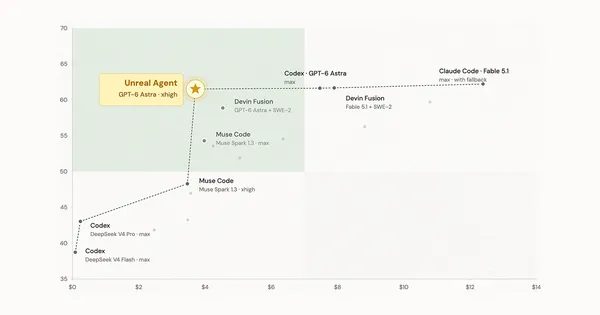
Unreal Agent
Hacker NewsComments


The Softness of Metal
Hacker NewsComments

Likelihood Based Inference in Fully and Partially Observed Exponential Family Graphical Models with Intractable Normalizing Constants
arXiv stat.MLarXiv:2404.17763v3 Announce Type: replace-cross
Abstract: Probabilistic graphical models that encode an underlying Markov random field are fundamental building blocks of generative modeling to learn latent representations in modern multivariate data sets with complex dependency structures. Among these, the exponential family graphical models are especially popular, given their fairly well-understood statistical properties and computational scalability to high-dimensional data based on pseudo-likelihood methods. These models have been successfully applied in many fields, such as the Ising model in statistical physics and count graphical models in genomics. Another strand of models allows some nodes to be latent, so as to allow the marginal distribution of the observable nodes to depart from exponential family to capture more complex dependence. These approaches form the basis of generative models in artificial intelligence, such as the Boltzmann machines and their restricted versions. A fundamental barrier to likelihood-based (i.e., both maximum likelihood and fully Bayesian) inference in both fully and partially observed cases is the intractability of the likelihood. The usual workaround is via adopting pseudo likelihood-based approaches, following the pioneering work of Besag(1974). The goal of this paper is to demonstrate that full likelihood-based analysis of these models is feasible in a computationally efficient manner under a logarithmically sparse setting. The chief innovation lies in utilizing the tractable independence model underlying an intractable graphical model, to estimate the normalizing constant, as well as its gradient. Extensive numerical results, supporting theory and comparisons with pseudo likelihood-based approaches demonstrate the applicability of the proposed method.
Quasi-SVD: Learning a Lie-constrained matrix factorisation for real-time imaging
arXiv cs.LGarXiv:2607.25967v2 Announce Type: replace-cross
Abstract: Singular Value Decomposition (SVD) underlies matrix factorisation tasks across many fields, with imaging applications demanding real-time processing. Yet SVD algorithms are inherently sequential, constraining real-time GPU throughput and limit online deployment in imaging pipelines. This study introduces a fully parallelized matrix factorization framework for GPUs by enforcing matrix orthogonality on left singular vectors via Lie-parametrised algebra and recovering the remaining components through soft constraints. This asymmetric constraint design enables an efficient parallel and provably valid decomposition, achieves high reconstruction fidelity and substantially accelerates computation relative to the exact SVD, with real-time throughput exceeding standard video frame rates. Performance is evaluated on multiple imaging tasks spanning complementary computational regimes: (1) spatio-temporal background subtraction for ultrasound localisation microscopy, requiring high-dimensional matrix separation, (2) Mueller matrix polarimetry for neurosurgical tissue characterisation, requiring massive batch processing of small matrices, and (3) an MNIST denoising benchmark at an intermediate scale with known ground truth. Across regimes and instruments, the proposed framework demonstrates robust domain transfer at various matrix scales, sufficient for live image-guided workflows that classical solvers cannot currently support in these settings. By prioritising downstream reconstruction fidelity over exact spectral recovery, the proposed SVD framework makes structured matrix factorisation practical for real-time processing.
Exact and Approximate Range Queries in Ball Mapper
arXiv cs.LGarXiv:2601.01405v3 Announce Type: replace-cross
Abstract: Ball Mapper summarizes a finite metric dataset by covering the sample with closed balls centered at selected landmarks and connecting landmarks whose balls share observations. Its construction therefore depends critically on repeated fixed radius range queries, yet the effect of replacing exact queries by approximate search has not been systematically characterized. We formulate Ball Mapper through an abstract range query procedure that separates the mathematical construction from the search backend used to realize it. Under fixed ordering, exact procedures preserve the landmark sequence, cover, graph, and membership-based colorings. For approximate procedures, we derive deterministic bounds on covering radius and landmark separation under additive and multiplicative query errors, prove inclusions for the induced nerve, characterize edge survival through witness redundancy for conservative approximations, and bound perturbations of mean vertex colorings. The accompanying implementation provides independent exact reference backends together with exhaustive and approximate search methods under a common closed ball convention. Experiments on Gaussian, mixture, and noisy curve data across three seeds show that approximation fidelity depends strongly on geometry and that edges supported by multiple witnesses are substantially more robust to missed memberships. At 20,000 observations, the approximate indexes did not outperform exhaustive FAISS Flat search. The results therefore establish a framework for controlled approximation rather than a universal speed advantage, and identify the geometric and combinatorial quantities that govern when approximate range search preserves the Ball Mapper summary.
Lifelong Learning of Video Diffusion Models From a Single Video Stream
arXiv cs.LGarXiv:2406.04814v4 Announce Type: replace-cross
Abstract: Video diffusion models can enable embodied agents to anticipate plausible futures from the recent past, but they are typically trained offline on curated datasets--a mismatch with the agents' learning setup at deployment: online, from a single video stream that sequentially outputs one frame at a time. We bridge this training gap and demonstrate that training autoregressive video diffusion models from such a stream, resembling the experience of embodied agents, is not only possible but can also perform comparably to standard offline training given the same number of gradient steps. We find that this robustness to video stream autocorrelation and nonstationarity can be achieved using experience replay methods that retain a subset of the video stream. To support training and evaluation in this setting, we introduce five new datasets for streaming lifelong generative video modeling: Lifelong Bouncing Balls (O), Lifelong Bouncing Balls (C), Lifelong 3D Maze, Lifelong Drive, and Lifelong PLAICraft, each consisting of one million consecutive frames from environments of increasing complexity. Together, our datasets and experiments lay the groundwork for video generative models and world models that continuously learn from single-sensor video streams rather than fixed datasets.
Orthogonal JEPA: Factorized Predictive States for Latent World Models
arXiv cs.LGarXiv:2608.20065v2 Announce Type: replace
Abstract: World models construct latent states that support prediction, planning, and reasoning about an underlying system. Joint-embedding predictive architectures (JEPAs) offer a direct way to learn such states by predicting targets in representation space instead of reconstructing every detail of the observation. Standard JEPAs, however, organize all predictable content through one target embedding and one prediction pathway. In complex systems, this monolithic state can allocate redundant capacity to dominant signals while providing weak or conflicting gradients to less dominant predictive structure. We introduce \method, a latent world-modeling framework based on orthogonal predictive factorization. Learned basis matrices analyze each target state into multiple components, and a dedicated prediction branch estimates each component from a shared context representation. Predictive regression preserves the factor magnitudes required for state synthesis, an orthogonality objective discourages repeated directions, factor-activity regularization maintains variation in projected targets, and online variance regularization discourages coordinate-wise encoder collapse. Predicted components are synthesized into a complete latent state that can be used by a readout, decoder, planner, or autoregressive rollout. The same predictive-state mechanism applies when the target is temporally future, spatially hidden, or another partial observation of the same system. Experiments on controlled vision, single-cell transcriptomics, longitudinal health records, continuous control, and molecular dynamics evaluate representation quality, forecasting, planning, and long-horizon stability.
Reinforcement Learning for Delivery Drone-Based Participatory Sensing in Dynamic Environments
arXiv cs.LGarXiv:2607.18874v2 Announce Type: replace
Abstract: Using Unmanned Aerial Vehicle (UAV) for urban sensing has emerged as a powerful paradigm to monitor the status of the city, e.g., air quality and noise levels, through agile aerial crowdsourcing. Despite this potential, existing UAV-based sensing approaches overlook environmental disturbances like wind that drastically impact drone velocity and energy efficiency. Consequently, directly applying existing methods to this joint delivery and sensing paradigm in dynamic environments faces two severe challenges: (1) scalability bottlenecks as fleet sizes expand; and (2) multi-timescale decision heterogeneity between macro task dispatching and micro velocity control. To tackle these, we formalize the problem as SensUAV and propose a Two TimeScale Reinforcement Learning framework (TSRL). Specifically, TSRL separates decision-making into two cooperative layers. At the macro level, a task-embedding sensing dispatcher handles scalability by separately encoding distinct task features and sequentially evaluating UAV suitability before task selection. At the micro level, a wind-aware velocity controller learns fine-grained velocity scheduling to adapt to dynamic environmental variations. Extensive experiments on real-world datasets demonstrate that TSRL significantly outperforms baselines, achieving average system profit improvements of 20.1% in Hangzhou and 46.6% in Shanghai.
Tight Sample Complexity Bounds for Entropic Best Policy Identification
arXiv cs.LGarXiv:2605.13717v2 Announce Type: replace
Abstract: We study best-policy identification for finite-horizon risk-sensitive reinforcement learning under the entropic risk measure. Recent work established a constant gap in the exponential horizon dependence between lower and upper bounds on the number of samples required to identify an approximately optimal policy. Precisely, known lower bounds scale in $\Omega(e^{|\beta| H})$ where $H$ is the horizon of the MDP, while the state-of-the-art upper bound achieves at best $O(e^{2|\beta| H})$ (arXiv:2506.00286v2) using a generative model. We show that this extra exponential factor can be traced to overly loose concentration control for exponential utilities. To close this open gap, we revisit the analysis of this problem through a forward-model based algorithm building on KL-based exploration bonuses that we adapt to the entropic criterion. The improvement we get is due to two main novel technical innovations. We leverage the smoothness properties of the exponential utility to derive sharper concentration bounds, and we propose a new stopping rule that exploits further this tightness to obtain a sample complexity that matches the lower bound.
Event-Based Early Warning of Vineyard Disease Risk from Environmental Time Series
arXiv cs.LGarXiv:2605.04548v2 Announce Type: replace
Abstract: Accurate early warning of vineyard disease risk from environmental observations is essential for timely intervention and more sustainable crop protection. However, many existing studies formulate disease prediction as daily presence classification, which can favor persistence-driven predictions and provide only limited support for actionable short-horizon warning. In this paper, we present an event-based approach for early warning of vineyard disease risk from environmental time series and evaluate it through a vineyard case study. Rather than predicting daily disease status, the task is reformulated to predict transitions into annotated disease-risk periods within a future window of 3-7 days. To reduce fragmentation caused by short interruptions in the binary labels, new events are defined only after a minimum disease-free gap. This formulation encourages models to capture environmental precursors associated with upcoming risk periods instead of merely reproducing temporal persistence. Using multi-year agro-meteorological data, we construct input representations that capture humidity dynamics, rainfall accumulation, temperature variability, and seasonal structure through cyclic temporal encoding. We evaluate representative methods from classical machine learning and deep learning, including XGBoost, Long Short-Term Memory (LSTM) networks, and Temporal Convolutional Networks (TCNs), using both standard classification metrics and an event-oriented early warning protocol. The results show that the event-based formulation supports practical short-horizon warning, while the compared models exhibit distinct trade-offs between event recall, lead time, and false-alert behavior. Overall, the study underscores the importance of problem formulation in environmental time-series learning and demonstrates the value of event-based prediction for vineyard disease warning systems.
Relative Wasserstein Angle and the Problem of the $W_2$-Nearest Gaussian Distribution
arXiv cs.LGarXiv:2601.22355v2 Announce Type: replace
Abstract: Understanding the distributional structure of high-dimensional datasets has become an important topic, yet direct visual characterization is difficult. In this work, we develop a geometric framework for characterizing the distributional structure of empirical datasets by quantifying their deviation from the Gaussian family under the geometry induced by optimal transport theory. Building on the cone structure of the relative translation invariant quadratic Wasserstein $(RW_2)$ space, we define two geometric quantities---the \emph{relative Wasserstein angle} and the \emph{orthogonal projection distance}---and show that they are well-defined because of the flat geometry of the filling cone between distributional rays. This formulation recasts the problem of measuring deviation from the Gaussian family as an orthogonal projection problem onto the Gaussian cone and reveals that the commonly used moment-matching Gaussian is, in general, not the $W_2$-nearest Gaussian to a non-Gaussian distribution. In one dimension, we derive closed-form expressions for the proposed quantities and extend closed-form expressions to several other location--scale families, including uniform, Laplace, and logistic distributions. In higher dimensions, we develop a numerical approximation method for the proposed quantities based on empirical optimal transport and covariance-shape optimization. Our experimental results show the empirical convergence and stability of the proposed methods and reveal that the $RW_2$ angle provides a robust and consistent measure of distributional non-Gaussianity. Moreover, these results provide empirical support for its potential use as an indicator of distributional heterogeneity.
Agent0: Unleashing Self-Evolving Agents from Zero Data via Tool-Integrated Reasoning
arXiv cs.LGarXiv:2511.16043v2 Announce Type: replace
Abstract: Large Language Model (LLM) Agents, often trained with Reinforcement Learning (RL), are constrained by a dependency on human-curated data, limiting scalability and tethering AI to human knowledge. Existing self-evolution frameworks offer an alternative but are typically restricted by the model's inherent capabilities and single-round interactions, hindering the development of complex curricula involving tool use or dynamic reasoning. We introduce Agent0, a fully autonomous framework that evolves high-performing agents without external data through multi-step co-evolution and seamless tool integration. Agent0 establishes a symbiotic competition between two agents initialized from the same base LLM: a curriculum agent that proposes increasingly challenging frontier tasks, and an executor agent that learns to solve them. We integrate external tools to enhance the executor's problem-solving capacity; this improvement, in turn, pressures the curriculum agent to construct more complex, tool-aware tasks. Through this iterative process, Agent0 establishes a self-reinforcing cycle that continuously produces high-quality curricula. Empirically, Agent0 substantially boosts reasoning capabilities, improving the Qwen3-8B-Base model by 18% on mathematical reasoning and 24% on general reasoning benchmarks. Code is available at https://github.com/aiming-lab/Agent0.
继续滚动加载更多…